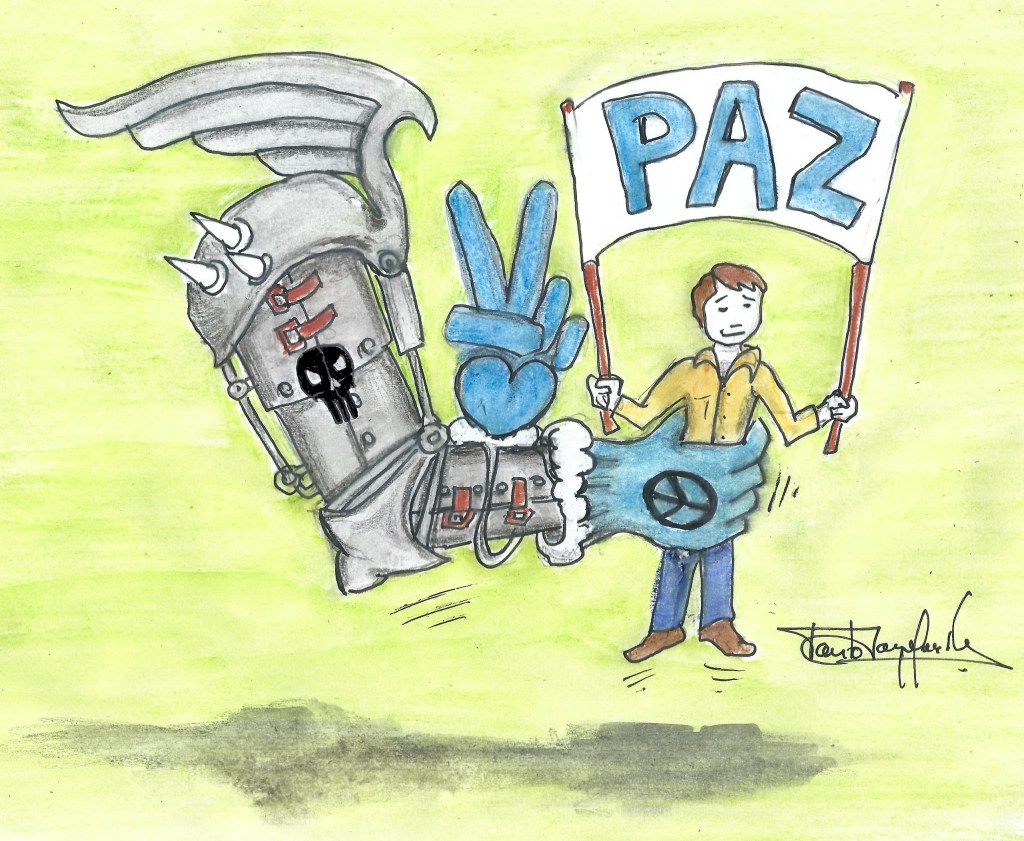
Cessar-Fogo Mundial por causa do COVID.

António Guterres tentou; muitos acharam impossível mas a coisa pegou. Gradualmente, 16 zonas de conflito estavam a alinhar no projecto e vários Países do Security Council da ONU elaboraram projectos de uma Resolução nesse sentido. De repente, no dia em que se comemorava o fim da II WW, os Russos disseram que necessitavam de mais tempo para estudar as propostas e os Estados Unidos roeram definitivamente a corda.

Realmente … leva-nos a pensar que os cinco Países do Conselho de Segurança da ONU são também os cinco maiores exportadores de armas mundiais.

(EXTRACT OF AN ARTICLE ON – THE PASSBLUE independent coverage of the UN)

After six weeks of negotiations, the United States shot down hopes for a resolution to be approved in the United Nations Security Council on May 8, refusing to back worldwide cease-fires as the US continues to castigate China and the World Health Organization for the Covid-19 pandemic. Meanwhile, momentum behind tenuous cease-fires is vanishing, experts say.

The long-awaited moment for the Council to approve a resolution supporting the UN secretary-general’s March 23 call to pause fighting in war zones during the coronavirus crisis may be gone for now. The resolution had come close to getting through, it seemed, by Thursday night, May 7, according to some diplomats. France and Tunisia had circulated a redraft of the resolution, obtained by PassBlue, with compromise language about the WHO. The new formulation expressed support for “all relevant entities of the United Nations system, including specialized health agencies,” in obvious reference to the WHO without naming it. The organization is the UN’s only specialized health agency.

France brandished its diplomatic skills as a permanent Council member to get the draft put under silence procedure — a span of time allowing parties to object — until 2 P.M. Friday, Eastern Daylight Time.

Hopes were high among most Council members that the resolution would see the light of day by the deadline, especially because on Friday the Council was holding an enormous meeting, albeit online, with an array of high-level government officials to commemorate the end of World War II in Europe. The latest draft resolution — it has gone through numerous iterations — had overcome many obstacles laid by the US and China. Estonia was the first Council member to submit a draft resolution on the pandemic in early March but was swatted down mainly by China for including human-rights references, one diplomat said. Then, a French-led draft was circulated, focusing on the global cease-fire; it was eventually merged with one led by Tunisia. That version, with more changes, was the one put under silence procedure late last week.

Around noon on Friday, May 9, silence was broken, even though several diplomats told PassBlue that senior US officials had shown signs the night before that the US was on board. But on Friday, Russia also said it needed more time to consider the draft; as one diplomat put it, Russia woke up and had to insert itself into the process.

In rejecting the draft, the US State Department said that the Security Council should either proceed with a resolution limited to support for a cease-fire or a broadened resolution “that fully addresses the need for renewed member state commitment to transparency and accountability in the context of Covid-19.”

https://www.kobo.com/pt/en/ebook/bosnia-95

O Carro Chetnik

Quando se cumpre uma missão da ONU em teatros de operação distantes, vivem-se situações indeléveis que balizam as nossas memórias. Algumas experiências são mais marcantes do que outras, mas todas dignas de registo.

Recordo uma patrulha no bairro de Ilidza em Sarajevo – 1995 – quando nos cruzamos com um ícone do Cerco a Sarajevo – o Carro Chetnik [radicais sérvios]. Tratava-se de um antigo veículo da ONU, roubado de uma forma violenta dois anos antes. Era uma carrinha Toyota Hilux todo-o-terreno, do tipo misto, com caixa aberta e suspensão elevada. Estava toda pintada em várias tonalidades verdes e castanho, para dar um aspeto camuflado e tapar as anteriores marcas da ONU. Na zona de carga tinha uma série de armações montadas, que indiciavam o uso de uma metralhadora pesada ou de um morteiro. Nas portas do carro estavam pintadas as tradicionais cruzes sérvias com os quatro “C” e, na antena do rádio, flutuava uma flâmula com uma águia bicéfala branca. Tinha ainda uma característica sinistra que tornava aquele carro numa peça única: – sobre o capô to motor estava aparafusada uma caveira real envergando um capacete azul da ONU. Como se fosse o logotipo da marca do carro.

Aquele carro era uma afronta para toda a ONU, devido à caveira e ao capacete azul, de que se contavam inúmeras estórias lúgubres. Contudo, até então, não tinha havido como forçar os seus utilizadores a retirar o sinistro “trofeu” do capô. Os seus ocupantes eram extremamente agressivos e qualquer abordagem teria de ser feita com o uso da força.

O nosso carro cruzou-se com o carro Chetnik nas ruas enlameadas do bairro sérvio de Sarajevo. O Carro Chetnik estancou imediatamente o seu movimento e, do seu interior, saíram vários homens de meia-idade, com os cabelos desalinhados e longas barbas (característica dos Chetniks), envergando velhos camuflados Jugoslavos e com as suas Kalashnikovs em riste.

A presença de um veículo de Observadores Militares da ONU naquelas paragens não era apreciada pelos combatentes sérvios, os quais fizeram questão de o demonstrar agressivamente. Como continuei a conduzir sem qualquer intenção de reduzir a marcha, os milicianos Sérvios voltaram a embarcar no carro Chetnik e seguiram-nos. Nessa altura decidi apressar a marcha e chegar rapidamente ao checkpoint da ONU que marcava o limite da zona Sérvia de Sarajevo da zona. Os militares franceses que guarneciam aquele checkpoint estavam bem armados e eram um fator dissuasor de peso.

Quando o Carro Chetnik desapareceu do nosso retrovisor, tanto eu como os meus companheiros no carro da ONU suspirámos de alívio. Uma curta mas intensa experiência, que felizmente não passou de um susto.

#peacekeepinginawarzone

Ilidza’s Chetnik Car (Bosnia 1995)

In October 1995, during the days when the Dayton Agreements were being discussed, I was driving through Sarajevo’s Serb neighborhood of Ilidza, providing situation awareness to a recently arrived UN Military Observer (UNMO), when we saw something simultaneously danger and unique – “The Chetnik Car”. That was something not all UNPROFOR staff had the chance to see … and the blue helmets that had actually seen it were horrified with the scene.

The name Chetnik invoked an old 19th Century Serbian Monarchy paramilitary organization, created to fight the Ottoman Empire. The name was used to unite the Serbs during the Balkan War, the First- and Second-Word Wars. Finally, on the Yugoslav conflict it was used to define Serb nationalist hardliners.

The Chetnik Car was a UN stolen pickup truck, painted of green camouflage with the Serbian crosses painted on the doors, exhibiting a real human skull wearing a blue helmet on the vehicle’s hood. On the back open cargo bay it had a heavy machine gun installed, and seats for an assault team. On the radio antenna of the vehicle there was a flag with the Serbian double-headed white eagle.

Of course, the skull with the blue helmet was the most significant message of that car – they hated UNPROFOR. The mere existence of the Chetnik Car was an outrage to the UN, but its users were radical fighters, just waiting for an excuse to engage the blue helmets in combat. The Serb authorities wouldn’t arrest them and for UNPROFOR to cease the car, it would have to use lethal force, which was not going to happen.

We were inside of an overloaded Toyota Land Cruiser, driving slowly among the mortar craters of Ilidza streets. When we crossed our path with the Chetnik Car, several fighters, wearing black tactical uniforms, moved out of the car towards the UNMO vehicle pointing their rifles.

We just kept moving slowly but steadily away from Ilidza towards the French checkpoint at the entrance of Sarajevo.  The Chetniks demonstrated very noisily their disapproval for UN presence in Ilidza, but let us go through, because UNMO officers operate unarmed; hence we were not worth engaging.

Having the Chetnik Car on our tail was a distinctive experience; not to be repeated again.

#Peacekeepinginawarzone

The path to Dayton’s Agreements (Bosnia 1995)

In the beginning of October 1995, it was common knowledge that the US Administration’s Representative for the Balkans – Richard Holbrooke – was negotiating a definitive Cease Fire Agreement, which could lead to a permanent Peace Agreement.

People remained sceptical, because it would probably be just another cease fire agreement, like many others before; some of them remained in force for 42 hours or, at most, until the snow cloak that covered the outskirts of Sarajevo was gone.

However, the American deal introduced a “clever nuance”: – the reestablishment of water, gas and electricity to Sarajevo. The Bosnian population desperately needed those services back in their houses; therefore, they demanded their own authorities to respect those negotiations. With such pressure, the ABiH soldiers had to keep quiet and not challenge the VRS to retaliate; and that was the real game changer.

What the Americans did was exactly what needed to be done. They forced the Host Nation population to realize that their problems had to be solved by them … not by foreign institutions, such as the UN, NATO or the OSCE. The internationals were there to help, not to solve. In the words of Ambassador Cutileiro – the initial dealer of European Union for the Yugoslav conflict:

– “We can only help them, if they want to be helped!”

The American diplomacy managed to close the deal with all three parts, and the date for “The Cease Fire Agreement” to be in force was the 10th of October 1995. In UNPROFOR, nobody needed a “Crystal Ball” to know who was going to survey those future Agreements.

Reading a crystal ball for the implementation of future agreements in Bosnia

With the arrival of the autumn season, and some chilly weather, so did the water supply to the houses plumbing and most public places in Sarajevo. The Serbs were sticking with the agreements and Sarajevo population could go back to certain bourgeois acts, such as flushing the toilet. There was no more need to go out to the tunnels for the replenishment of the house’s water tanks. Richard Holbrooke was a hero in Sarajevo.

Field mission Lessons Learned: – Group Work versus Team Work

Military personnel deployed in the Theater of Operations should take into account the differences between Group Work and Team Work. Both cases of cooperative work are necessary but they are different and should be applied in different contexts. The differentiating factor is the TASK.

In the first case (Group Work) everybody has approximately the same task, moving in unison to reach the Crew’s common goal.

In the latter case (Team Work) each one has a different task to accomplish, and only with the accomplishment of all different tasks can the Crew achieve its common goal.

Pending on the situation, the same people can do the different works. Group Work is used in massive “all together” action/effort; whilst while Team Work is used in problem solving of technical aspects and decision making assessments.

It is for the leadership to decide which line of work should be followed, and assign the necessary resources.

Plano de evacuação da ONU (Eleições Angolas 1992)

Durante as Primeiras Eleições Livres Angolanas, que decorreram nos dias 29 e 30 de Setembro de 1992, os Angolanos votaram em massa, ultrapassando as previsões mais optimistas, com 92% dos eleitores inscritos (4 milhões e 400 mil pessoas) a exercerem pela primeira vez o dever/direito de voto. O número surpreendeu, já que se admitia uma taxa de abstenção na casa dos 20% a 30%. Os angolanos escolhiam entre 19 partidos, quem os iria governar.

No dia 01 de Outubro, depois do ato eleitoral, era a loucura total nos vários aeródromos espalhados pelo País, onde 10 oficiais da Força Aérea Portuguesa ao serviço da ONU, procuravam coordenar a operação aérea de suporte eleitoral. Todas aquelas urnas de voto tinham de ser rapidamente retiradas dos milhares de locais onde haviam sido colocadas por helicóptero, e reenviadas de imediato para Luanda em C-130. O que havia levado semanas a montar, teria de levar agora horas a desmontar.

Conforme os cargueiros aéreos iam levando as urnas de voto para Luanda, os votos no seu interior eram contados. Os resultados eleitorais, segundo os acordos de Bicesse, só deveriam ser formalmente anunciados no dia 08 de Outubro. Contudo, a comunicação social soube das contagens parciais e divulgou-as.

No dia 3 de Outubro, Jonas Savimbi (então líder da UNITA) dirigiu uma «Mensagem à Nação», na qual expressava que não aceitava os resultados das eleições, por ter havido fraude.

A violência estalou nas ruas da Capital e o conflito reacendeu-se por todo o País. A organização para ONU encarregada pelo apoio às eleições – Programa da ONU para o Desenvolvimento (PNUD/UNDP) – decidiu ativar o plano de evacuação que tinha elaborado e chamar para Luanda os 10 oficiais da FAP que estavam colocados noutras tantas Províncias Angolanos.

Após a chegada de todos os oficiais da FAP a Luanda, os responsáveis do PNUD fizeram uma avaliação da situação de segurança. Aparentemente as Forças Governamentais continuavam a ter o controlo da situação em Luanda, mas o clima de Guerra Civil tinha definitivamente regressado a Angola, e, no dia 8 de Outubro, o PND decidiu ativar o plano de “Evacuação Internacional”.

Os 10 militares portugueses foram chamados ao Quartel-General do PUND em Luanda e receberam as instruções desse “Plano”. Para admiração do grupo, o tal “Plano” consistia em entregar a cada um o dinheiro (cash) do preço de uma passagem aérea para Lisboa; um aperto de mão com um agradecimento (escrito) pelo trabalho bem efectuado; e um “Adeus até à próxima”!

Nesse mesmo dia, andava perdido pelas ruas de Luanda um grupo de 10 portugueses, com 20.000 dólares numa carteira, à procura de uma agência de viagens que “ainda” tivesse 10 lugares num avião para fora de Angola, de preferência com uma ligação para Lisboa. Não era bem este tipo de “PLANO DE EVACUAÇÃO” que os oficiais Portugueses estavam à espera.

Obviamente que não foi tarefa fácil, porque todos os voos estavam esgotados. Quando já começavam a ficar desesperados, lá conseguiram um voo num voo para esse mesmo final de tarde, num Boeing 747 francês, em direcção a Paris.

Cerca de 20 minutos após a descolagem da capital de Angola, o comandante de bordo transmitiu no sistema de som da aeronave a seguinte mensagem:

– Caríssimos passageiros, informo que o Aeroporto de Luanda acaba de ser encerrado a todo o tráfego aéreo até futuras instruções. Aparentemente fomos um dos últimos aviões comerciais a sair de Angola”.

Tinha recomeçado a guerra civil em Angola, a qual só viria a finalizar em 22/02/2002 com a morte de Jonas Savimbi, numa região próxima de Luena, em Lucusse.

Field mission Lessons Learned – “Runaway Bags”

In a UN mission, when one person less expects, he/she will/may have to stay away from the main Unit, sometimes for several days. In a conflict zone, the peacekeeper should not only plan to have his/her gear prepared for an unexpected stay, but also for an unexpected evacuation of the UN compound.

That brings about the issue of “Runaway Bags”; something to have permanently ready and close-by both at the accommodation’s doorstep, and in a trip.

Runaway Bags are no more than a collection of stuff someone may need in an emergency situation. Its “packing-up” is an individual responsibility and it should be prepared as soon as possible after arriving to the mission area. Everything should fit inside a backpack, and kept close to the door of the individual accommodation, in case there is an attack and that person has to “runaway”; or to take along in a routine trip/patrol (because we always know how they start … but we never know how they end).

Do not go on patrol without your “Runaway Bag”. You know how it starts but you don’t know how it ends!

The content varies with each person and with each mission area. Obviously a “runaway bag” made for the desert will not have the same content of that one made for the snowy mountain.  However, overall, it should not weigh more than 15 kilos and should contemplate four areas of concern: First Aid; Survival; Food and Hygiene. The difficult part is to select how much of each article should go inside, in order to keep the backpack under the 15 kilos.

The First Aid section should consider having: the medicines/prescriptions that specific person is eventually taking;  bandages and compresses; duct tape; a strangler garrotte; condom (it has multiple uses); anti exposure cream (sun and cold); band-aids; pharmacy disinfectant; water purification pills; insect repellent.

The Survival component should consider having: both local and hard currency money (because there are no free runaways); documents and photocopy of the documents; multifunction knife; flashlight; lighter and/or matches (fire); compass; small radio transistor (to hear the news); spare batteries for all the equipment taken; small mirror; glow sticks; notebook with pen/pencil; toilet paper (half roll compressed); whistle; sleeping bag; rope (10m); hat; rain cover; Walkie-Talkie (with mission frequency); one change of underwear..

The food section should have one litre of water (canteen); a combat ration; energy bars.

The personal hygiene should consider including: a small soap bar; dental cleaning material; some wet cleaning wipes.

During my missions, in several occasions I’ve regretted not paying enough attention to this matter but, believe me, it’s worth investing sometime right at the start, and then it’s done for most of the mission’s duration.

UN battlefield negotiations – UNPROFOR 1995

As prescribed on their “job description”, United Nations’ Military Observers have to negotiate compromised solutions between the warring factions.  Those negotiations are normally conducted in meetings, with people that barely know each other; or even hate one another. Making arrangements with only one of the belligerents tend to be easier, but not necessarily more relaxed.

Back in 1995, during the Bosnian conflict, I recall a meeting with Serbs at Lukavica Barracs, which became a very educative Lesson Learned for further missions.

As the local protocol dictated, before talking business one had to discuss fait-divers. The Serbs tried to speak in English, as a gesture of politeness. The presence of a Portuguese officer was not very common and a good theme to start chatting. Portugal was a friendly country for the Serbs, because it was a small western European Christian country, without any particular interest in Bosnia. Furthermore, the Serbs in general were sport lovers and the name of the Portuguese football player – Luis Figo – jumped immediately to the table. There was also a number of Serbian football players that were, or had been, playing in Portuguese Teams at the time, but Alex didn’t have enough knowledge of football to support that conversation. Alex felt very embarrassed of his lack of football knowledge and took note of another lesson regarding negotiations with warring factions:

Lesson Learned “Study the sportive history of the Host Nation and its relations with your own Nation. It is not enough to know the Host Nation’s history and culture heritage, because no one will be discussing that at the negotiation table. Knowing the Host Nation’s preferred sport, its athletes and the correspondence with the Troop Contributing Country is essential to break the ice and start a profitable negotiation.”

Scenes from a past war – Sarajevo 1995

Back in 1995, Sarajevo had no electricity, no gas and no water distribution system operational. Living among the population, the UN Military Observers (UNMO) had to suffer the same restrictions and solve the same problems of the locals.

Going out for water replenishment was particularly interesting. The water collection point was located inside of a system of road tunnels, close to the sportive complex of Zetra where the Danish Army had a blue helmet’s Company, and not far from BiH HQ where the UNMO team had its front office. Zetra sportive complex was constituted by a large multipurpose pavilion and a football stadium. The pavilion was built to host the 1994 Olympic Winter Sports. Its metallic cover was pierced all around with bullet holes, and its structure showed a multitude of twisted iron bars. Inside the pavilion the blue helmets had installed tents and containers to support all sort of activities. Although very much alive with peacekeepers moving around, the infrastructure was a ruin altogether. 

Sarajevo had two parallel road tunnels in Zetra vicinities. Those tunnels were almost 100 meters long crossing through an urban elevation covered with all sorts of modern dwellings. There was no vehicle traffic across the twin tunnels, which had been closed since the early stages of the war. However, the tunnels were of strategic importance because they offered anti-sniper shelter to people gathering in public places, such as collecting water from UN’s water tank trucks. 

Compared with the absence of electricity, or gas, the lack of water was of the upmost importance to Sarajevo’s population, and the UN was trying to help. Between 1994 and 1996, the UN agencies and programs had made about 200 water wells inside Sarajevo. However, public gatherings were a major security issue and people couldn’t use the wells. Therefore, the UN implemented a distribution system with water tanks, which would collect the water at the wells and go to protected places – such as Zetra’s tunnels – for public distribution.

Those two tunnels also protected the locals from bad weather and they provided protection to setup small street markets inside. In truth, only one of the tunnels was fully dedicated for public use, because the other one, just a few meters away, only had a small portion dedicated to the population; the rest of the infrastructure was a shelter for ABiH warfare equipment. Locals used to say that the ABiH had four tanks in Sarajevo, and two of them were inside that tunnel. Regularly, the Bosnian soldiers would move one of the tanks to the opposite exit of the tunnel, facing the Serbian part of town, and fire its big weapon. After two or three rounds the tank would move back into the tunnel, remaining protected from Serbian retaliation fire.

Blue Helmets’ Core Values and Core Competencies

When discussing the matter of Core Values and Competencies with other former UN staff, I have been noticing that there some confusion between Values and Competencies.

A Value is something everybody in the same organization shares, a common belief that guides de different actions and attitudes of all its members, regardless their individual technical skills, in consonance with the United Nations Charter. It is something abstracted and not a product that be measured; but the Peacekeeper can be accountable for.

The UN Core Values are: – “integrity”, “respect for diversity/gender” and “professionalism”. The question is: – What does that mean? How do you define it?

In acting with Integrity, the Peacekeeper:  – upholds the principles of the United Nations Charter; demonstrates the managerial principles of the United Nations, including impartiality, fairness, honesty and truthfulness, in daily activities and behavior; acts without consideration of personal gain; resists undue political pressure in decision-making; does not abuse power or authority; stands by decisions that are in the Organization’s interest even if they are unpopular; and takes prompt action in cases of unprofessional or unethical behavior.

Behaving with Professionalism, the Peacekeeper will: Show pride in work and in achievements; demonstrate skillful competence and mastery of subject matter; have a conscientious and efficient attitude in meeting commitments, observing deadlines and achieving results; be motivated by professional rather than personal concerns; show persistency when faced with difficult problems or challenges; and will remain calm in stressful situations.

Respect for Diversity and Gender is reflected in: – Working effectively with people from all backgrounds; treating all people with dignity and respect; treating men and women equally; showing respect for, and understanding of, diverse points of view and demonstrating this understanding in daily work and decision-making; examining own biases and behaviors to avoid stereotypical responses; not discriminating against any individual or group.

What are UN Competencies?

The term “Competency” refers to a combination of skills, attributes and behaviors that are directly related to successful accomplishments of each and every UN staff member´s Job Description.

There two major types of Competencies: Core Competencies and Managerial Competencies.

The Core competencies (applicable to everybody) are: Communication; Teamwork; Planning & Organizing; Accountability; Client Orientation; Creativity; Technological Awareness; and Commitment to Continuous Learning.

The Managerial Competencies (for leaders) are: Vision; Leadership; Empowering Others; Managing Performance; Building Trust; and Judgement / Decision Making.

Let’s focus on the Core Competencies – applicable to all peacekeepers – and the way they should and shouldn’t behave, in order to assure a good image for themselves, their own countries and the United Nations Organization.

Core Competencies are not specific to any occupation, but rather to the overall staff. Specific technical or functional Skills are not included, because this Communication Plan concerns to the image of the Centre and not the individual Peacekeeper.

The matrix bellow portrays what is normally evaluated when accessing the Peacekeeper’s Competencies. Basically, it’s the DO(s) and DON´T(s) each blue helmet should consider.

Communication

Positive indicatorsNegative indicators
Speak and write clear and effectivelyLack of confidence when talking
Listen to others, interpret messages from others and respond appropriatelyProduce writing that is vague or wordy
Ask questions to clarify, show interest in having two-way communicationUse of inappropriate language
Tailor language, tone, style and format to match the audienceLack of expression during an interview
Openness in sharing information (within OPSEC) and keeping the audience informedLost the attention of the audience at times
Drift from one subject to another
Limited positive feedback from others on communication effectiveness
Withholds information without justification

Teamwork

Positive indicatorsNegative indicators
Work collaboratively with colleagues to achieve the goalRarely offers support to colleagues
Request inputs and genuinely value others´ ideas and expertise, willing to learn from othersPrefers to work and act alone
Place the Team agenda before personal agendaEmphasizes achieving personal goals
Build consensus within the TeamIs prepared to ignore/disrupt majority decisions
Support and act in accordance with Team decisions, even when such decisions may not reflect own positionShows limited consideration of the ideas and inputs from others
Share credit for Team accomplishments and accepts joint responsibility for team shortcomingsTakes the credit for Team accomplishments; passes on responsibility for Team limitations

Planning and Organizing

Positive indicatorsNegative indicators
Develop clear goals consistent with agreed strategiesNo clear system of priorities
Identify priority activities and assign/adjust priorities as requiredDisorganized and unsystematic (impractical work schedules)
Allocate appropriate amount of time and resources for completing workUnrealistic about timelines, deadlines not met, tasks not complete
Foresee risks and allow for contingencies when planningEfforts get sidetracked
Monitor and adjust plans and actions as necessaryNo checks on activities
Use time efficientlyUnwilling to change plans to meet new demands

Accountability

Positive indicatorsNegative indicators
Takes ownership for all responsibilities and honors commitmentsDefers responsibility
Delivers outputs for which one has responsibility within prescribed time, cost and quality standardsDoes not deliver on commitments, compromises standards easily, cuts corners
Operates in compliance with organizational regulations and rulesProduces poor quality work and/or takes longer than is efficient to achieve quality
Supports subordinates, provides oversight and takes responsibility for delegated assignmentsUnaware of standards that need to be achieved
Takes personal responsibility for his/her own shortcomings and those of the work unit, where applicableUnconcerned with the standards of other people’s work once it has been delegated

“Client” Orientation

Positive indicatorsNegative indicators
Consider all those to whom services are provided to be “clients” and, although maintaining and independent and impartial posture, seek to see things from the clients´ point of viewLimited awareness of clients´ point of view
Establish and maintain productive partnerships with clients by gaining their trust and respectOnly moderately concerned about helping others
Keep the clients informed of progress or setbacks in projectsTakes time to warm to people and establish relationships
Meet time for delivery of the projects to the clientsDoes not work as hard as colleagues to meet client needs
——————————-Little evidence of receiving client feedback
——————————Laz in keeping clients informed

Creativity

Positive indicatorsNegative indicators
Actively seek to improve programs or servicesSlow to produce new ideas
Offer new and different options to solve problems or meet client needsView problems in a conventional manner and thinks in a traditional way
Promote and persuade others to consider new ideasAccepts the status quo
Take calculate risks on new and unusual ideas; think “outside the box”Problem-solving lacks creativity
Take interest in new ideas and new ways of doing thingsProduces few alternatives  
Not bound by current thinking or traditional approachesLittle experience of creativity at work

Technological Awareness

Positive indicatorsNegative indicators
Keep abreast of available technologyLimited knowledge about technologies
Understand applicability and limitations of technology to the workLittle interest in finding out about technologies
Actively seek to apply technology to appropriate tasksLack of proactivity in applying technology to work
Show willingness to learn new technologiesLimited understanding of the applicability of technology to work

Commitment to Continuous Learning

Positive indicatorsNegative indicators
Keep abreast of new developments in NATO operations, exercises and experimentsLimited knowledge about NATO matters beyond the assigned projects
Actively seek to develop oneself professionally and personallyStruggle to keep up to date
Contribute to the learning of colleaguesNot proactive in undertaking development tasks
Show willingness to learn from othersReluctant to help others to learn
Seek feedback to learn and improveDefensive with feedback from others
Crie um site como este com o WordPress.com
Comece agora