As prescribed on their “job description”, United Nations’ Military Observers have to negotiate compromised solutions between the warring factions. Those negotiations are normally conducted in meetings, with people that barely know each other; or even hate one another. Making arrangements with only one of the belligerents tend to be easier, but not necessarily more relaxed.
Back in 1995, during the Bosnian conflict, I recall a meeting with Serbs at Lukavica Barracs, which became a very educative Lesson Learned for further missions.
As the local protocol dictated, before talking business one had to discuss fait-divers. The Serbs tried to speak in English, as a gesture of politeness. The presence of a Portuguese officer was not very common and a good theme to start chatting. Portugal was a friendly country for the Serbs, because it was a small western European Christian country, without any particular interest in Bosnia. Furthermore, the Serbs in general were sport lovers and the name of the Portuguese football player – Luis Figo – jumped immediately to the table. There was also a number of Serbian football players that were, or had been, playing in Portuguese Teams at the time, but Alex didn’t have enough knowledge of football to support that conversation. Alex felt very embarrassed of his lack of football knowledge and took note of another lesson regarding negotiations with warring factions:
Lesson Learned – “Study the sportive history of the Host Nation and its relations with your own Nation. It is not enough to know the Host Nation’s history and culture heritage, because no one will be discussing that at the negotiation table. Knowing the Host Nation’s preferred sport, its athletes and the correspondence with the Troop Contributing Country is essential to break the ice and start a profitable negotiation.”
Back in 1995, Sarajevo had no electricity, no gas and no water distribution system operational. Living among the population, the UN Military Observers (UNMO) had to suffer the same restrictions and solve the same problems of the locals.
Going out for water replenishment was particularly interesting. The water collection point was located inside of a system of road tunnels, close to the sportive complex of Zetra where the Danish Army had a blue helmet’s Company, and not far from BiH HQ where the UNMO team had its front office. Zetra sportive complex was constituted by a large multipurpose pavilion and a football stadium. The pavilion was built to host the 1994 Olympic Winter Sports. Its metallic cover was pierced all around with bullet holes, and its structure showed a multitude of twisted iron bars. Inside the pavilion the blue helmets had installed tents and containers to support all sort of activities. Although very much alive with peacekeepers moving around, the infrastructure was a ruin altogether.
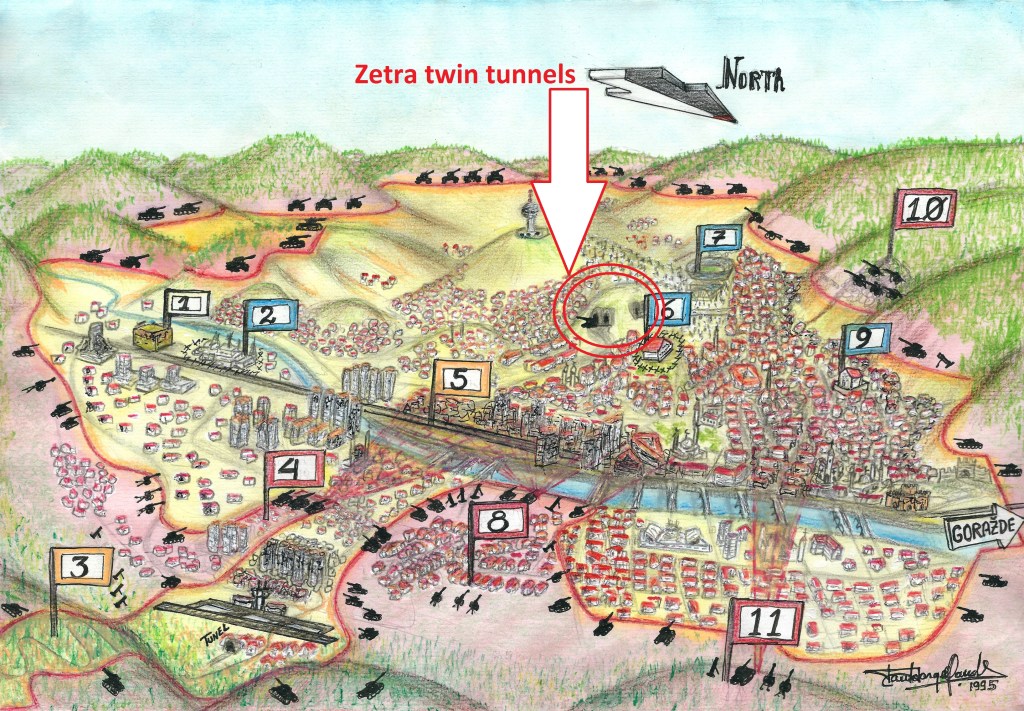
Sarajevo had two parallel road tunnels in Zetra vicinities. Those tunnels were almost 100 meters long crossing through an urban elevation covered with all sorts of modern dwellings. There was no vehicle traffic across the twin tunnels, which had been closed since the early stages of the war. However, the tunnels were of strategic importance because they offered anti-sniper shelter to people gathering in public places, such as collecting water from UN’s water tank trucks.
Compared with the absence of electricity, or gas, the lack of water was of the upmost importance to Sarajevo’s population, and the UN was trying to help. Between 1994 and 1996, the UN agencies and programs had made about 200 water wells inside Sarajevo. However, public gatherings were a major security issue and people couldn’t use the wells. Therefore, the UN implemented a distribution system with water tanks, which would collect the water at the wells and go to protected places – such as Zetra’s tunnels – for public distribution.
Those two tunnels also protected the locals from bad weather and they provided protection to setup small street markets inside. In truth, only one of the tunnels was fully dedicated for public use, because the other one, just a few meters away, only had a small portion dedicated to the population; the rest of the infrastructure was a shelter for ABiH warfare equipment. Locals used to say that the ABiH had four tanks in Sarajevo, and two of them were inside that tunnel. Regularly, the Bosnian soldiers would move one of the tanks to the opposite exit of the tunnel, facing the Serbian part of town, and fire its big weapon. After two or three rounds the tank would move back into the tunnel, remaining protected from Serbian retaliation fire.
When discussing the matter of Core Values and Competencies with other former UN staff, I have been noticing that there some confusion between Values and Competencies.
A Value is something everybody in the same organization shares, a common belief that guides de different actions and attitudes of all its members, regardless their individual technical skills, in consonance with the United Nations Charter. It is something abstracted and not a product that be measured; but the Peacekeeper can be accountable for.
The UN Core Values are: – “integrity”, “respect for diversity/gender” and “professionalism”. The question is: – What does that mean? How do you define it?
In acting with Integrity, the Peacekeeper: – upholds the principles of the United Nations Charter; demonstrates the managerial principles of the United Nations, including impartiality, fairness, honesty and truthfulness, in daily activities and behavior; acts without consideration of personal gain; resists undue political pressure in decision-making; does not abuse power or authority; stands by decisions that are in the Organization’s interest even if they are unpopular; and takes prompt action in cases of unprofessional or unethical behavior.
Behaving with Professionalism, the Peacekeeper will: Show pride in work and in achievements; demonstrate skillful competence and mastery of subject matter; have a conscientious and efficient attitude in meeting commitments, observing deadlines and achieving results; be motivated by professional rather than personal concerns; show persistency when faced with difficult problems or challenges; and will remain calm in stressful situations.
Respect for Diversity and Gender is reflected in: – Working effectively with people from all backgrounds; treating all people with dignity and respect; treating men and women equally; showing respect for, and understanding of, diverse points of view and demonstrating this understanding in daily work and decision-making; examining own biases and behaviors to avoid stereotypical responses; not discriminating against any individual or group.
What are UN Competencies?
The term “Competency” refers to a combination of skills, attributes and behaviors that are directly related to successful accomplishments of each and every UN staff member´s Job Description.
There two major types of Competencies: Core Competencies and Managerial Competencies.
The Core competencies (applicable to everybody) are: Communication; Teamwork; Planning & Organizing; Accountability; Client Orientation; Creativity; Technological Awareness; and Commitment to Continuous Learning.
The Managerial Competencies (for leaders) are: Vision; Leadership; Empowering Others; Managing Performance; Building Trust; and Judgement / Decision Making.
Let’s focus on the Core Competencies – applicable to all peacekeepers – and the way they should and shouldn’t behave, in order to assure a good image for themselves, their own countries and the United Nations Organization.
Core Competencies are not specific to any occupation, but rather to the overall staff. Specific technical or functional Skills are not included, because this Communication Plan concerns to the image of the Centre and not the individual Peacekeeper.
The matrix bellow portrays what is normally evaluated when accessing the Peacekeeper’s Competencies. Basically, it’s the DO(s) and DON´T(s) each blue helmet should consider.
Communication
Positive indicators
Negative indicators
Speak and write clear and effectively
Lack of confidence when talking
Listen to others, interpret messages from others and respond appropriately
Produce writing that is vague or wordy
Ask questions to clarify, show interest in having two-way communication
Use of inappropriate language
Tailor language, tone, style and format to match the audience
Lack of expression during an interview
Openness in sharing information (within OPSEC) and keeping the audience informed
Lost the attention of the audience at times
Drift from one subject to another
Limited positive feedback from others on communication effectiveness
Withholds information without justification
Teamwork
Positive indicators
Negative indicators
Work collaboratively with colleagues to achieve the goal
Rarely offers support to colleagues
Request inputs and genuinely value others´ ideas and expertise, willing to learn from others
Prefers to work and act alone
Place the Team agenda before personal agenda
Emphasizes achieving personal goals
Build consensus within the Team
Is prepared to ignore/disrupt majority decisions
Support and act in accordance with Team decisions, even when such decisions may not reflect own position
Shows limited consideration of the ideas and inputs from others
Share credit for Team accomplishments and accepts joint responsibility for team shortcomings
Takes the credit for Team accomplishments; passes on responsibility for Team limitations
Planning and Organizing
Positive indicators
Negative indicators
Develop clear goals consistent with agreed strategies
No clear system of priorities
Identify priority activities and assign/adjust priorities as required
Disorganized and unsystematic (impractical work schedules)
Allocate appropriate amount of time and resources for completing work
Unrealistic about timelines, deadlines not met, tasks not complete
Foresee risks and allow for contingencies when planning
Efforts get sidetracked
Monitor and adjust plans and actions as necessary
No checks on activities
Use time efficiently
Unwilling to change plans to meet new demands
Accountability
Positive indicators
Negative indicators
Takes ownership for all responsibilities and honors commitments
Defers responsibility
Delivers outputs for which one has responsibility within prescribed time, cost and quality standards
Does not deliver on commitments, compromises standards easily, cuts corners
Operates in compliance with organizational regulations and rules
Produces poor quality work and/or takes longer than is efficient to achieve quality
Supports subordinates, provides oversight and takes responsibility for delegated assignments
Unaware of standards that need to be achieved
Takes personal responsibility for his/her own shortcomings and those of the work unit, where applicable
Unconcerned with the standards of other people’s work once it has been delegated
“Client” Orientation
Positive indicators
Negative indicators
Consider all those to whom services are provided to be “clients” and, although maintaining and independent and impartial posture, seek to see things from the clients´ point of view
Limited awareness of clients´ point of view
Establish and maintain productive partnerships with clients by gaining their trust and respect
Only moderately concerned about helping others
Keep the clients informed of progress or setbacks in projects
Takes time to warm to people and establish relationships
Meet time for delivery of the projects to the clients
Does not work as hard as colleagues to meet client needs
——————————-
Little evidence of receiving client feedback
——————————
Laz in keeping clients informed
Creativity
Positive indicators
Negative indicators
Actively seek to improve programs or services
Slow to produce new ideas
Offer new and different options to solve problems or meet client needs
View problems in a conventional manner and thinks in a traditional way
Promote and persuade others to consider new ideas
Accepts the status quo
Take calculate risks on new and unusual ideas; think “outside the box”
Problem-solving lacks creativity
Take interest in new ideas and new ways of doing things
Produces few alternatives
Not bound by current thinking or traditional approaches
Little experience of creativity at work
Technological Awareness
Positive indicators
Negative indicators
Keep abreast of available technology
Limited knowledge about technologies
Understand applicability and limitations of technology to the work
Little interest in finding out about technologies
Actively seek to apply technology to appropriate tasks
Lack of proactivity in applying technology to work
Show willingness to learn new technologies
Limited understanding of the applicability of technology to work
Commitment to Continuous Learning
Positive indicators
Negative indicators
Keep abreast of new developments in NATO operations, exercises and experiments
Limited knowledge about NATO matters beyond the assigned projects
Actively seek to develop oneself professionally and personally
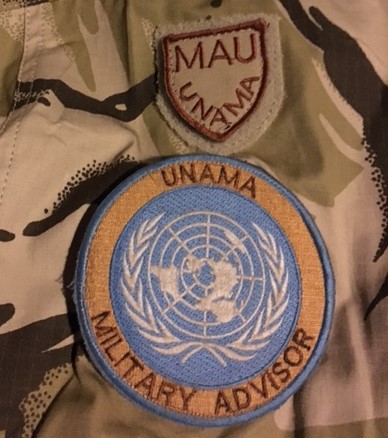
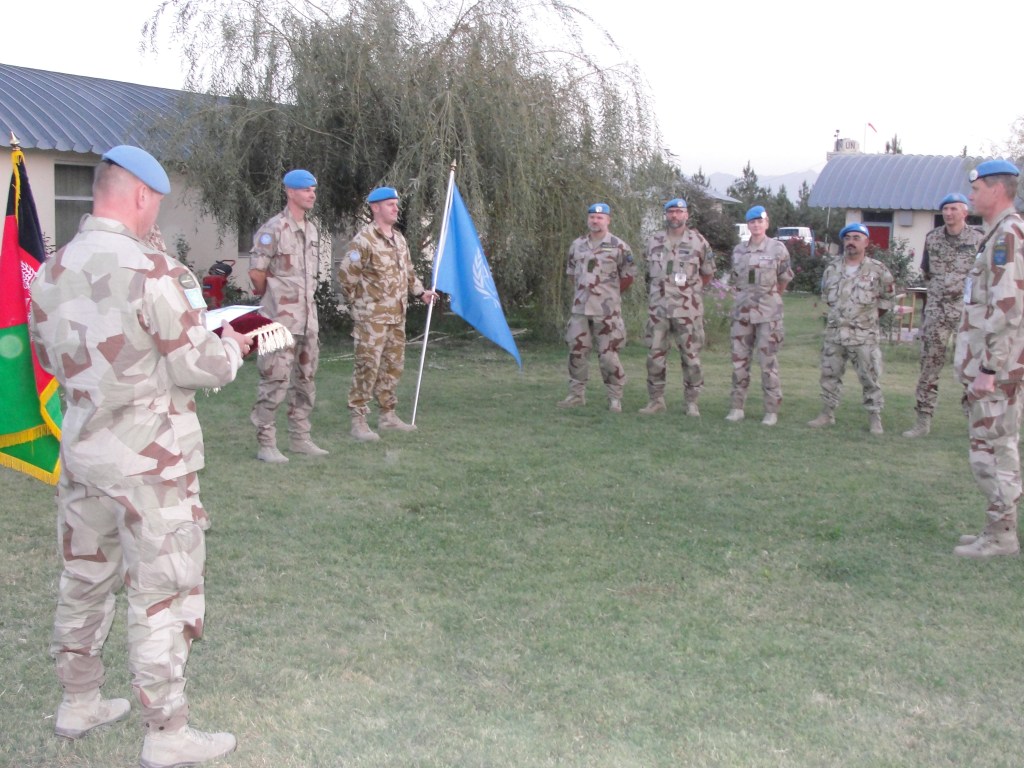
Patch of Military Advisory Unit – UNAMA Afghanistan
Late last winter, the Taliban have made an agreement with the USA to halt the violence in Afghanistan and start exchanging prisoners of war with the Afghan Government. Allegedly, the Taliban got from the US delegation the promise that the Afghan Government would release about 5.000 Taliban prisoners, but apparently that did not happened … at least not on the scale and time line the Taliban expected.
Meanwhile, time went by and spring has arrived, and the situation was not solved. We do not need a “Chrystal Ball”, to assess what’s next:
Question: What does normally occurs in Afghanistan in spring time?
Answer – Two things happen (very much correlated): It is Sowing time for OpiumPoppies; and the Taliban fighting campaign starts.
Not being able to comply with the promised development with the Taliban, together with the seasonal traditions in Afghanistan can only have an outcome – According to Al Jazeera news channel – the Taliban in the past few weeks have made over 70 attacks per day to the Afghan Government facilities.
The numbers of civilian casualties (CIVCAS) in this conflict are the dramatic aspect of it. 2020 starts with 1.293 CIVCAS, of which 533 died (including 152 children) and 760 were wounded.
One of my last patrols in UNPROFOR – Bosnia – 1995, while the belligerent factions were negotiating an enduring Peace Agreement in Dayton, was to go look for a U.S. journalist, which was allegedly missing behind the Serb’s lines. That news reporter wanted to write the Bosnia war story in a different angle – the Serbian perspective; he had requested the proper clearances to the Serb authorities but, for his great disappointment, never got any reply. However, silence was not an option for this courageous (but not so clever) journalists and he decided to go on his own. Shortly after his departure, he was reported missing.
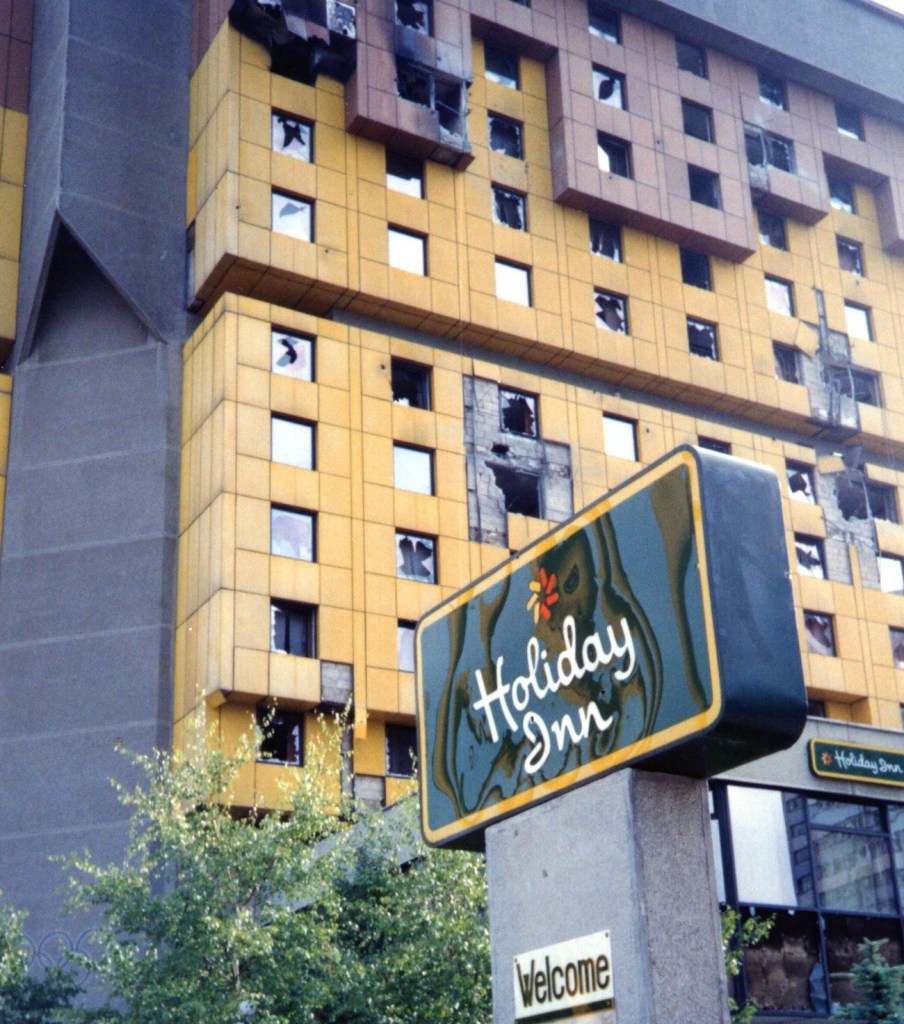
In those times, practically all international journalists residing in Sarajevo were in close contact with each other, sharing information and contacts. They called themselves “The Tribe” and most of them lived the hotel Holiday Inn; or what was left of it. It was a modern building, noticeable by its yellow color, isolated from other builds right in the middle of the Snipers Alley. In 1995 the dwelling was in a very poor condition, due to sniper fire and artillery shelling. The side of the building face the Serb territory had practically no glass windows, in some accommodations there was UNHRC plastic bands substituting the widows. Here and there one could see multiple impacts of different caliber ordinance, with vestiges of fire inside the apartments.
The hotel guests had their rooms on the opposite side, facing the muslin part of Sarajevo. The seller of the hotel was the working space and the recreation area of the “Tribe.
The “Tribe´s” compound –Holiday Inn – Sarajevo. Photo offered by Jin Sullivan
Because they were living close together, all the journalists had a rough idea of what each other was working on. That was how our missing “hero” story came to live. His “Tribal fellows” knowing his ambitious intentions, reported his two days absence without news to the US Embassy in Sarajevo. The Embassy contacted the UN for support and the Regional Senior Military Observer did not take long to make a decision, issuing the following instructions:
– “Our Russian Major and the Portuguese Captain should leave immediately and search for this chucklehead. No not assign any other tasks to these two, because they may be away for some time.”
My Russian comrade – Alexey (fictitious name) – made the necessary contacts and off we went to Lukavica Barracks, in order to meet the Serbian officer responsible for operations around Sarajevo, but no one knew anything about an American journalist. However, we had to look for him and, together with the Serbian officer, we planned a patrol and got the necessary permissions to go to Pale, Srebrenica and Gorazde. The places we thought might have some interesting stories to tell in a different angle. We were not planning to sleep in Serbian territory. The plan was to return to Sarajevo every evening; hence this would be a three days mission.
We left Lukavica towards Pale. Our vehicle radio coverage was very poor so we kept transmitting blind position reports. Last thing we wanted was also to be considered missing. Our first stop was UNPROFOR UNMO Team 7-L – Pale. There were no UNMOs in that Team for some time, only a small group of interpreters that we were paying to keep the liaison with the Serbian leadership. Our interpreters made several contacts and confirm that there was a travel permission request. The Serbs though that was a CIA attempt to peek inside their lines and decided to refuse the request. However, in order not to have problems with the Americans, their option was not to answer the request. Regarding further initiatives of that journalist they knew nothing.
We asked around among the Serbian population and no one had saw the journalist. A Serbian officer said:
– “Yeap. I saw an American passing-by today,” – and spiting on the ground concluded – “but he was going very fast … inside an F-16!”
We travelled 70 km towards Southwest e we reach Gorazde. There were no more mines on the access road to the City. That was an evolution regarding the last week, resulting from the recent Cease Fire Agreement. We´ve asked for the journalism to both Serbs and Bosnians, but again, no one had seen any American around that place. We´ve returned to Sarajevo empty handed.
The following day we travelled early in the morning to Srebrenica, which was about 20 km from the Yugoslav border. It was a long trip and the destination was still a complicated area. That was a patrol to be handled with extreme caution. On the previous day my Russian comrade had made all the translations, but now we needed the help of one of our Team´s interpreters – Milan (fictitious name).
On the higher mountains of Bosnia there was already some snow, demanding precautionary measures regarding the driving of the armored Toyota. Milan asked over and over again to everybody if they had seen an American journalist. But the answer was always negative.
A Serbian patrol was also looking for him, result of our queries on the previous day, but that was not good news because the Serbs had a different story. They were looking for a CIA agent disguised as a journalist, and they wanted to teach him a lesson.
Upon arriving to Srebrenica we drove to the infamous factory facilities that hosted the recent months´ developments. The walls had still the bullet impacts allegedly from a Serbian firing squad during the cleansing actions. We asked and, yet again, no one had seen, or heard about an American journalist. We didn’t stay long because the situation was very tense. The Serbs were not enjoying our presence and the remaining Muslins had strong negative feelings for the UN, because the UN had failed them during that summer events.
We were having a sandwich lunch inside the car, close by the former Netherlands UNPROFOR compound, when we received a radio transmission instructing us to abort the mission and return to Sarajevo.
The journalist had been found alive and well in Budapest. Apparently he had contracted a Serbian interpreter, with a transportation included in the fee. He has tried several interviews but, because no one was collaborating with him, he decided to do a photo reportage of the Balkans and crossed the entire Bosnia territory, Croatia and Hungary.
I still remember my words when we reported back in HQ UNPROFOR – Sarajevo:
– “Goddammit! I´ve had enough. We were desperately looking for this guy while he was having a nice Gin tonic in a Danube boat?! In Budapest?! This is too much; please do not task me for any other stuff related with journalists.”
Our Deputy Commander, a UN veteran from Belgium, replied:
–“Caution Paulo; God is listening and He has a sense of humor; you may have to deal with journalists in the future.”
Three months later, after having redeployed to Portugal – Lisbon – the Air Force issued my new travel orders. I was to become the new Public Affairs and Media Relations Officer at the NATO HQ – CINCIBERLANT.
No one understood why I was laughing when I got those orders.
1 – Dress, think, talk, act and behave in a manner befitting the dignity of a disciplined, caring, considerate, mature, respected and trusted soldier, displaying the highest integrity and impartiality. Have pride in your position as a peace-keeper and do not abuse or misuse your authority.
2 – Respect the law of the land of the host country, their local culture, traditions, customs and practices.
3 – Treat the inhabitants of the host country with respect, courtesy and consideration. You are there as a guest to help them and in so doing will be welcomed with admiration. Neither solicit or accept any material reward, honor or gift.
4 – Do not indulge in immoral acts of sexual, physical or psychological abuse or exploitation of the local population or United Nations staff, especially women and children.
5 – Respect and regard the human rights of all. Support and aid the infirm, sick and weak. Do not act in revenge or with malice, in particular when dealing with prisoners, detainees or people in your custody.
6 – Properly care for and account for all United Nations money, vehicles, equipment and property assigned to you and do not trade or barter with them to seek personal benefits.
7 – Show military courtesy and pay appropriate compliments to all members of the mission, including other United Nations contingents regardless of their creed, gender, rank or origin.
8 – Show respect for and promote the environment, including the flora and fauna, of the host country.
9 – Do not engage in excessive consumption of alcohol or any consumption or trafficking of drugs.
10 – Exercise the utmost discretion in handling confidential information and matters of official business which can put lives into danger or soil the image of the United Nations.
Em 1995, quando o Aeroporto de Sarajevo estava fechado tínhamos de entrar e sair da Cidade sitiada através do Monte Igman.
Descer o Monte Igman não era só perigoso devido ao fogo dos snipers e das granadas RPG, era igualmente um perigo conduzir naquela estreita estrada de terra batida, com elevado grau de inclinação, e uma ravina que não desculpava qualquer ligeira saída da picada.
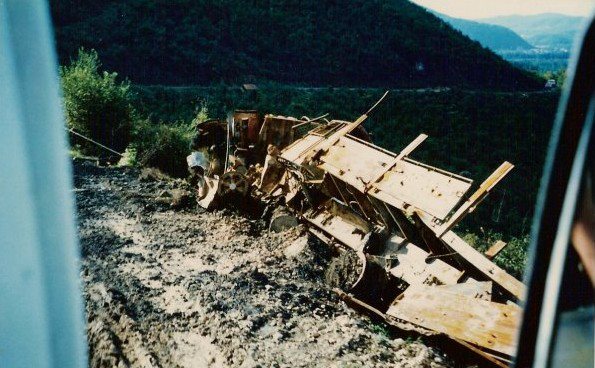
Descida do Monte Igman – Camião UN atingido – foto de Franky Hauwelaert
O dia 19 de agosto de 1995 foi um dos dias marcantes naquelas descidas do perigoso percurso. Nesse dia ocorreu algo trágico e marcante, para a história da Guerra da Bósnia. Estava previsto para esse dia a chegada uma delegação de alto nível Norte-Americana a Sarajevo. O objetivo dessa delegação era de negociar um possível cenário que contribuía para o fim do conflito. Algo que, segundo os rumores que corriam, seria uma alternativa aceite pelos sérvios que implicava o fim do cerco a Sarajevo.
Uma vez que o aeroporto continuava fechado, a delegação Americana fez o caminho alternativo que implicava descer o Monte Igman. A coluna de carros blindados era constituída por dois veículos, transportando no seu interior os diplomatas e respetiva escolta. No carro da frente viajavam o Alto Representante dos Estados Unidos para a Europa e Ásia – Richard Holbrooke – e uma alta patente do Pentágono – General Wesley Clark. No segundo veículo viajavam o Embaixador US para a Bósnia – Robert C. Frasure; o diplomata Joseph Kruzel; e o Coronel Sam Nelson Drew da Força Aérea Norte-Americana.
Toda a nossa atenção estava concentrada naquela visita e tudo parecia estar a correr normalmente. Contudo, aproximadamente a meio da descida do Monte Igman, o veículo de trás, um blindado de transporte de tropas (APC) francês, saiu repentinamente da estrada e caiu montanha abaixo. Durante a queda deram-se algumas explosões porque, aparentemente, aquela zona da ravina estava minada. Quando os militares da ONU se aproximaram do local, no sopé do monte, encontraram o veículo a arder. Os reportes que recebemos informavam a existência de feridos graves e quatro mortos. Tinham morrido no acidente os três VIPs americanos e o condutor do Exército Francês. O veículo que seguia à frente, com o Dr. Holbrooke e o General Clark, prosseguiu para Sarajevo. O constrangimento era geral e, obviamente, não houve qualquer negociação nem contatos diplomáticos.
Mais tarde, veio a verificar-se que a razão da queda do APC tinha sido uma mina anticarro colocada na estrada. Durante a queda, as explosões que ocorreram deveram-se a outras minas que estavam na encosta.
Essa descoberta deixou o sobreolho franzido a muitos militares da ONU, conhecedores da área em questão. Aquela picada tinha sido utilizada naquele mesmo dia e não tinha havido nenhum incidente com minas. No entanto, tinha chovido bastante no dia anterior, abrindo a hipótese da mina ter escorregado encosta abaixo até à estrada com uma enxurrada, ou um deslizamento de terras. Não deixava de ser estranho que vários carros tivessem passado por aquele mesmo local nesse dia sem ter ativado a mina.
Nesse mesmo dia, umas horas mais tarde, um carro de combate – Scorpion – Britânico, ao descer o Monte Igman, embateu num outro APC francês que ia à sua frente, um Renault VAB semelhante ao que transportava os VIP nessa manhã, fazendo-o sair da estrada e cair na ravina. Este segundo acidente, embora não tivesse ativado nenhuma mina, também causou vários feridos graves e um morto, todos franceses.
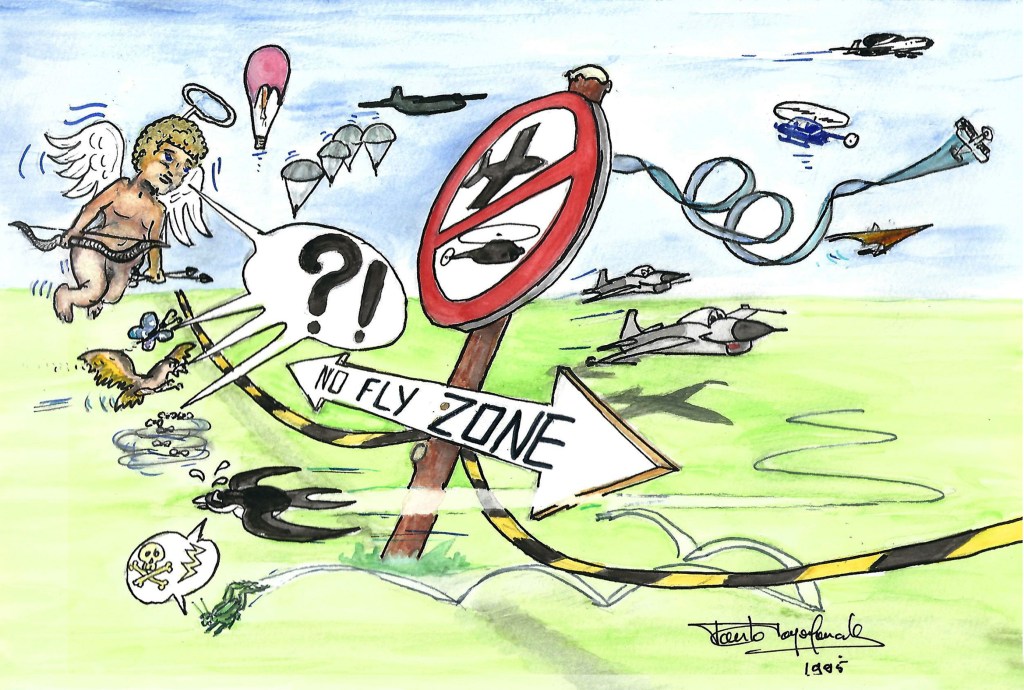
During the conflict in Bosnia, the UN had imposed a No Fly Zone (NFZ) over the country. Only with a previous authorization by the UN could someone fly over Bosnia. In order to assure that NFZ the UN gave a mandate to NATO for the implementation of the necessary measures and, simultaneously, deployed UN Military Observers (UNMO) to the Croatian and Yugoslavian radar sites of the respective civilian air traffic Area Control Centers (ACC).
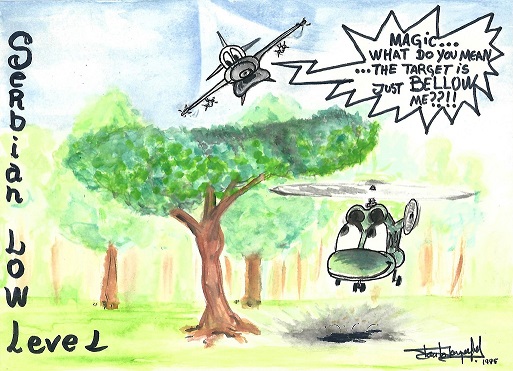
Looking at the ACC radar scope, we could see several targets flying over Bosnia. They had a considerable speed, displayed similar radar identification codes and were performing wide circular patterns. Those were the NATO fighters – the Guardians of the No Fly Zone. Down South, over the Adriatic Sea, there was a NATO radar observation aircraft; a Boeing E-3 Sentry – AWACS – pointing its radar downward, trying to see low level violations of the NFZ. Occasionally, up north, inside Hungarian airspace, there was another AWACS, making sure there were no radar blind areas over Bosnia. The AWACS radio call sign was “Magic”. Anything flying in Bosnia without UNPROFOR permission, would be detected by a “Magic” and intercepted by the “Guardians”, in which case the intruder would be advised (on the emergency frequencies) to “exit immediately the No-Fly Zone, or be prepared to be submitted to drastic measures”.
Sometimes there were so many NATO air assets flying inside the NFZ, that it seemed there was no space for other flyers to go inside.
Having UN radar operators looking upwards and NATO radar operators looking downwards, theoretically, would mean the No-Fly Zone was completely covered; no “fly” would “fly” undetected over Bosnia … or so we thought! The Serbian pilots were nothing less than experienced aviators.
They knew all the tricks in the play book and, although in much less quantity, there were still flying around inside the NFZ. Sometimes we saw them; other times we didn’t see them, but we knew they were still flying over Bosnia.
The propeller is just a big fan in the front of the plane to keep the pilot cool. Want proof? Make it stop; then watch the pilot break out into a sweat.
That’s what the aviation joke says; but it couldn’t be more accurate regarding a pilot’s reaction to the loss of his propeller thrust. I remember one day, in Luena aerodrome – Angola – during the UN mission to support the country’s 1992 elections, when the pilot of a Beechcraft C-90 GT King Air aircraft landed in such conditions.
During the final approach, the twin engine King Air seemed to have difficulties in landing. One of its engines was stopped and the other one was making a random noise of engine power. That pilot was definitely in serious problems!
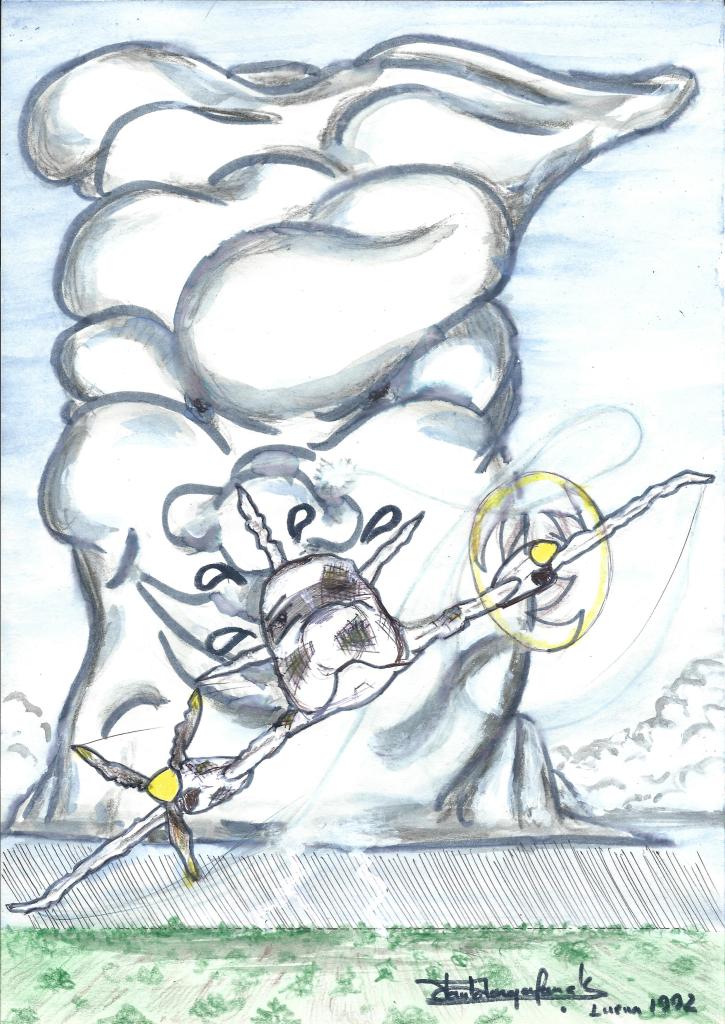
When the captain finally managed to park the aircraft at the UN spot, he got out of the cockpit sweating like a fount, and pointed out to the southern horizon. Far in the distance, we could see an insurmountable wall of clouds, formed by huge cumulonimbus towers. Those things in Africa can be enormous, rising up to 45.000 feet and above. Inside of a cumulonimbus tower there’s electrical storms, heavy rain, very strong winds and ice; small and big balls of ice, flying up and down the cloud. Not a good place to fly into!
Looking at the aircraft, it seemed that it was attacked by a pride of lions; such was the quantity of deep scratches and dents in the aircraft’s plating. In several parts of the fuselage the painting was gone; its communication and navigation aids antennas were broken; the rubber cover of the anti-freezing on the leading edge of the wings was hanging in stripes; some windows were cracked; the ailerons and stabilizer were dented; all external lights were broken and both propellers were prorated, as if a horde of rats had been feeding on it. However, the thing that impressed me the most was a tremendous collision that must had occurred on the tapering nose of the aircraft. It would seem that someone had given a valiant punch in the nose of the Beechcraft, turning what was concave into convex.
The sweaty pilot-in-command simply said:
– “Southeast of this location there’s a long and tall Cumulonimbus. We had no ability to go over it and the turbulence was too strong to fly under it; hence i decided to cross it perpendicularly … shortly after we entered the clouds, it looked like we had hit a wall of ice … I started sweating when we lost engine number one and number two had a drastic loss of power”.
Regardless the technology, Mother Nature was still in command, and we could all see in the distance that big “Cumulonimbus Africanis”!

 OPen samento