“It is easier to break an atom than a prejudice!”

Afghanistan seems to be gradually changing. Even the insurgency leadership appears to have a different posture; for sure much different from what we’ve witnessed some years ago. The Taliban allegedly have agreed to step-down the level of violence and it looks like they also wish to find a solution for that multi-decade conflict.

In such conflict areas, any solution takes about 30 years to cement and bring solid outcomes. That is normally the time for the babies born after the conflict epoch to become grownup and start making (or influencing) decisions with a non-Warfare perspective. He young people have got to be able to express their opinions, and participate in the destination of their country, through a political combat and not with Kalashnikovs.

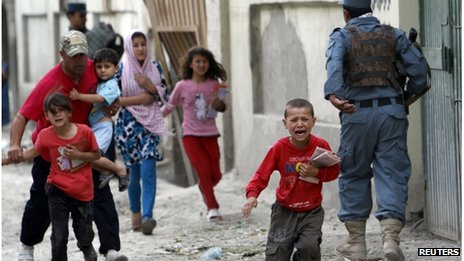
For that to occur the children must be educated and have access to information; and that was just the International Community has been doing for years all over Afghanistan; Massively!

Under each burka there’s a girl aspiring to go to school, or a woman wishing to be heard.

However, can we realistically trust these new developments? Albert Einstein’s once said:

“It is easier to break an atom than a prejudice!”

The fact that we’re seeing signs of progress doesn’t mean the International community umps out of the process. Abandoning the Afghans to their own luck is basically giving away all the effort we done so far. All the blood and treasure many nations have spilled and spent with Afghanistan.

Afghanistan still has a tribal culture; where the ancients rule by right and implement justice according to traditional (medieval) legislation. Out of the urban areas; the youngsters will not access to leadership, neither to decision making, for many years to come; not until they become ancients themselves.

So how can we have democracy and traditional structures coexisting? The answer seems to be:

– “Neither of the above; it has got to be something in the middle – the Afghan way.”

That’s the challenge; but it will not happen if the International Community gives-up the democratization process.

Base Aérea de Beja recebe idosos (COVID – 19)

De acordo com o jornal Correio da Manhã de 18ABR2020, o Secretário de Estado da Defesa – Jorge Seguro Sanches – terá afirmado que a Base Aérea de Beja tem a capacidade de acomodar nas suas instalações um grupo idosos no âmbito da resposta à pandemia COVID-19.

De acordo com aquele governante, a Base instalou 76 camas para receber esses cidadãos senior.

Overconfidence can kill you.

In order to do a proper analysis of a certain situation, one has got to scan it from the outside. We’ve got to put some distance between the study object and the observer and look at all the external facts that influence that particular situation. If you are too close and a part of it, you tend to miss the big picture.

A peacekeeper cannot avoid being a part of the studied object situation, because he/she was normally embedded on it. The only distance the peacekeeper can implement; is time! We have to let time go-by in order to serenade sensations/feelings, and make a critical assessment of what went right and what went wrong. Frequently we reach the conclusion that we lived situations that had everything to go wrong; very wrong! We’ve only lived to tell the story because the “lucky” factor had (too much) influence in the outcome of that situation.

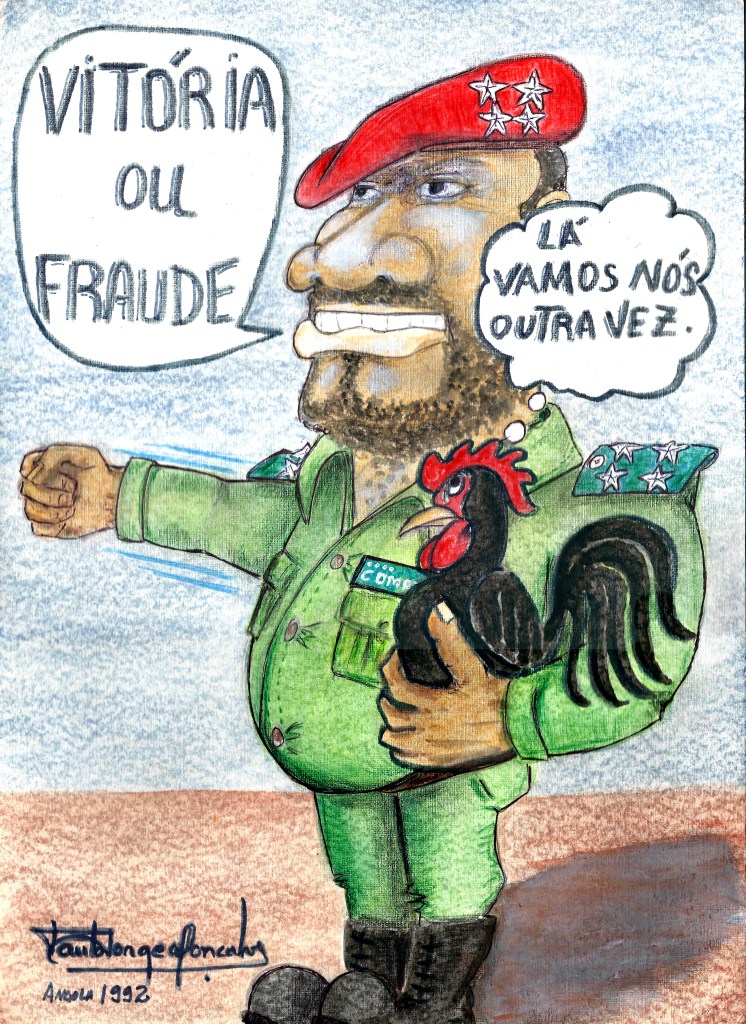
I recall a certain day, during a UN mission in Luena – Angola – 1992, where I did everything wrong and only the “lucky” factor saved me. Something that gave experience to survive other missions in Bosnia, Afghanistan, and other parts of the world.

We were in the UN ramp of Luena’s airfield preparing the cargo load and organizing some passengers to board a UN aircraft that was flying inbound. At that a given moment, a group of demobilized soldiers entered the aircraft maneuvering area, looking for an aircraft that could eventually fly out of Luena, to Angola’s Capital – Luanda. When they verified that there was absolutely no chance to achieve their intentions, they became aggressive towards everything and everybody. Some of them had weapons and they opened fire randomly over several people/locations.

At the aerodrome’s UN corner, there were several journalists waiting for the arriving aircraft; a soon as they heard the first bursts they immediately jumped to the ground and took cover. People were crying and screaming in Flemish, Portuguese, English and some Angolan dialects.

I just kept on working. There was a lot to do before that aircraft’s arrival and, in all fairness, it was very common to hear shooting in Luena. The sound of those Kalashnikov was like the sense around of a movie … and all those people were just extra actor in that film … my film.

Suddenly, I felt something hitting the ground very strongly, just in front of my right foot; only after I heard the sound of a single shoot. That shot had been fired in my direction and, because the bullet traveled faster than sound, I only heard the sound after the projectile. Immediately after, I felt a wind blow with a hiss on my left ear. The sound of yet another shot came right after that. My brain evaluated all those inputs and, in a micro second, I realized that those were not lost bullets; someone was actually firing at me. I think I blushed when I recognized the stupidity on my behavior. Boldness was not synonymous of dedication and overconfidence leads to irresponsible attitudes that can get you killed.

I also jumped to the ground and hid my silhouette behind some carton boxes waiting to be loaded on the cargo plane. At that time a all lot of shooting started at the airfield. The Angolan special police (the Ninjas) had just arrived, and they were not solving the problem with sticks. When the firing was over, there were several bodies lying on the apron’s tarmac and the situation was under control. Several demobilized soldiers were arrested which, in the hands of the anti-riot police, was not a very auspicious situation.

The sound of a landing C-130 and its reverse engine procedure filled the air. Our aircraft had just landed. When the journalists boarded the aircraft they had red eyes for having been crying; I just had that stupid look on my face of someone that had just escaped from being shot in the head … by mere luck. I committed the traditional mistake of lowering the guard due to routine operations.

I registered yet another Lesson Learned: – “Overconfidence can get you killed.”

Experience is something one gathers by surviving to one’s mistakes. That experience enables the veteran peacekeeper to anticipate situations, because he/she has already outlived them. It is the perfect “on-time”; and “at the site”; substitute for the analytical distancing. The veteran experiences a sensation of “déjà vu”; a jump in time to other similar situations and its solutions, assisting the instantaneous decision making to adapt and overtake.

There’s a military aviation saying that applies to such Lessons Learned culture:

  –“In the civilian society, the more you live – the more you learn; in conflict resolution missions, the more you learn – the more you live”.

Ração de combate mortífera (Angola 1992)

Na missão da ONU em Angola (1992), uma das preocupações com que me debatia era a segurança física de pessoal e equipamento da ONU no aeródromo de Luena. Devido a que ainda havia algumas escaramuças armadas entre elementos da UNITA e das FAPLA (MPLA), necessitávamos de segurança armada. Desta forma, foi colocado à disposição da ONU um pelotão reduzido das FAPLA. A fim de coordenar a atuação dos militares angolanos, e manter a autoridade, contávamos também com a presença de um capitão das FAPLA, que foi incorporado no ambiente de trabalho do pessoal ONU. Como se pretendia pessoal motivado e em regime permanente no aeródromo, chegámos a um acordo: – A ONU daria cinco rações de combate por dia, e 500 dólar por mês, ao capitão angolano, e ele distribuiria esse apoio material pelos seus homens.

Implementou-se esse regime de imediato e, no quotidiano, reparei que passou a haver muito mais soldadesca às nossas ordens do que o combinado. Provavelmente porque não tinham outras tarefas e nós sempre lhes dávamos qualquer coisa extra que sobrava das nossas próprias rações de combate.

As rações de combate foram a origem de um incidente grave entre os guardas, com consequências fatais. Nós tínhamos rações do modelo antigo português, e rações americanas já do modelo liofilizado. Obviamente que as rações preferidas pelos angolanos eram as portuguesas, porque que continham latas de conserva com chispe, feijoada e sardinhas, assim como bisnagas de leite condensado, rebuçados, etc. Ninguém queria ficar com as rações americanas, que eram do tipo – juntar água; esperar; e comer.

Ração de combate portuguesa
Ração de combate americana

Com a cadência a que estávamos a dar rações aos nossos seguranças, rapidamente se esgotaram as rações portuguesas, e tive de passar a distribuir rações americanas. No dia em que isso ocorreu, gerou-se uma grande discussão sobre quem ficaria com a última ração portuguesa. A discussão acabou com alguém a roubar, á vista de todos, a caixa da ração disputada. O ladrão correu para a zona da pista sendo perseguido de perto pelo sargento do pelotão, que também queria aquela ração. Ambos foram seguidos na corrida por mais alguns camaradas. Ao fim de uns minutos ouviram-se dois tiros. Fiquei apreensivo com o que teria passado, mas o capitão angolano assegurou-me que estaria tudo bem. Passado pouco tempo, alguns dos homens que tinham perseguido o prevaricador regressaram à placa e, com um sorriso sinistro na cara, disseram:

“Comandante, aquele já não come mais ração portuguesa!”

Nem aquele, nem mais nenhum, porque a partir desse momento só havia rações americanas. Foi uma morte absolutamente desnecessária. A vida humana tem muito pouco valor em zonas de guerra; seja ela em Angola, na Bósnia ou no Afeganistão. Mata-se por muito pouco e sobrevive-se com muita dificuldade … e sorte.

UN mission diffuses tension between Lebanese, Israeli soldiers

The United Nations Interim Force in Lebanon (UNIFIL) on Tuesday diffused a standoff between Lebanese army soldiers and Israeli troops who reportedly crossed the border demarcation line between the two countries. “Tension increased. Our troops were in the middle with the aim of preventing misunderstandings and decreasing tension,” UNIFIL spokesperson Andrea Tenenti said. “Shortly after the situation went back to normal.” The incident took place between the southern Lebanese village of Adaisseh and the northern Israeli town of Metulla. Lebanese media reported that Israeli army personnel carrying construction equipment crossed into Lebanon while working on a concrete wall on the Israeli side of the border. UNIFIL and its 10,500 troops deployed on the ground oversee a cease-fire with Israel in southern Lebanon. 

Air Power in conflict resolution(Bosnia 95)

During the summer 1995, there was a report about Gorazde, from an independent entity, stating that, regardless the efforts of UNPROFOR, the Red Cross (ICRC) or the UN agency for the refugees – UNHCR – if the war wouldn’t be stopped shortly, the approaching winter would have a calamitous effect on the pockets’ population. Gorazde’s population was sick, homeless, starving and desperately needed warm clothing and shoes to face the frozen weather.

The approach of the winter had yet another consequence: – NATO’s air coverage would be significantly diminished due to all sort of weather restrictions. Even the satellite surveillance over Bosnia’s territory would be jeopardized. Low clouds, high winds, heavy rain and snow fall; it would all reduce the amount of aircraft in the air, and the type of mission performed.

 When the Allied fighters patrolled Bosnia Herzegovina, the pilots always made sure to overfly Gorazde as a “Show of Force”. It was a simple military operation, intended to intimidate the Serbs, showcasing NATO’s mighty air power. It involved high speed low level “flyby”; close to, or even breaking, the sound barrier at low altitudes; simulations of airstrikes, while collecting VRS positions’ imagery for Intelligence purposes.

NATO air operations’ planners were very concerned, because they had instructions to monitor the situation from the air, and deter any setback on the ongoing peace negotiations; but that was easier said than done! The air planners considered it to be hardly compatible with Bosnia’s winter conditions.  

SHOW OF FORCE

  In August 1995, as a result of the mortar shelling over Sarajevo’s market place, NATO aircraft moved from “show of force” to “force implementation”. Not only on Sarajevo, but also around Gorazde the jets bombed the Serbian positions to its “almost total destruction”. The conflict was finished, the warring factions signed the Dayton Agreements, and UNHCR started to bring into Gorazde convoys of humanitarian support.

Air Power did make a difference in the former Yugoslavia conflicts.  

Taliban – from armed insurgency to political party.

Al Jazeera TV channel has recently announced that the Taliban will release 20 Afghan government prisoners as a “goodwill step.”  It will be the first time the Taliban has released prisoners following the February peace agreement between the Taliban and U.S.  The release comes days following the government’s release of 300 Taliban prisoners. 

Afghan prison facility on the outskirts of Kabul

It seems that the Taliban are really trying to become a political force in Afghanistan, rather than (just) an armed insurgency faction. The question is: “What’s next?” “What will it be their political program?” “Will we be seeing a democratization of the Taliban?” “Will there be cantons in Afghanistan where the Taliban will officially rule?” or at least “Places where the Afghan Government will decline having sovereignty?”

Questions still to be answered

Returning Home, still breading “War smokes”

When we return from a long mission peacekeeping in a conflict area, the re-adaptation to the family environment and to a peaceful civilian atmosphere is not always easy to handle. Little things – such as the proper/civilized way to address other people – have got to be readjusted. The tone in which we talk, the technical phraseology (military jargon), the command orders, even returning to speak in our own mother language; all contribute for potential misinterpretation of the newly arrived peacekeeper’s intentions.

There are reports of military personnel with serious issues in their social relations, after returning from the mission. The soldiers become nervous and, without realizing their own attitudes, they behave in a mistrusting and aggressive way, even to their loved ones.

However, if one has his/hers return well plan and organized, things may be easier. The family relations play a very important role in receiving the peacekeeper. At first, it might be weird, but everybody rapidly re-adapts to his/her reintegration. In my experience, it usually takes about two weeks to reconfigure and recharge the batteries for what’s next after returning home. 

Vehicle traffic is the very first test/ indicator of re-adaptation to a civilized social life. Crossing streets without looking is the normal attitude in a conflict area, but that is a dangerous attitude in a major western urban area. The way we react to the unjustified stupidity of other drivers is also something that should be self-monitored. Some social peculiarities of urban areas can be difficult to digest, to the newly returned peacekeeper.

I remember one scene that I made a full of myself in the middle of an European Capital, because I was still breading the smokes of war in Bosnia. I had just arrived from Sarajevo for some meetings in Zagreb, and I was walking down one of the City’s main streets with a national companion. It was 12H00 and we were looking for a restaurant to have proper/civilized lunch. At that time, the traditional time signal of Zagreb – old customary cannon gunshot – took place. Instinctively, I crouched down in the pavement embarrassing my national comrade in the middle of the sidewalk. Local people were passing by and looked at the two weird foreigners with a disapproval semblance.

– “You’re not going to start screaming INCOMMING … are you?” – Asked my national comrade.

That minor event worked as a wake-up call that, when I would return definitively home, I would have to readjust and pay more attention to my behavior. In fact, when I did return home there were some construction works in my neighborhood. It took me some time to accept peacefully the sounds of pneumatic hammers, vehicle exhausts’ shots and breaking glasses.  

I was lucky for not suffering from Post-traumatic Stress Disorder (PTSD), but many (too many) of my peacekeeper comrades did/do. Domestic violence, divorces, sleeping problems, anxiety disorder, etc. are all collateral damages from peacekeeping missions, in areas of great human suffering.

A passarada violou a Zona de Exclusão Aérea – Bósnia 1995.

Na noite de 24 para 25 de Fevereiro 1995, eu estava de turno à posição radar cedida à ONU no Centro de Controlo Aéreo de Área (ACC) de Belgrado, para a vigilância da Zona de Exclusão Aérea (No Fly Zone) sobre a Bósnia. A uns meros 100 quilómetros da minha posição, decorria o mais sangrento conflito na Europa desde a Segunda Guerra Mundial.

Cerca das 02H00 da manhã surgiram quatro alvos no monitor do radar dentro da Zona de Exclusão Aérea. Havia uma separação em distância e tempo, entre cada um, de aproximadamente 10 quilómetros, ou 20 minutos, e todos se deslocavam para Este em direcção à (então) Jugoslávia, a cerca de 90 quilómetros por hora. Após consulta da informação meteorológica verifiquei que o céu estava bastante nublado, com nuvens baixas, ventos moderados a forte e queda de neve. Em suma, não havia condições atmosféricas sobre a Bósnia para voos de contacto visual com o terreno.

Caso aqueles blips no ecrã fossem helicópteros não poderiam voar baixo, contornando vales e montanhas, para fugir à cobertura dos radares de terra. A única possibilidade era subir acima da altitude da montanha mais alta e voar directo para o destino, com uma boa separação entre aeronaves. Eventualmente, como medida extra de precaução, deveriam voar o mais lento que fosse possível, a fim de que os filtros dos radares que eliminavam alvos fixos ou demasiado lentos (Moving Target Indicator) os escondessem dos monitores dos aviões radar (AWACS) da NATO. Uma vez que os AWACS “olhavam” de cima para baixo, os seus radares podiam ver entre vales e montanhas, mas apanhavam todo o tipo de veículos terrestres, pelo que os filtros de movimento eliminavam alvos lentos para não confundir os operadores. Voar a menos de 90 quilómetros por hora (potencial velocidade de um carro/comboio) poderia dar invisibilidade às aeronaves prevaricadoras.  Porém, isso não resultava com os radares terrestres que olhavam para cima. A única forma de fugir ao cruzamento dos dois sistemas era voar a velocidades baixas entre montes e vales. Naquela noite, a segunda premissa não era possível e lá estavam os quatro blips a brilhar no meu radar, sobre a Bósnia Herzegovina.

O contacto radar inicial foi feito praticamente na fronteira Oeste entre a Croácia e a Bósnia; ou seja, saindo da Krajina Sérvia do Sul. Os alvos atravessaram toda a extensão da Bósnia Herzegovina em direcção a Este, desaparecendo horas depois próximo da fronteira com a Jugoslávia, onde a morfologia do terreno era mais plana. Os alvos eram um retorno consistente com velocidade constante, não havendo espaço para ser um erro de sistema ou retorno de terreno.

DE modo a manter uma postura de transparência nos relatórios da ONU, convidei o supervisor dos controladores Jugoslavo para verificar aquela potencial violação da Zona de Exclusão Aérea. Ele observou cuidadosamente os blips, verificou os meus apontamentos das posições radar que haviam feito, e concluiu:

– “Isto são aves migratórias.”

– “Aves migratórias?! – Exclamei incrédulo. – “A voar a 90 Km/h? Durante o Inverno? Em direção a Este? Às duas da madrugada? Com queda de neve e tudo? … Acho que não!

Porém, vou registar nas observações do relatório a sua opinião. Nós reportamos o que vemos … alguém acima do meu escalão há-de decidir se é ou não uma violação”.

Tradução – Vocês estão a violar (a zona de exclusão aérea) preparem-se para serem interceptados … rapazes … apanhem-nos!

Embora eu soubesse que efectivamente havia aves migratórias que voam à noite nas suas migrações, e que alguns até voavam depressa, esses voos eram feitos no Outono/Primavera e nas direções Norte/Sul para evitar as condições inclementes do Inverno; nunca para Este e nunca no meio de um nevão.

Dois dias tarde, um relatório vindo das forças UNPROFOR no terreno informava que naquele dia, àquela hora, tinham ouvido o barulho de helicópteros a voar em direcção à Jugoslávia.

Guerra aérea em Angola (anos 70 e 80)

Em 1992, numa das primeiras missões de Apoio à Paz que as Forças Armadas Portuguesas efectuaram, um grupo de 10 oficiais da Força Aérea Portuguesa partiu em missão da ONU para Angola, a fim de gerir os 54 helicópteros e 12 aviões que as Nações Unidas haviam contratado para o apoio às primeiras eleições livres Angolanas. Após receberem as necessárias instruções, em Luanda, esses 10 oficiais foram distribuídos por outros 10 aeródromos para cobrirem todo o território Angolano.

Distribuição dos oficiais da Força Aérea para gestão das frotas aéreas da ONU.

Com essa ampla distribuição territorial, os oficiais portugueses aperceberam-se que quase todas as infraestruturas aeronáuticas do País estavam fortemente militarizadas. A razão dessa realidade não só era devida à guerra civil com a UNITA, mas também devido aos ataques aéreos da Força Aérea da África do Sul (SAAF). Efetivamente, as incursões militares Sul-Africanas em Angola, durante os anos 70 e 80, eram uma constante. O motivo de tal atitude era a existência, em território angolano, de acantonamentos de guerrilheiros da SWAPO (South West Africa People Organization). Estes guerrilheiros usavam Angola, alegadamente com o consentimento do Governo de Luanda, para atacar o território Sul Africano com táticas terroristas. Enquanto Luanda apoiava a SWAPO, Pretória apoiava a UNITA. Desta forma, certos aspetos da guerra civil Angolana tiveram nuances de guerra convencional entre dois Países vizinhos. As incursões do Exército de Pretória em busca de guerrilheiros SWAPO tinham, regra geral, cobertura aérea da SAAF. Os Sul-Africanos fizeram dezenas de operações aéreas, com milhares de saídas de aeronaves de combate e apoio logístico em território angolano. A Força Aérea Angolana, que na altura gozava de um forte apoio da União Soviética e de Cuba, enfrentava as aeronaves SAAF com uma credível capacidade de defesa aérea. Aviões Mirage Sul-Africanos e MIGs Angolanos combatiam e eram abatidos, com regularidade, nos céus angolanos. Por todo o lado havia sistemas de misseis e batarias antiaéreas, esperando uma incursão dos helicópteros da África do Sul. Foi uma guerra aérea pouco conhecida, mas de dimensões consideráveis.

Crie um site como este com o WordPress.com
Comece agora