The violent cessation of Yugoslavia brought to the discussion forums concerned with “crisis resolution” some lessons that, apparently, we insist on not learning.
Economic difficulties generate social dissatisfaction, which leads to the emergence of rowdy leaders, with fiery speeches, which open space for the confrontation between the institutional power and popular masses.
This is true both in developed countries and in those considered to be in the so-called third world category. If the social conflict is supported by nationalist or ethnic-tribal differences, everything becomes far more complicated. Any student of the subject knows that it is much more painful and expensive to engage in the remediation of a regional conflict than it is in the timely commitment to resolve a localized dispute at the start.
The Yugoslav conflicts (1992-1995) should have taught us that:
– If not solve at the start, internal conflicts tend to move quickly into serious problems, with international consequences (migration, importation of the same problems within the borders of the hospitable country), difficult to handle latter in the developing process;
– The political, humanitarian and/or military response to such crisis must be fast, flexible and coordinated / cooperative, with the capacity to deploy and remain in the intervened territories for long periods of time. Organizations with strong logistic supplier branches (such as the military), become a major player in such theaters;
– The course of action in a “Coalition” mode, where several countries come together to resolve a crisis, should be encouraged involving as many countries as possible;
– The five countries with a permanent seat on the United Nations Security Council (China, , France, the United Kingdom, the United States of America and Russia) will have to commit not to halt the resolution process and to sponsor an international mandate (with proper Rules of Engagement) empowering the Coalition forces on the ground to act accordingly;
– Regional international institutions (OSCE, NATO, EU, AU, etc.) should strive to resolve the conflicts in their respective areas of influence;
– The resolution of problems at the place of origin avoids the spillover of those problems beyond the intervention borders.
“If we don’t go to their place and help them, their problems will end up at our doorstep, endangering us!”
However, it will never be too much to remember that “Humanitarian Aid” is a poor substitute of “Human Rights”. Humanitarian Aid is a fieldwork, done by people dedicated to supporting and assisting the most needed, in a selfless and neutral way. It should not be confused with the political activity required for the implementation of Human Rights, which requires (not neutrality) impartial and robust decision-making, in order to implement the internationally accepted rules of Human Rights and the necessary “call to responsibility” of those who violate it.
In this last aspect, there’s another registered (but little learned) lesson: -The absence of Humanitarian Aid causes conflicts, but when it is distributed in a less rigorous way, it tends to prolong armed conflicts; because it often ends up in the wrong hands, increasing exponentially all sort of illicit profits and interests in continuing the conflict.
A dissolução violenta da ex-Jugoslávia trouxe para os fóruns de discussão preocupados com a “resolução de crises” algumas lições que, aparentemente, teimamos em não aprender.
As dificuldades económicas geram insatisfação social, a qual potência o aparecimento de líderes conflituosos, com discursos inflamados, que abrem espaço para o confronto entre o poder instituído e as massas populares.
É assim tanto em países em desenvolvidos, como nos que são considerados em vias de desenvolvimento ou nos do chamado terceiro mundo. Quando a conflituosidade social tem suporte em diferenças nacionalistas ou étnico-tribais tudo se complica. Qualquer estudioso da matéria sabe que é muito mais penoso, caro e penalizante a resolução de um conflito regional do que o empenhamento atempado na resolução de um diferendo localizado.
Senão vejamos:
– Os conflitos internos tendem a transitar rapidamente para graves problemas com consequências internacionais (migrações, importação dos mesmos problemas para dentro das fronteiras do país hospitaleiro);
– A resposta humanitária ou militar tem de ser rápida, flexível e coordenada/cooperada, com capacidade de destacar e permanecer nos territórios intervencionados por períodos de tempo longos;
– A modalidade de atuação em “Coligação”, onde vários países se juntam para a resolução de uma crise, deverá ser encorajada envolvendo o maior número de países possível;
– Os cinco países com assento permanente no Conselho de Segurança das Nações Unidas (China, Estados Unidos da América, França, Reino Unido e Rússia) terão de se comprometer em não travar o processo de resolução e patrocinar um mandato internacional para as forças vivas no terreno poderem atuar em conformidade;
– As instituições internacionais regionais (OSCE, NATO, EU, UA, etc.) deverão empenhar-se na resolução das respetivas regiões de influência;
– A resolução dos problemas no local de origem evita a importação dos mesmos para além das fronteiras intervencionadas.
Porém, nunca será demais recordar que a “Ajuda Humanitária” é um fraco substituto dos “Direitos Humanos”. O trabalho de campo de todos aqueles que se dedicam a apoiar e assistir os mais necessitados com Ajuda Humanitária, de uma forma abnegada e neutral, não deverá ser confundido com a atividade política e às tomadas de decisões imparciais, mas robustas, em prol dos Direitos Humanos, contra aqueles que violam as regras internacionalmente reconhecidas.
Neste último aspeto, uma das lições registadas (mas pouco aprendida) é que a ausência de Ajuda Humanitária provoca conflitos, mas, quando esta existe e é distribuída de forma pouco rigorosa, tem a tendência de prolongar os conflitos armados, uma vez que essa ajuda acaba muitas vezes nas mãos erradas, potenciando lucros ilícitos e interesses em continuar com o conflito.
Today, 27DEC2020, it’s elections day in the Central African Republic (CAR). Unfortunately, yesterday, armed terrorist groups launched attacks targeting the Central African defense and security forces and United Nations peacekeepers in Dékoa (Kémo prefecture ), and in Bakouma (Mbomou prefecture). As a result, three (3) Burundi peacekeepers lost their lives on the line of duty.
Several members of the CAR Defense and Security Forces were also killed in this outrageous attack, was perpetrated by the so called” Coalition of Patriots for Change” (CPC), which, in close coordination with former President François Bozizé, is trying to prevent the holding of peaceful elections on Sunday, December 27, causing the forced displacement of populations.
We honor the 3 blue helmets that have fallen in the line of duty; they shall not be forgotten.
O International Peace Institute – organismo independente de avaliação e lições aprendidas em ambientes de resolução de crise e manutenção da paz – liberou um estudo sobre as missões de Apoio à Paz de países europeus em África, onde Portugal é apontado como uma excepção positiva na forma como a Europa se tem vindo a empenhar nas operações de manutenção de paz (peacekkeping).
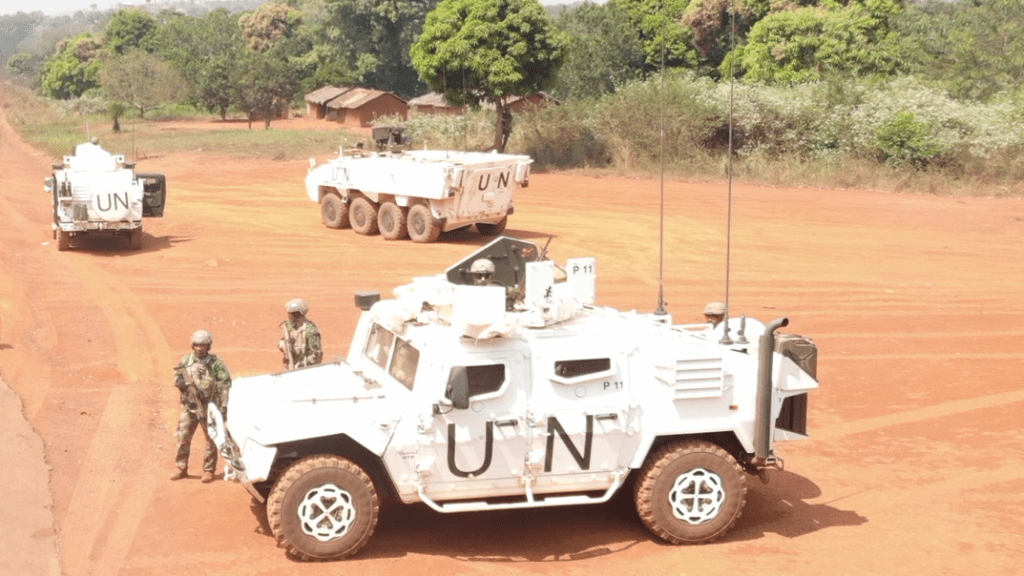
Portuguese QRF in MINUSCA – foto EMGFA
High-Impact Portuguese Contribution to MINUSCA … “Most European states contributing to peacekeeping in Africa have deployed high-end, low-risk capabilities for short periods of time. This is evident in Mali, where European states have favored capabilities such as peacekeeping intelligence, special forces, and air assets. An exception is the Portuguese quick-reaction force in the Central African Republic—seen by many as “the best case” of a European contribution—which has been more willing to use force and does not have an end date for its deployment. The UK has also adopted a different approach in South Sudan, deploying more modest capabilities that it then handed over to non-European countries.” …
The Portuguese quick-reaction force (QRF) deployed to MINUSCA in 2017 was presented by many interviewees as “the best case” of a European contribution to peacekeeping. It initially consisted of a company of 160 troops—paratroopers and commandos—reinforced by 20 additional personnel after one year (an ambulance with two doctors and three nurses as well as some intelligence and civil-military cooperation officers). As a QRF, the unit can only be deployed for up to thirty days at a time in any given location in CAR — because of heavy wear and tear on vehicles, weapons, and other equipment — followed by thirty days of rest and recuperation. This was an issue for the mission at the beginning but has since become understood and accepted. Given that MINUSCA does not have the ability to move vehicles by air, all movements are done by road using “light” Humvee-like vehicles (five tons compared to the ten–twelve-ton armored personnel carriers that have limited mobility, especially in the rainy season). It typically requires two to four days’ drive to reach the area of operation.
Like other European TCCs, Portugal, after years of peacekeeping experience in Angola, Mozambique, Timor-Leste, Guinea-Bissau, and Lebanon, had been busy with NATO operations in Afghanistan and Iraq. Unlike most European TCCs and Canada, however, Portugal does not seem reluctant to use force. Its QRF has become engaged in firefights most of the times it has been deployed inside CAR. Also, Portugal has not provided an end date for its deployment to MINUSCA and sees its simultaneous engagement with the EU training mission in CAR (with fifty staff officers, including the brigadier general) as an incentive to remain (public praise of the Portuguese QRF by the UN has also helped). Finally, the Portuguese QRF—the only European unit in the mission with the exception of a Serbian level I hospital—has also shown that it can work with non-European TCCs to prepare for operations, including Senegalese attack helicopters (for air-ground operations), Bangladeshi special forces, and Nepalese and Rwandan troops. This makes the QRF more effective and its posture more robust.
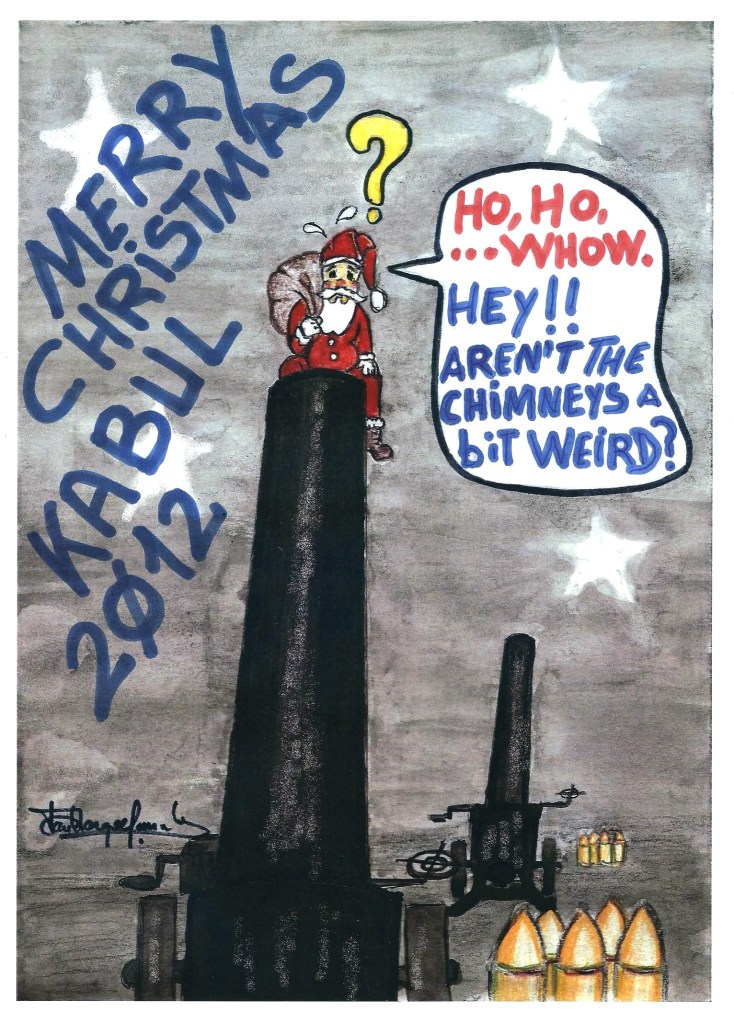
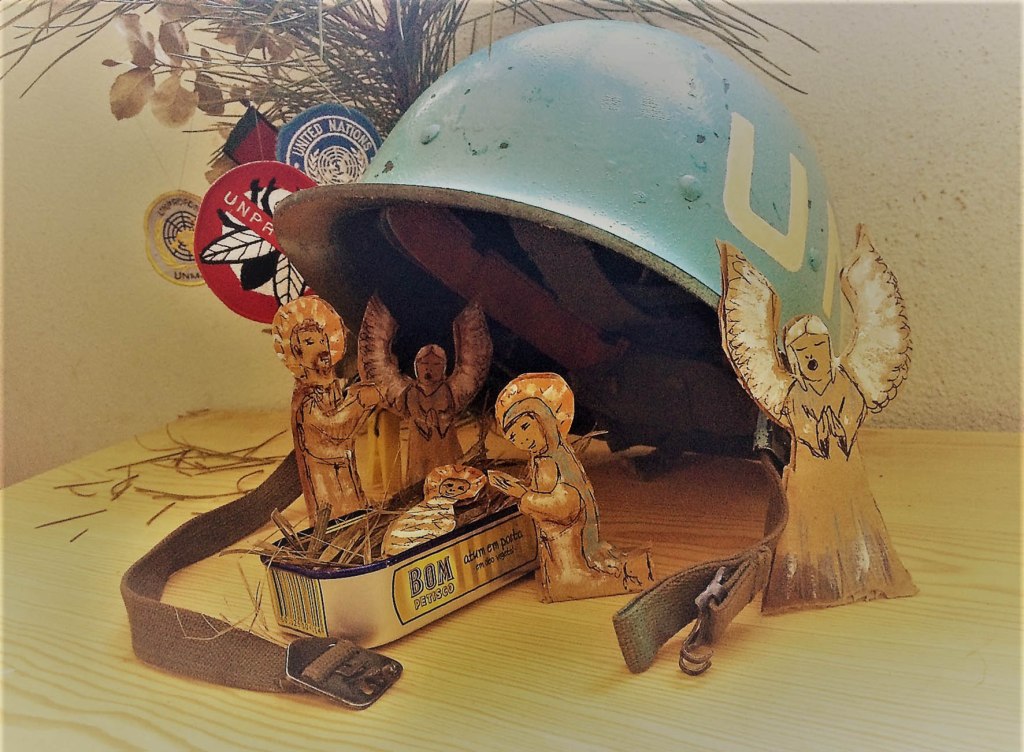
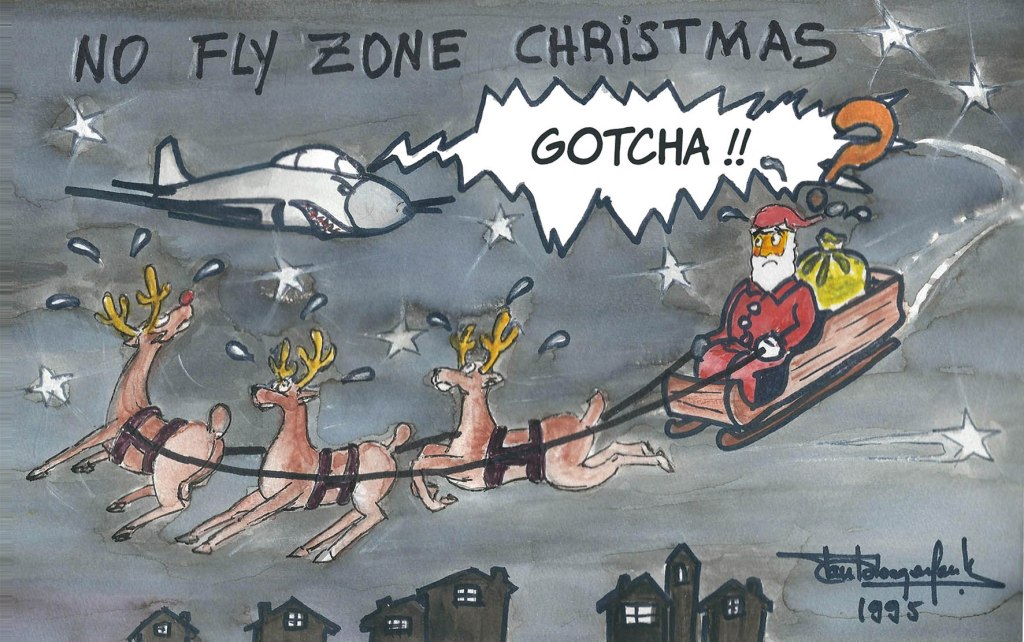
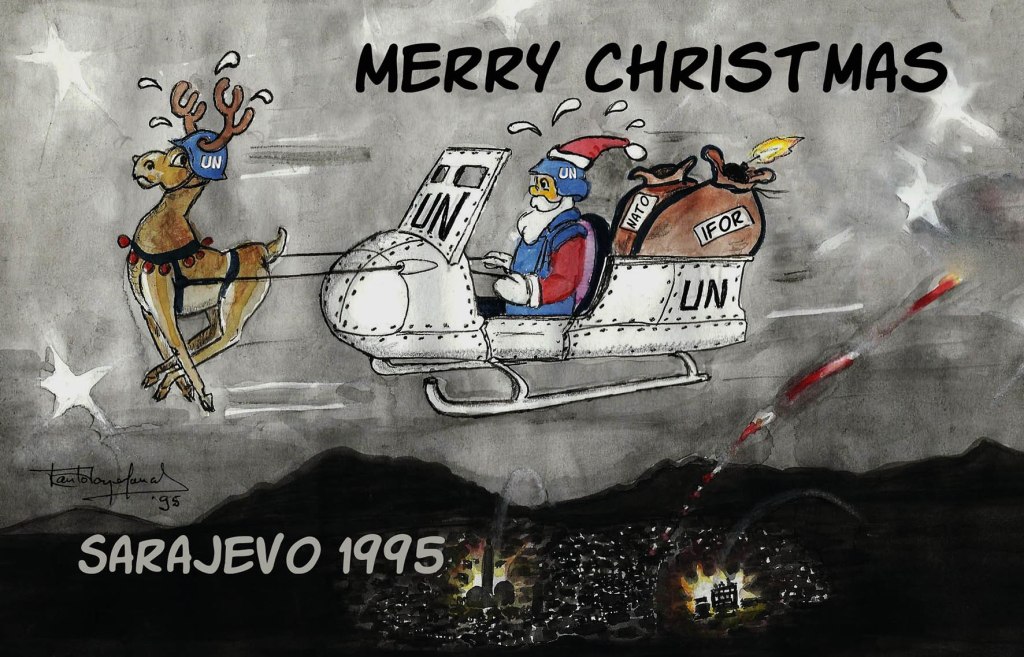
Spending the Christmas season in a mission area, away from the loved ones, is always something difficult to endure. However, someone has got to do it and we always have some creativity to overtake difficulties.
I wish a Merry Christmas to all sailors, airmen, soldiers, police agents and civilian personnel serving in EU/NATO/OSCE/UN and all sort of NGOs around the World peacekeeping and crisis response missions.
We’ve been seen for the past few days (weeks) a new hope in the ongoing negotiations for a lasting Peace Agreement in Afghanistan. Should the negotiators (both parts) be able to overtake their differences, it would be a major achievement in that turmoil part of the World. However, let us not forget that Afghanistan still lives what could be defined as a Civil War, that has been ongoing for several decades, and the modus operandi of those populations has adjusted to that (sad) reality. There should be no doubts that it is a Civil War we are taking about; because:
The Taliban constituted an opposition group, with a political leadership properly structure in exilium in Pakistan. With a shadow Government (with ministers, regional governors, etc.) transmitting instructions to their followers on the ground.
– The Taliban did declare officially that there was a state of war between them and the Government of Afghanistan;
– The Taliban had a system of recruitment, training and maintenance of a permanent core of fully armed fighters;
– The conflict was using non-conventional tactics and was being fought inside exclusively the borders of Afghanistan;
– It was a long lasting conflict;
– The Afghan (secret) Police reported (2014) over 3 000 insurgency groups active in the country;
– It had “high intensity” because:
a. It provoked more than 1 000 fatal victims per year, in which far more than 5% of the casualties were made by the weaker faction;
b. It managed to drag the presence of fighting International Forces.
However, although there was a civil war ongoing, in many parts of the country the combats were not constant (hence the non-conventional tactics). There were periods of time when people could go around in their business;
Afghanistan was severely destroyed by decades of conflict, which opened space for all sort of international entities to congregate in the country. There were hundreds of NGOs dedicated to all sort of matters (even sport), trying to help the Afghanis. There were International Organizations of all sort (NATO, EU, World Bank, ICRC, practically all programs and agencies of the United Nations family, OSCE, etc.). There were embassies and consulates of all the major countries, with strong staff implementation on the ground and bilateral development programs; etc. etc.;
The Afghan territory is bigger than the Iberian Peninsula (653 000 square kilometers), with extremely different geography landscapes, ranging from deserts to forests, mountains of Hindukush (beginning of Himalaya system) and flat plains, dry areas and wild rivers; hence the distribution of the international community was wide spread, pending on their interest. In fact, Afghanistan occupies 0,44% of the overall land mass of Hearth, ranking of place nr. 41 of the Worlds, countries and territories;
The Afghani population had a very low level of scholarship; only 19% of the people could read and write;
Religion and cultural heritage had a great importance in the Afghan life. Their family education of the (fundamentalist) view of the Koran made it possible for radicalization of young educated people. These radicalize youngsters were infiltrated among the Governmental and international structures and became a major issue in the so called “Green on Blue” attacks. These were Afghanis that we used to trust and which suddenly turned their weapon towards their international comrades/instructors and opened fire, killing whoever was around.
The presence of high numbers of International staffs, introduced yet another issue in the country – organized crime and resentment toward the locals that were employed and had foreigner salaries. Not only were they subject of envy, they were “targets” of extortion. Many times were heard stories of interpreters that had members of their family kidnaped for a ransom, live threatening, illegal taxation, etc.
All things taken into account, the Peace Process that is being negotiating will be nothing short of extremely difficult, and the International Community should be ready to support it, in order to last.
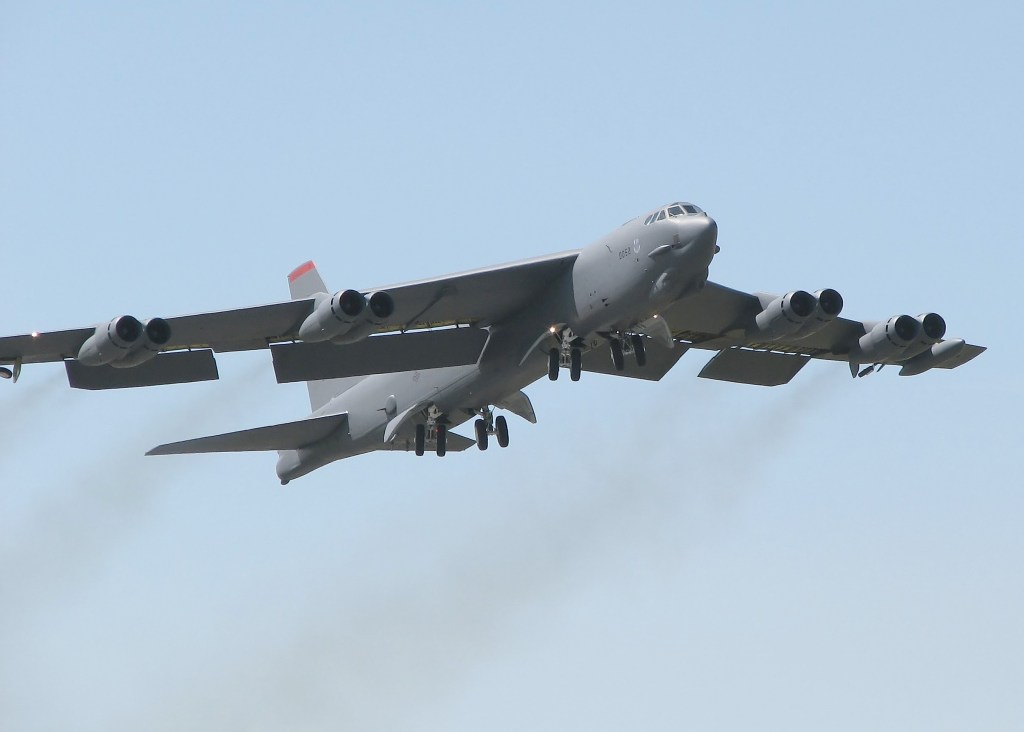
Donald Trump’s Administration can be characterized as not having engaging in a new major combat operation, somewhere in the World. In fact, America is reducing its presence in Iraq and in Afghanistan. However, as the time to exchange staffs in the “Oval Room” gets closer, that seems to be changing, because the US deployed long-range bombers to Middle East to deter Iran. This is the second time that the US Air Force launched its B-52 (Stratofortress) heavy bombers for a short-term deployment to the Middle East, in less than a month,.
B-52 Stratofortress
It appears that these efforts are meant to deter potential hostile Iranian military activity as Washington reduces its military presence in Iraq, roughly a year since the targeted bombing of Iranian Maj. Gen. Qasem Soleimani in Baghdad.
The B-52 deployment comes less than two weeks after Iranian Supreme Leader Ayatollah Ali Khamenei called for retaliation for the assassination of a senior Iranian nuclear scientist in an attack that officials in Tehran have blamed on Israel.
Interpreters always have a funny nick name or callsign. In Bosnia they were “Yellow Cards” because of the distinctive color of their UN id. cards. In Afghanistan some called them “Fnoos”. However, regardless the nickname we attribute them, they are absolutely indispensable in any crisis response deployment, peace/development negotiation and in all major achievements.
In fact, every problematic country/territory requiring International presence has the same situation. Either in Asia, Africa, Europe or South America, every crisis resolution deployment of an International (Civilian/Police/Military/Diplomatic/Non-Governmental) organization has got to have them.
Afghanistan is not a small country. In fact, its territory ranks in number 41 of the largest countries in the World, occupying 0,44% of earth’s land mass. It has 653 000 square kilometers, with extremely different geography landscapes, ranging from deserts to forests, mountains of Hindukush (beginning of Himalaya system) and flat plains, dry areas and wild rivers; hence the distribution of the international community was wide spread, pending on their interest. But they all needed to speak with the local population; and that was always a problem, because Afghanistan is a very heterogenic country. It has tribes from different ethnic groups, such as Pashtuns, Hazaras, Almaks, Balutchis, Turkmen, Uzbeks, Tadzhiks, and some others less representative. All of them had a different version of the same Dari or Pashtun languages. An Afghan from the north could hardly understand someone from the south, let alone a foreigner.
The need for local interpreters was very high, but the problem was: – Where to find them?
The Afghani population had a very low level of scholarship; only 19% of the people could read and write – in a country that had a past with Soviet influence – let alone speaking English;
The average salary of a (male) urban Afghani was less than 150 USD per month. An Air Traffic Controller (which had to have domain of the English language) had a salary of 300 USD per month.
These international missions had two things in common:
The vast majority of the international staff did not have previous education on the local languages (which are not easy to learn);
The staff rotated in and out of the mission area quite fast (no time to learn the local language);
They all had US Dollars and no problems in spending it.
Therefore, following the market demand/offer system, the salaries of the Afghani that could speak English started to rise considerably. One driver could made about 1 000 USD per month working for an International organization. A proper linguistic expert made more than 2 000 USD. There were cases of Air Traffic Controllers quitting their job to become local employees of International Organizations. The problem started to be so big that the Afghani institutions were struggling to retain their educated staff, and they were (also) loosing that battle. In many cases, the way to maintain the Governmental jobs was through corrupted solutions, having “other sources” of payment that could compensate (if possible – supplant) what the foreigners were offering.
This introduced a new type of constrain – resentment toward the ones that had foreigner salaries. Not only were they subject of envy, they were “targets” of extortion. Many times were heard stories of interpreters that had members of their family kidnaped for a ransom, live threatening, illegal taxation, etc.
The other issue was Security related. Being easy targets of the Taliban (and organized crime) the interpreters were constantly approached by the insurgency tin order to operate as spies. They attended meetings with important people, therefore they knew stuff nobody else knew among the Afghani population, and that privileged information was crucial for the Taliban to plan their combat campaigns.
That was how they got their nick name – Fnoo. Some military contingents tried to protect their interpreters, and their family name was never mentioned. They were addressed by their birth name and registered as Family Name Unknown (FNU), which sounded like “Fnoo”.
Regarding the quality of the translations, there was something to take into consideration: the best interpreters were the ones hired in the same region of operation. Bringing someone from another region of Afghanistan could jeopardize the quality of the translation. Afghanistan is a patchwork of different ethnicities, and the way each ethnic group and local community looked at foreigners was not always the most favorable way, hence they would not open entirely to outsiders.
Yet another issue related to Afghan interpreters was the women, and all maters related with gender. Women were the ones that possessed most of the (non-combat) information, but the access to them was quite “obscure”. It required not only female international interlocutors but, above all, female interpreters. In this case, the interpretation went well beyond the pronounced words, because a simple gesture or even the silence had to be “interpreted” into a meaning.
The Afghan Government tried to look very Westernized – incorporating women in their ranks – but it was an absolute artificiality. The women wanted to go into that direction but the society is still divided between urban areas and rural areas. The urbans accept it with a smile in the face and cautiousness in the heart, but the rest of the country was not ready for it.
The demobilization of interpreters was heart breaking. Sometimes the Intel services revealed that the person we started to be attached to was in fact someone with close contacts with the insurgency, and we had to cease abruptly our relation with those “friends”. Other times, we had to close our compounds and living facilities in certain regions (reduction of international presence) and the interpreters were not needed anymore. That was the most difficult part of it. The result of closing compounds depended a lot on the organization and the nation in question. If it was a civilian international organization the interpreters were simply dispensed. Eventually they could be transferred to other areas with fewer personnel, but it did not always work. Most of the times the contracts simples ceased, and that was it. Normally that was the “Pay Back Time” and everybody jumped on them for having had a good salary while working for “infidels”. In case of International military compounds (pending on the nation) sometimes the interpreters were lucky to be working for a National contingent that would take care of them (bringing them with their family to the windrowing country), but that was not always possible, and they were simply left behind.
As a last note, allow me to say that a Taliban combated made 10 USD per day and, should he be able to assassinate an Interpreter, he would receive and extra payment of about 500 USD.
We may not notice but, in our own perspective, the entire World’s population (with only one single exception) is constituted by “The Others“.
We hardly see yourself in the other guy’s shoes; hence it is easy to criticize and point out negative aspects, without having to present alternative solutions.
The problem is that it normally costs two or three times as much to correct a faulty situation, as it would have cost to prevent it. And if that faulty situation involves an armed conflict, the corrective budget goes ballistic. Furthermore, the longer it takes to solve the issue, the more difficult it will be to serenade the grievances between the parties in conflict, the grim numbers of victims will escalate and, of course, the International Community’s costs in blood and treasure will also express an exponentiation.
Therefore, let me appeal to the western citizen selfishness and remind that it is easier, cheaper and faster to help all those populations struggling to survive, than to wait for their situation to escalate from unbearable to quarrelsome, to conflict.
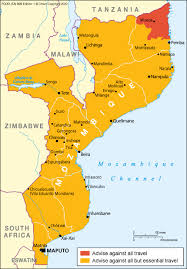
That is what is happening in Mozambique at this stage. Do not wait … or we will have a very nasty situation to solve latter on.


 OPen samento