Helicopter down-wash versus straw made huts

Back in 1992, in my UNDP mission in Angola, I was responsible to coordinate the UN air activity in support of the needs for air transportation of the Angolan Electoral Commission in the Province of Moxico. Every late afternoon the Electoral Commission would present the list of cargo and persons to be airlifted to specific destinations. In most cases, those destinations were no more than a modest gathering of straw and mud made huts, in the middle of nowhere.  Some villages were not even plotted on the maps, requiring someone (me) to join the flight as a navigator/interpreter, and ask the locals where to go in order to reach the destiny.  

One day, we were flying in a helicopter to one of such (unknown) destinations, and we had to do a “stop and go” in a certain village and ask how to get to the place we were supposed to go. When we just about to touch down on a nice open area, we could see through the windows of the aircraft the locals gesticulating very intensively, signing us not to land there. We landed in another place and found out we were about to touch down in the middle of a mine field. After some short explanation from the locals, we finally located on the map where our destination was, and we took-off again.

Upon reaching the village we were looking for, the pilot decided to over fly the location, in order to find a place to land and deliver the material for the elections that we had on board. He found the perfect place right in the center of the village and maneuvered the heavy MI-17 helicopter on its final approach to the landing site. What the gentile (urban) Russian pilot did not take into consideration was the construction material of the small huts bellow the “down-wash” of his MI-17. Those dwellings were made of straw, dry mud and wood sticks; far too fragile (and light) to “survive” the strong down-wash of the low level fly-by MI-17 helicopter. Suddenly, we were flying in the middle of a thick cloud of dust, straw, sticks, papers, chicken feathers and what have you.

I only had the time to tell the pilot: – “Check your six!” – which means look at your back. The path the helicopter had just flown could be perfectly identified by a straight line of roofless huts and destroyed henneries. The population was (understandably) not happy with our performance and many people started to gather into a mob, showing a not so friendly attitude towards our helicopter. After analyzing the situation, we found out that we didn’t have conditions to land the aircraft, without endangering the local population and risking the safety of our helicopter. Therefore, the pilot decided to abort the landing and we flown away, back to the UN base in Luena. That small village, which I don’t even remember its name, did not get the chance to vote in 1992, during the first free elections of Angola.

Zona de Exclusão Aérea Bósnia Herzegovina

Em 1992, devido ao agravamento do conflito na Bósnia Herzegovina e nas Krajinas Sérvias da Croácia, o Conselho de Segurança das Nações Unidas decretou uma Zona de Exclusão Aérea (No Fly Zone) sobre aqueles territórios. O objectivo era evitar que o Exército Nacional Jugoslavo utilizasse o seu esmagador “poder aéreo” naquele conflito.

Por forma implementar as medidas necessárias para a efectivação da No Fly Zone, a ONU passou um mandato à Aliança Atlântica (OTAN-NATO) para vigiar e interditar aquele espaço aéreo. No início de 1995, a NATO já tinha executado mais de 60.000 saídas de aeronaves de combate e/ou vigilância, no âmbito da No Fly Zone sobre a Bósnia/Krajinas.

Contudo, a ONU também tinha a sua própria capacidade de vigilância do espaço aéreo interdito, através do núcleo de Airfield Monitors, do Departamento de Observadores Militares (UNMO) da missão UNPROFOR. Portugal contribuía para esta capacidade da ONU com oficiais da Força Aérea qualificados em operação radar.

As equipes de UNMO Airfield Monitors operavam em locais relevantes para a monitorização da actividade aérea das facções em conflito (maioritariamente Sérvios/Jugoslavos mas também Croatas e Muçulmanos).

Um dos locais mais relevantes para aquela capacidade ONU, eram as estações radar dos Centros de Controlo Aéreo de Área (ACC) de Zagreb – Croácia, e Belgrado – Jugoslávia.

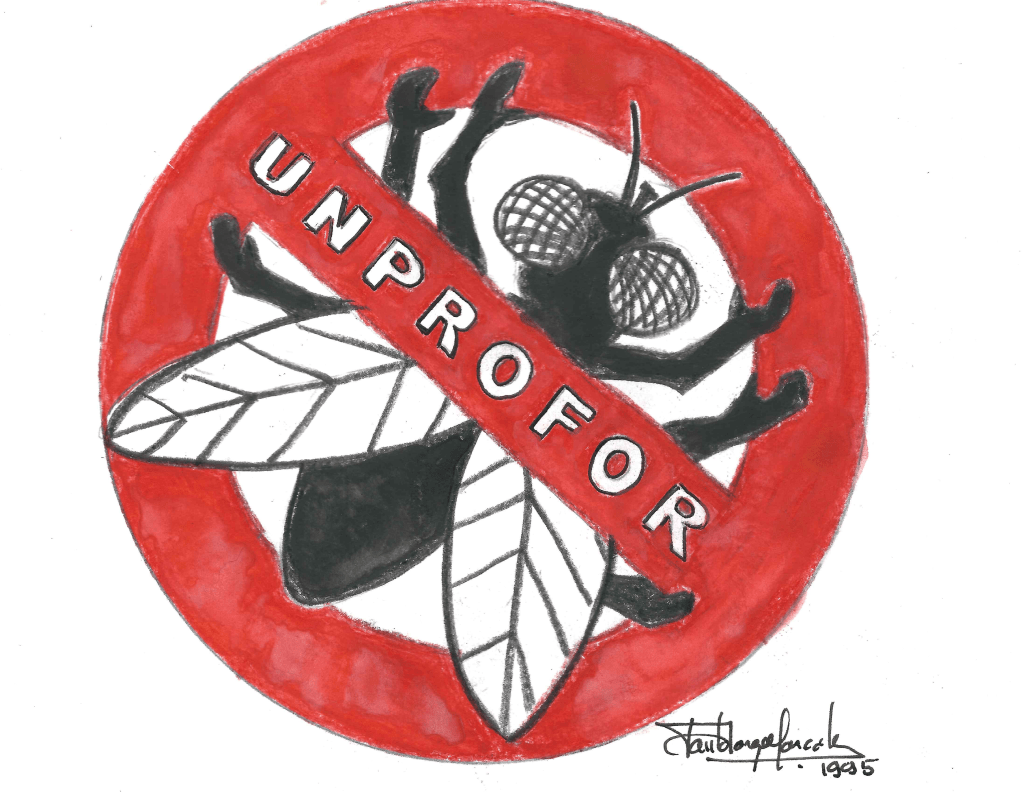
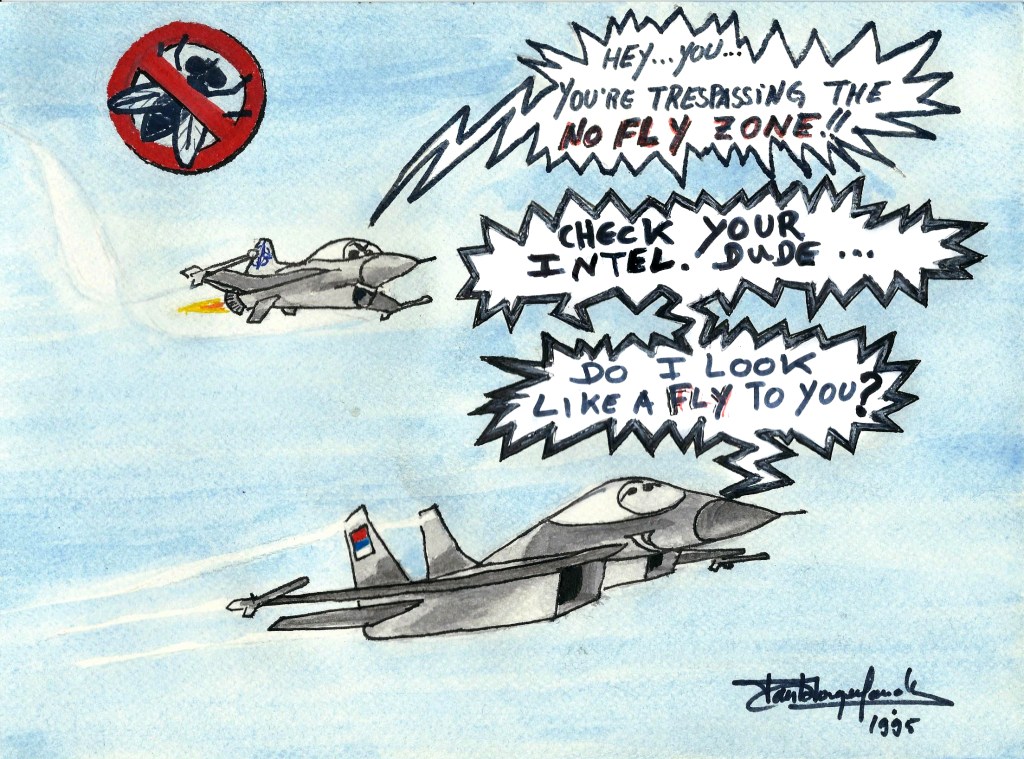
A terminologia “No Fly Zone” era alvo de menções jocosas e trocadilhos brincalhões, uma vez que a palavra “Fly” (em Inglês) é a mesma para “voo” e para “mosca”. Desta forma, No Fly Zone poderia ser traduzido por “Zona Interdita a Moscas” (ou a insectos voadores).

Com a NATO e a ONU a usarem radares para vigiar o espaço aéreo de cima para baixo e de baixo para cima, dificilmente uma aeronave não autorizada poderia voar sobre a Bósnia sem ser detectado e interceptado … ou, pelo menos, andávamos convencidos disso. Porém, os pilotos transgressores conheciam todos os truques que evitavam a sua detecção.

No entanto, independentemente das artimanhas utilizadas pelas tripulações prevaricadoras, de janeiro 1995 a julho desse mesmo ano, a Equipa UNMO Airfield Monitor de Belgrado detectou 130 violações da No Fly Zone, sendo que a sua esmagadora maioria pode ser validada por outras fontes de informação. Os relatórios dessa equipa acabaram em cima da mesa de trabalho do Conselho de Segurança da ONU, e contribuíram grandemente para a decisão (1995) de estender por mais sete meses as Sanções ONU à Jugoslávia de Slobodan Milošević.

Bosnia’s No Fly Zone

In 1992, due to the deteriorating security situation in the Balkans and the warlike acts perpetrated over the civilian population, the United Nations Security Council imposed an area of exclusion for non-authorized flights – commonly known as “No Fly Zone” (NFZ) – over Bosnia-Herzegovina and parts of Croatia (the Serbian Krajinas). The overall intention was to prevent the use of the Yugoslav Federal Army´s Air Power in the ongoing conflict.  

In order to implement this flight prohibition, the UN gave a mandate to the North Atlantic Treaty Organization (NATO), to survey and interdict those portions of airspace. To accomplish such a demanding task, NATO engaged fighter and surveillance aircraft which, in early 1995, had already made well over 60 000 sorties.

However, the UN also had its own air monitoring capability in place. UNPROFOR had a dedicated Airfield Monitors Branch, within the United Nations Military Observers (UNMO) Department.

The Airfield Monitor UNMO Teams were located in strategic points, in order to survey the air movements of the Yugoslav Armed Forces, the Croatian Air Force and the air components of the opposing forces in the Krajina and in Bosnia. These observations were, obviously, made with the consent of the local authorities. Therefore, there were UNPROFOR Airfield Monitor Teams physically present in the aeronautical installations, air bases and radar sites of the monitored entities.

One of the most important monitoring places, if not the most important places, to performance this surveillance, were the radar rooms of the civilian Air Traffic Control Centers (ACC) of both Croatia – in Zagreb – and Yugoslavia – in Belgrade.

The terminology of “No Fly Zone” was object of jokes between the Airfield Monitors. The word Fly (linked to the insect) could eventually mean that we were making sure that the airspace over Bosnia was clear of bugs.

With both NATO and the UN surveying the No Fly Zone, there was no way an aircraft could fly without being noticed … or so we thought. There were a lot of ways to avoid the radar coverage from up above and looking upwards, and the transgressor pilots knew all the tricks in the manual.

However, regardless the trespassing pilots’ skills, from January to July of 1995, the UNMO Airfield Monitor Team operating at the Belgrade Radar System reported 130 violations of the Fly Zone. Some of these reports could not be confirmed, but the majority of them were actually validated by other sources. These No Fly Zone violation reports ended over the desk of the UN Security Council, and contributed to the 1995 decision to extend the UN sanctions to Yugoslavia for an extra period of seven months.

Pig Bombs – Bosnia 1995

On the 26th of August 1995, I was driving to UNPROFOR HQ, when the Serbs attacked Sarajevo with a weapon I had never heard or seen before – “pig bombs”.

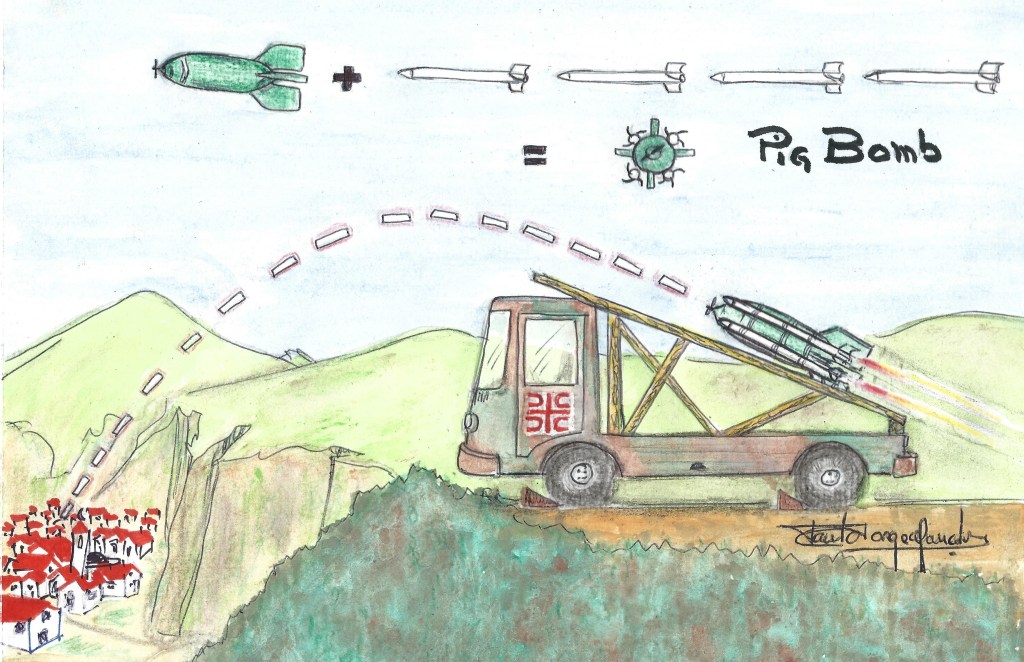
Pig bombs were improvised airstrikes, made with aircraft bombs and rockets, but launched from a truck up on the hills. The precision of those bombs was practically zero, but they were a tremendous psychological operations (PSYOPS) warfare tool.

There were two types of pig bombs; the ones that were built from a 160 liters fuel drum, and the ones that were made using aircraft deliverable weapons. 

In the case of the fuel drums, the Serbs used to a cylindrical container with fuel and added a chemical product to turn the liquid into an inflammable gelatin. The VRS soldiers would bring the drum to the mountain edge above Sarajevo, light it on fire, and release the drum downhill. As the drums were bumping into stones or dwellings, they would open cracks and pulverize the burning gelatin fuel, like a “napalm” bomb, setting everything on fire. That was the concept; but it was seldom used and it rarely worked as planned.

The pig bombs made out of aircraft striking weapons were more spectacular and feared. They were basically constituted by one aircraft bomb, attached to four rockets which, after ignited, would provide the initial takeoff booster propulsion. After that initial push, gravity would take over and the bomb would dive straight into Sarajevo. The locals called it “Krme”, and there were two types of them: krme 1 a lighter version and krme 2 a heavier version. Allegedly, the sound that each “krme” would make was different, and Sarajevo people knew how to distinguish each version.

The VRS had a considerable arsenal of air bombs and aircraft rockets, which they couldn’t use due to the No Fly Zone restrictions. Therefore, they solve the problem of not having an aircraft, by constructing launching platforms over military trucks, capable of launching a bomb with the help of four rockets. The truck would go up, to the top of a hill facing Sarajevo, and fire the bomb over the City.

The heavier version – krme 2 – would use a 250 kilogram bomb and four larger rockets. It would fly upwards only for some dozens of meters, but that would be enough to do a parabolic pattern diving into the town, spreading panic among the targeted population.

Pig Bomb; Krme 2 – one 250 kilos bomb and 4 aeronautical rockets

Pig bombs were a PSYOPS terror, but they did little harm. Some of they didn’t even explode and others exploded right after ignition of the rockets.

Arte abstrata em planos de voo (Angola 1992)

O Programa das Nações Unidas para o Desenvolvimento (PNUD/UNDP) recebeu da missão da ONU em Angola – UNAVEM – a tarefa de organizar as “primeiras eleições livres Angolanas”, em 1992. Como o território do interior do País estava quase que completamente minado, o PNUD decidiu executar a maior campanha aérea que a ONU algumas tinha feito, para distribuir pessoal e material eleitoral, apoiar o acto eleitoral e retrair todo esse pessoal/material para Luanda no final.  

Coube-me fazer a gestão dos meios aéreos da ONU na Província do Moxico, com base no aeródromo de Luena. Para o efeito, tinha uma pequena frota constituída por um avião Cessna Caravan (rodesiano) e três helicópteros MI-17 (Russos).

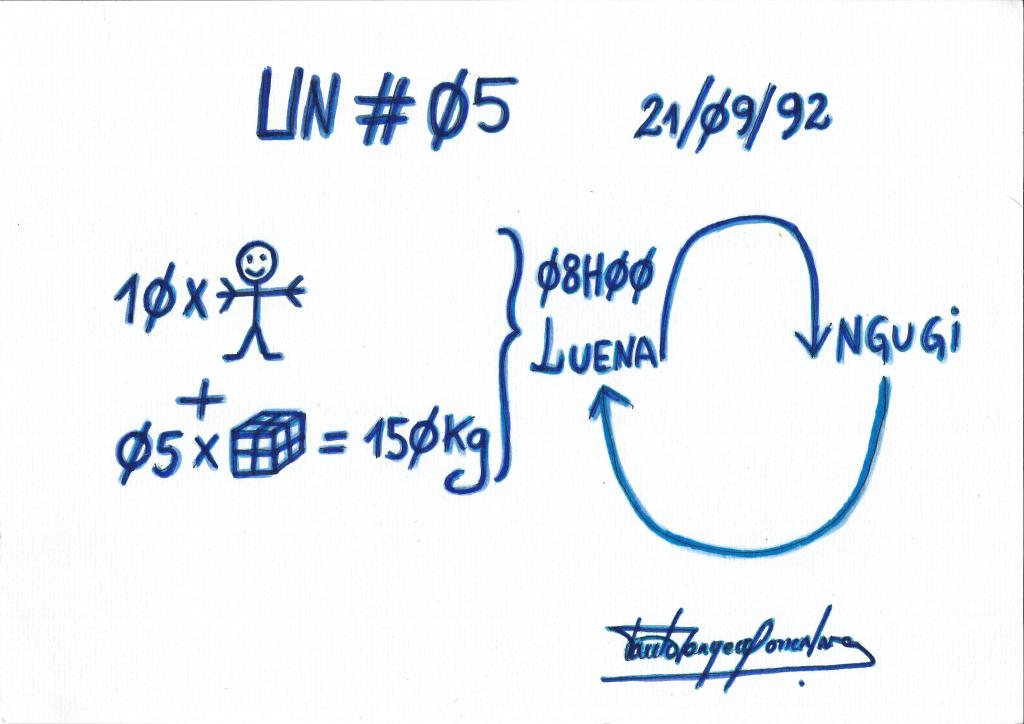
Dos 12 tripulantes russos, só um falava Inglês. Quando este tripulante estava a voar, tinha de um desafio extra para comunicar com as restantes tripulações e dar-lhes as instruções para os voos que eram necessários executarem. Acabei por instituir umas folhas com uns bonequinhos e uns cubos desenhados. Os bonequinhos simbolizavam passageiros e os cubos simbolizavam carga. Depois desenhavam-se umas setas com os nomes das localidades para onde eles deveriam de voar e estava feita o “Plano de Voo” para cada missão. Desta forma, eu entregava-lhes, por exemplo, uma folha de papel com o seguinte grafismo:

– “ UN#05 21/09/92 – 10 X (desenho de um) boneco + 5 X (desenho de um) cubo = 150 kg- Luena 08H00 ↑ (seta) Ngugi -» Luena↓ ”

A seguir assinava, para dar formalismo às instruções. Esse grafismo significava:

– “O helicóptero UN número 05 deverá embarcar dez passageiros e cinco volumes de carga, descolando de Luena para a cidade de Ngugi, com uma descolagem prevista para as oito horas, da manhã do dia 21 de Setembro de 1992. Depois regressa de novo a Luena.”

 Eram as nossas Air Tasks [ordem de missão]. Para os trajetos mais complicados – com várias paragens, embarques/desembarques intermédios e locais cuja identificação eram as coordenadas do GPS – o plano de voo parecia uma obra do abstraccionista Volpi, mas funcionava.

O problema estava na leitura dos mapas. Os russos tinham cartas de navegação magnificamente atualizadas, com muito detalhe, mas estavam escritas em cirílico. Por exemplo, a aldeia de Ngugi, em cirílico, escrevia-se Hгущи. Isto constituía um problema acrescido para correlacionar os locais que a Comissão Eleitoral me tinha dado e o planeamento de voo para as tripulações. Tivemos de construir uma tabela de conversão dos sistemas de escrita Romano/Cirílico, com os nomes das principais as localidades da Província. Nem sempre batia certo mas as aproximações fonéticas também contavam. Em seguida tiravam-se as coordenadas do local, metiam-se no GPS e lá iam eles. Em 90% dos casos tivemos sucesso com este processo, e os passageiros também ajudavam.

2 barras Twix nos pulmões, e não são de chocolate

Os territórios onde decorrem as missões de Apoio à Paz das Nações Unidas, para além da perigosidade no tocante ao eventual conflito armado que esteja a decorrer no local, envolvem também potenciais riscos para a saúde.

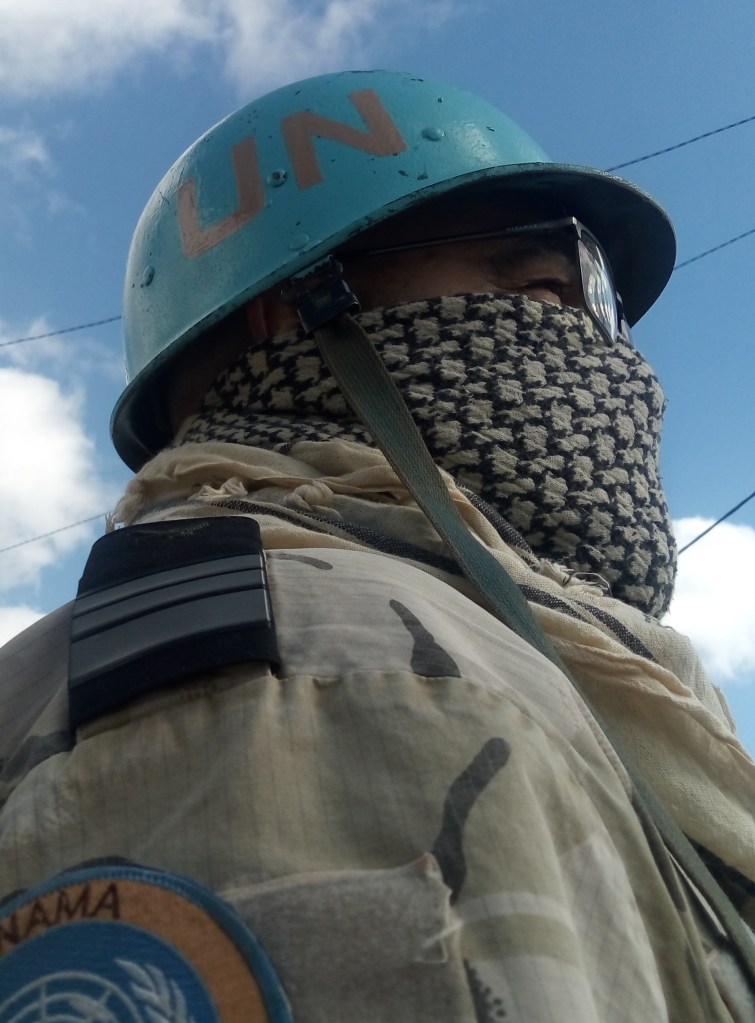
Durante o programa de iniciação à missão UNAMA – Afeganistão – que decorre em Cabul aquando da chegada de um novo “capacete azul”,  um instrutor veterano disse-me:

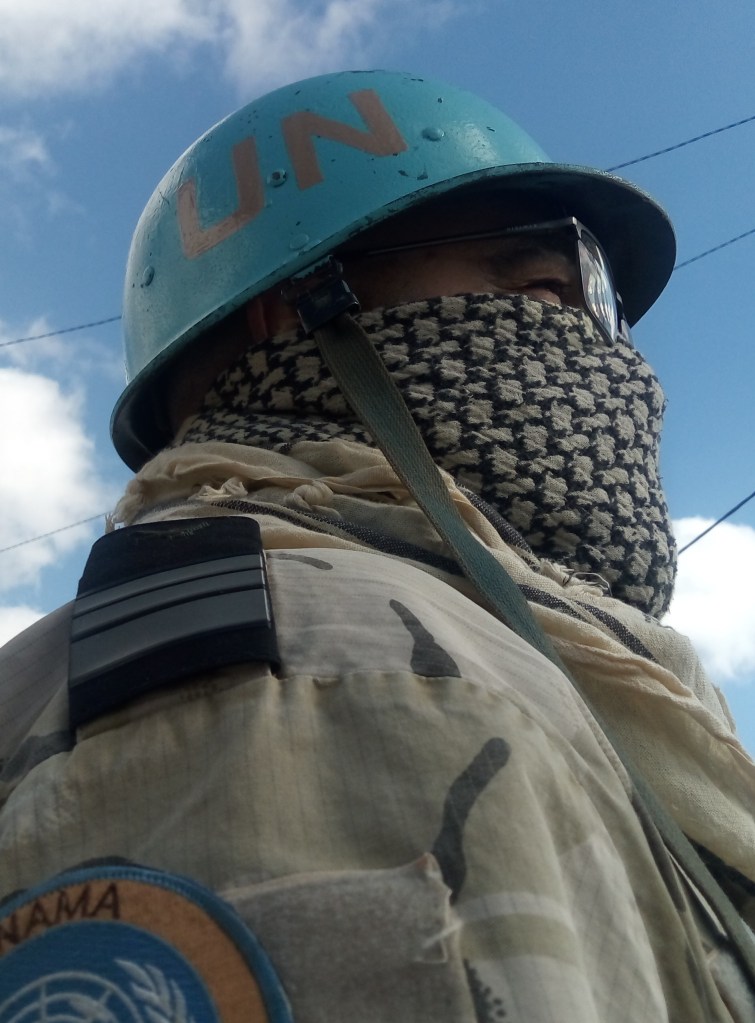
– “A primeira coisa que tens de comprar é um par de shemaghs. São os lenços árabes que se usam à volta do pescoço. São particularmente uteis!”.

– “Sei!… O examinador do teste de condução disse-me para usar um shemagh sobre os ombros, enquanto conduzia em Cabul, para ocultar a farda!” – Respondi.

– “Sem dúvida.” – Retorquiu o veterano. – “Mas servem para muito mais que isso. São óptimos para se colocarem sobre uma ferida aberta e estancar o sangue ou para servirem de torniquetes; servem de toalha; de almofada; de filtro de água; de saco improvisado; de defesa se souberes usar uma funda; etc. Contudo, aqui em Cabul, servem acima de tudo para tapar as vias respiratórias porque o ar está sempre carregado de pó, sendo que 20% desse pó é excremento humano vaporizado.”

– “Não entendi!” – Disse eu estupefacto.

– “Afirmativo companheiro. Em Cabul não há sistema de esgoto público e nem todas as habitações têm uma casa de banho. Os dejetos humanos são recolhidos das “cagadeiras” públicas, ou das fossas sépticas dos prédios, para camiões cisterna que levam o conteúdo algures para os arredores da Cidade e depois são despejados a céu aberto. Claro está que quando chega o Verão, tudo aquilo seca e o vento forte das tempestades de pó faz o resto do trabalho. Penso que foram os Finlandeses que fizeram um estudo sobre os seus militares que tinham passado por Cabul. O resultado desse estudo indicava que quem estivesse um ano nesta Cidade, regressava a casa com o equivalente a 200 gramas de pó nos pulmões. É certo que depois aquilo sai com a expectoração, …, mas ninguém gosta de regressar a casa com duas barras de Twix nos pulmões … e não são feitas de chocolate!”

Vendo a minha expressão de pasmo o neozelandês rematou o discurso:

– “Mate; não fiques assim tão admirado, em Cabul só há distribuição de eletricidade publica desde 2009; antes disso ou tinhas um gerador privado, ou tinhas velas e candeeiros a petróleo.

Two Twix bars in the lungs, and it’s not chocolate

UN peacekeeping missions have not only a dangerous warfare component, but also a healthcare hazard to look into. Neglecting the health hazards at the site; is asking to bring serious problems back home.

During the induction training sessions in UNAMA – Afghanistan – mission, one of the veterans told me:

– “The first thing you have to buy at the souvenir shop is a couple of shemaghs; the afghan scarfs – and wear it all the time when you’re outside.”

– “Yes, the driving test inspector told me to put it over the shoulders, when driving in Kabul, to hide the military rank. – Said I.

– “Yes, of course; and it has many other useful purposes. It’s very effective to put pressure on a bleeding wound; or to be used as a tourniquet; as a towel; as a water filter, as a pillow, as an improvised carry bag; even as defense told, if you know how to use a sling; etc. However, here in Kabul, the most relevant use of it is to cover your airways; you should be aware that the air in Kabul has a lot of floating dust and about 20% of that dust is pulverized human excrements.”

– “Sorry, I didn’t understand, …, did you just say that one fifth of the dust that I see covering everything is human shit?! – Said I, unbelieving that veterans’ words.  

– “Affirmative mate! Kabul City has about two million people, but there’s no public sewer system in place. In fact, most houses don’t have a WC; they use a public toilet. The human excrement is collected from the public toilet, or the larger houses’ septic tanks, by specialized tank trucks, which carry their content to the outskirts of town and dump it somewhere on the ground. Then comes the Summer heat and all that organic material dries and becomes mixed with hearth; the strong winds turns it into dust tempests and there you have it … human shit all over the place. The Fins made a study on that matter and they’ve realized that, after one year of being in Kabul, you return home with 200 grams of dust in your lungs. That’s the equivalent of two Twix bars … and they’re not made of chocolate! But don´t worry, it will all come out in time … eventually!”

UNPROFOR Blood Compensation Payment

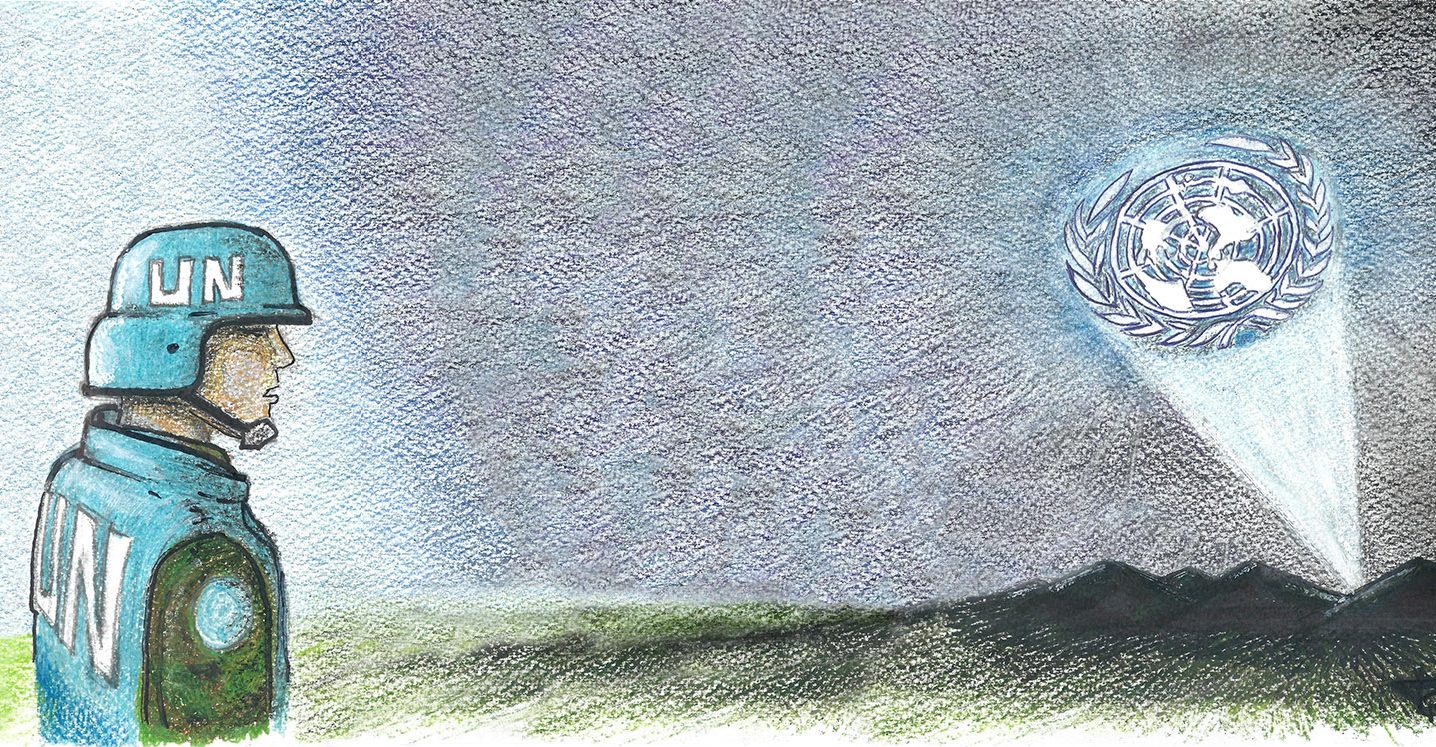
My first impression of UNPROFOR was not exactly the most valuing one.

To start with, the local population had set up a “Wall of Shame” surrounding the UN Headquarters perimeter, in Zagreb. Their message was “We’re not happy with your performance”. Each brick of that wall had a name of a deceased Croatian soldier, and their mothers blamed the UN for not having avoid it. That wasn’t very encoring regarding the locals’ appreciation of my future work.

I met my national sponsor at the gate, and we went straight to the administrative building to start my in-processing. At the check-in desk, I presented my nicest smile and addressed the silhouette across the booth’s stemmed glass. 

– “Hello, good morning, I am Captain Paulo Gonçalves, from the Portuguese Air Force, and I have just arrived. Here’s my travel orders … it says that I will be joining the UNPROFOR Military Observer Unit.”

– “Let’s see…UNMO?! …Portuguese, coming for a full year?! … Paulo Gonçalves?! … Ok, we have you. Welcome to UNPROFOR. Please read this paper carefully; it’s the testament of your life insurance. Identify the beneficiary of the insurance in case you get killed, and sign it … in triplicate. We will discuss further details latter!”

Didn’t even have the chance to drop the luggage, and I already had to sign my death will.

– “What the hell?! – I exclaimed turning to Captain Duque, my sponsor – “The very first procedure is to sign my testament? They want to know upfront who’s going to receive the UN “blood compensation” payment if I am Killed In Action (KIA) or Wounded In Action (WIA)? This doesn’t seem to be a very bright start! Does it? How many of you have died recently?” 

 – “Not that many.” – Said Captain Duque – “Just sign and get over with it! It’s a pragmatic formality, made in New York.”

UNPROFOR was a Peacekeeping mission, but unfortunately that UN “blood compensation” payment was done several hundreds of times during those four years.

Repelente de crocodilo Angola 1992

Numa Operação de Apoio à Paz, cada um tem um papel a desempenhar, e mais uma série de tarefas extra que todos têm de fazer; como por exemplo, ir buscar água ao rio para os tanques de lavagens. Recordo a primeira vez que o fizemos, no Rio Luena, em Angola, na missão da ONU em 1992. Com a ajuda de um camarada brasileiro carregamos uma carrinha de caixa aberta com uma bomba de água e um depósito com capacidade para três metros cúbicos de água, e partimos em direcção ao rio.

O brasileiro estava há mais tempo na região, pelo que tomou a liderança do evento. Dirigimo-nos a uma zona na margem do Rio Luena que permitia o acesso a carros à beirada água. De imediato iniciamos a extracção do precioso líquido para dentro do tanque, enquanto apreciávamos a paisagem e observávamos os miúdos de uma população próxima a tomar banho no rio.

A alegria da criançada era contagiante e, assim que o tanque encheu, também fomos dar um mergulho.

– “Achas que que é problemático irmos ao banho aqui?” – Perguntei ao brasileiro.

– “As crianças não se parecem queixar de nada; vamos lá?!”

E o brasileiro continuou dizendo:

– “Isto é tudo gente boa. Se você deixar a carteira na margem do rio provavelmente não vai acontecer nada. Contudo … se deixar o sabão, de certeza que não vai lá estar, quando você sair da água.”

A longa guerra civil Angolana tinha dificultado abastecimento de mercadorias para o interior do país, dando-se prioridade aos produtos considerados essenciais. Os artigos não essenciais pagavam-se a preços elevadíssimos. Incompreensivelmente, os artigos de higiene não eram considerados de primeira necessidade, pelo que um bom sabonete era particularmente cobiçado na região. Dizia-se que os mais novos nunca tinham usado um sabonete na vida. Depois de me ensaboar, escondi o sabonete numas ervas da margem e tomei banho de olho posto no capim. Foi um sucesso, repetido várias vezes em locais diferentes do mesmo rio, partilhando sempre as águas com a criançada local.

Meses mais tarde, já em Portugal, soube que num dos locais onde havíamos tomado banho, tinha ocorrido um incidente envolvendo um elemento ao serviço da ONU e um crocodilo. Alegadamente, durante a estação das chuvas, que estava prestes a começar em outubro, o nível das águas aumentou bastante e entrou dentro das tocas onde os crocodilos estavam a hibernar, nas margens dos rios, despertando-os. Nós tínhamos estado a banhar-nos no limite entre as duas épocas, seguindo o exemplo das crianças e adultos locais. O outro indivíduo atuou isoladamente e, quando se estava a ensaboar com o precioso sabonete, terá despertado a curiosidade reptílica de um inclino das margens. O ataque não foi letal, mas o elemento da ONU ficou seriamente ferido.

Consta que, durante o conflito entre Angola e a África do Sul, as forças especiais sul africanas tentaram uma operação de coleta de informações através de infiltração por via fluvial com mergulhadores. As equipas envolvidas estavam a desaparecer misteriosamente; até que um biólogo alertou as autoridades que os crocodilos estavam activos naquela altura do ano.

The Media and the Military (M&M)

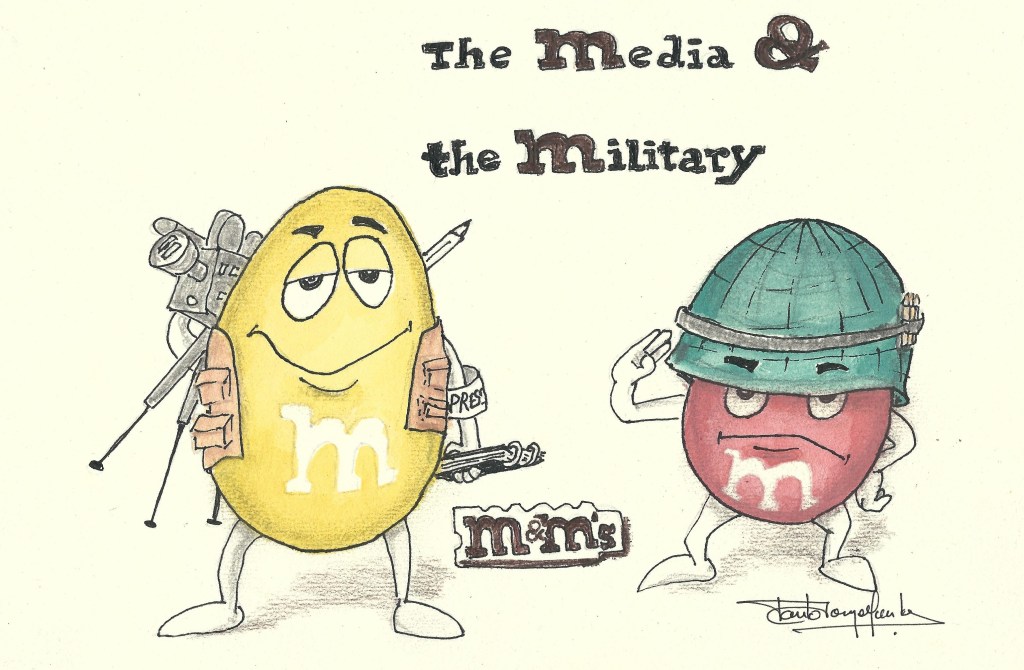
The news media’s job is to report the news. News can be defined as something that makes today different from yesterday. With that definition in mind, nearly every issue with which the military are involved is newsworthy; especially if the battle rhythm is slower than the news broadcast needs; which is normally the case.

The new security environment obliges political/military answers that rely on multi-national forces, coming from a myriad of different cultural and social realities. The principles of democracy dictate that governments maintain the support and confidence of their population. This necessitates a free, honest flow of information. This access to information often conflicts with the need of security in military operations. In the other hand, it fits perfectly in having the “sending Nations” living rooms during TV prime time and the political offices (back home) satisfied with the development of “our brave boys and girls at the front line”. Commanders and their staffs, at all levels, must consider these requirements in all types of operations; being in peacetime, in crisis or in open conflict.

“can’t live with it, can’t live without it”

Having the Command and Control of a multinational force also means the Concern and Constrain of a multinational media interest. The Force Commander must anticipate such interest, and consider it as a part of the operations’ planning process.

The operational management of multinational contingents requires structural changes to the customary single nation operation, which, in turn, will require a changed approach to traditional Public Information (PI) functions. While PI operations in a multinational force are decentralized, their success depends on unity of effort. All levels of command must work towards common goals following common guidance. If proper measures are put in place ahead of developments, the Military and the Media can operate in sync, but there should be no space for the temptation to interfere in each other’s work sphere.

“In a Military Operation, the Media and the Military are like a railway track; they work close to each other, in the same direction, BUT in a parallel way and independently. If one of the parts tries to change that, the entire Operation (the train) will derail”.

And just when we all thought we (M&M) had it right … up came the social media platforms; where both “M” reside inside the same person. Any soldier with a mobile phone can become a front line news correspondent, showing the guys back home how cool he/she looks in combat fatigue, or crying for mom’s help (live) when under fire in a Taliban ambush. Yet another issue for the Commander’s concern: Where and when to apply censorship procedures? Restrictions on broadcasting (jammers)? Prohibition of certain devises? Etc.

Regardless the solution, in today’s world Strategic Communications is a mandatory component of any military operation’s planning.  Because, like the psychotherapist, psychoanalytic, sociologist, philosopher and author Paul Watzlawick (1950s) used to say:

“One cannot, not communicate.”

Crie um site como este com o WordPress.com
Comece agora