Aguardente expresso

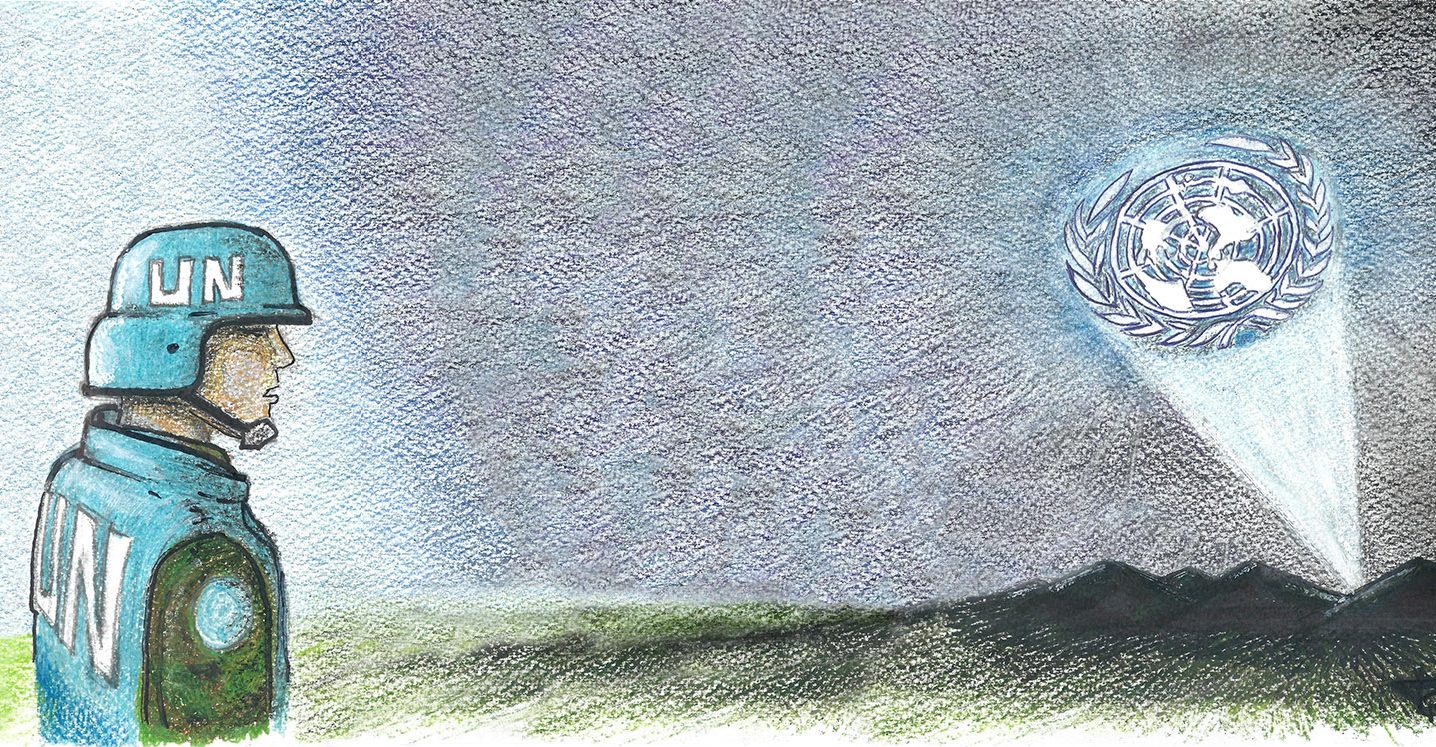
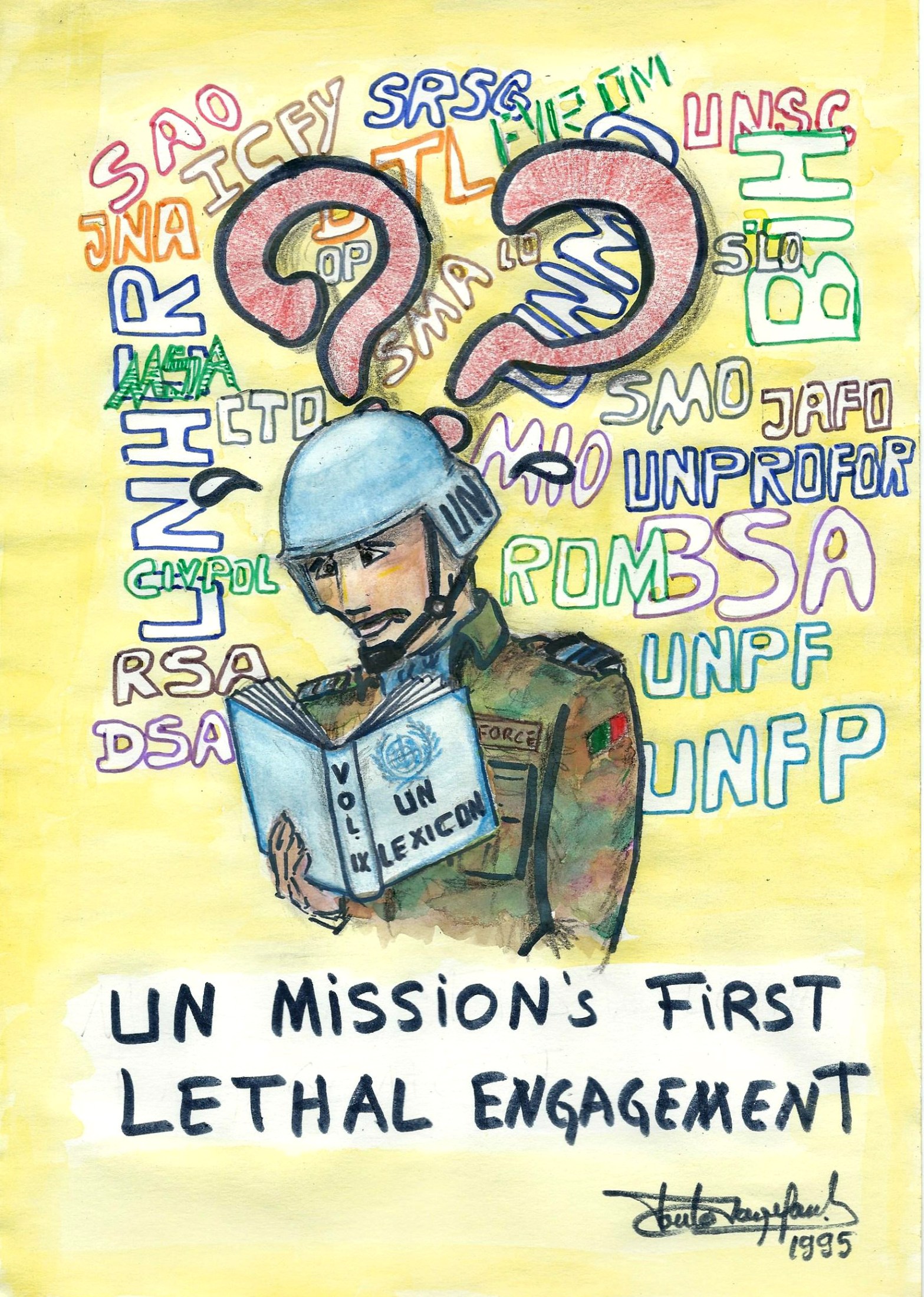
Durante as missões da ONU acontecem inúmeras situações anedóticas dignas de registo.

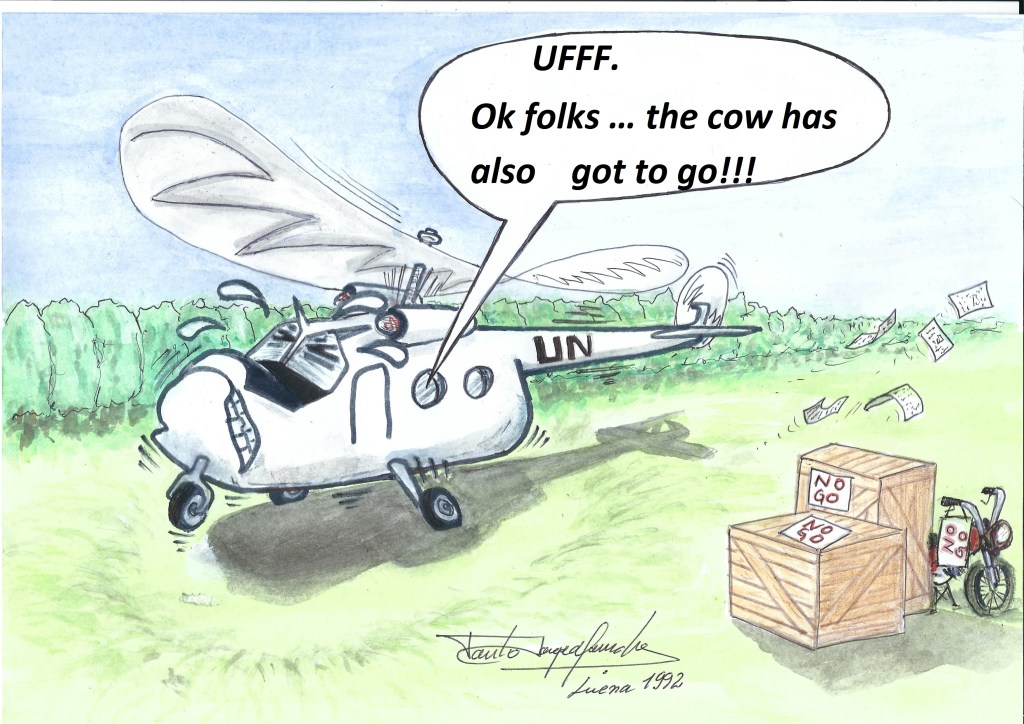
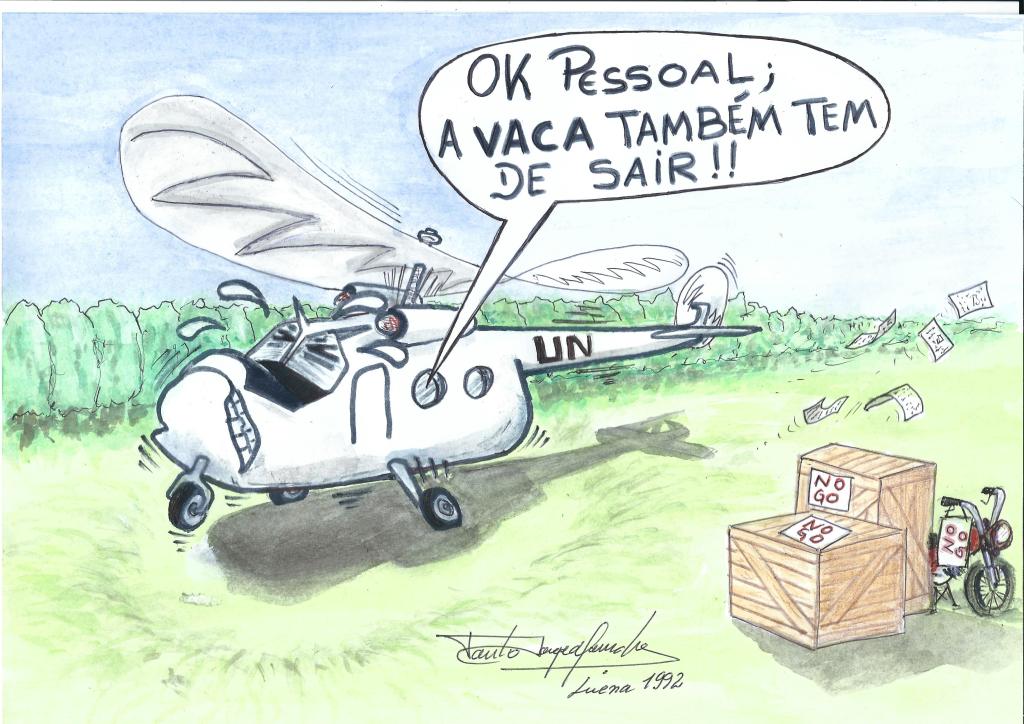
Recordo uma certa manhã, na missão da ONU em Angola (1992) para apoiar com meios aéreos as Primeiras Eleições Livres, após as aeronaves terem partido como um bando de pássaros do aeródromo de Luena, ter-me sentado para descansar e ligar o leitor de cassetes para ouvir uma música suave. Nessa altura verifiquei que as pilhas estavam gastas. Abri o aparelho e iniciei o procedimento de troca das pilhas. Um miúdo que andava por ali na placa, a tentar catar os desperdícios de combustível de avião Jet A-1, aproximou-se e observou cuidadosamente todos os meus movimentos. Quando eu me preparava para guardar as pilhas velhas, a criança dirigiu-me a palavra:

“Sôr, dá-me essas pilhas.” – Pediu ele.

– “Companheiro, estas pilhas estão gastas, já não funcionam, perderam a electricidade; entendes?” – Respondi-lhe.

“Não faz mal, Sôr. Dá-me as pilhas, por favor”. – Insistiu o miúdo.

“Ho rapaz, eu dou-te as pilhas mas elas não te vão servir de nada. Não consegues tirar nada daí de dentro” – retorqui enquanto lhe dava as três pilhas AA do leitor de cassetes..

“Consigo, consigo“ – disse ele – abro-as com uma catana e meto-as dentro de um panelo com fruta e farelo de milho a fermentar, para fazer a Caxipembe [aguardente de milho]. O ácido das pilhas apressa as coisas e amanhã o Caxipembe já está pronto para eu vender no bazar!”

“Ora toma!” – Pensei eu em voz alta – “Acabaste de receber uma aula de química aplicada, de um puto com 12 anos! Então é assim que vocês fazem Caxipembe Expresso?”

Mas a criança já tinha descolado em direção aos portões do aeródromo, com as três pilhas na mão direita e uma lata com Jet A-1 na outra. Fiquei apreensivo com a qualidade da poderosa aguardente que tinha estado a beber, com os meus amigos Russos, numa das serenatas dessa semana.

Turn the barrel don’t move the weapon

In the UNPROFOR mission, back in 1995, there were lots of tales of war gags in Sarajevo that were too funny to be true. However, people swore they were true stories and I registered several of them.

One of such stories occurred among the recently created Muslim Army (ABiH) ranks, at the start of the confrontations, in 1992. Allegedly, some arms’ dealers managed to escape the Serbian control and bring into the besieged city a couple of 82 mm mortars, with a few boxes of its grenades. The problem was, the Muslims did not have soldiers trained in using mortars and the amount of mortar grenades available did not permit much practice or instruction. Therefore, the ABiH Command randomly selected a small group of fresh combatants and assigned them the noble task of becoming artillery “gunners”. Mind you, artillery is one of the most demanding Army Branches, requiring sharp calculations, thorough awareness of meteorology and knowledge of the equipment.

The small group of gunners was assembled and someone explained the theory of operating a mortar. The instruction had to remain at the theoretical level, because they couldn’t afford loosing ammunition with training – even the final demonstration would have to be “on the job training”, aiming at the Serbian neighborhoods of Sarajevo. On the following days, those gunners fired several rounds of mortar towards the generic direction of the Serbian lines; and that was it – they were “qualified”.

Shortly after their “qualification” the ABiH Command decided to hit a certain Serbian position, in order to retaliate a Serbian mortar attack. One of the gunners received a set of binoculars, a scale, a note pad and a walkie & talkie radio, and moved out to an elevated position where he could see the Serbian position and talk with his mortar comrades. Two other gunners were assigned a mortar tube, some 82 mm grenades, and someone point out the direction and distance where their target was.

The gunners fired the first round and the grenade impacted more or less at the correct distance but frankly left of the target. The man at the observation post used his radio and issued instructions with the necessary corrections to the gunners:

– “The distance was correct; but you need to correct the azimuth 100 meters to the right.”

 The radio man waited for the second round to be fired, in order to readjust the firing parameters; but nothing happened. Sometime after, the radio man contacted his comrades again, asking why haven’t they fire again; and the answer he got was:

– “Stand-by! These things are very heavy. We’ve already re-positioned the mortar tube 100 meters to the right; but now we also have to carry the grenades.”

As a result of their inexperience, those gunners didn’t realize that all they had to do was to turn the mortar tube a certain number of degrees to the right and fire again; not to move the weapon the 100 meters.

“That’s Silly”; one may say, but that was the way the ABiH learned their War Lessons. Months later, those gunners were striking targets as accurately as any other mortar specialist.

Keep away from the cameramen

Back in 1995, the Bosnian Warring Factions had discovered the Center of Gravity of the International Community:  – “The living-rooms of the European and North American population, during the TV news prime-time”. There was the need to broadcast strong dramatic images, favoring the Bosnian Muslims’ cause; and there were lots of journalists around, desperate to get those strong images; the self-called “Tribe” residing in Holiday Inn – Sarajevo.

Among the UNMO officers, there was an unwritten rule:

– “Keep away from the cameramen … if you don’t want to die on “life TV.”

That unwritten rule was due to the fact that the snipers, from all factions, had the tendency to fire upon UN personnel when the “Media Tribe” was close to them, in order to film it and have in the evening news; hence passing strong messages about the Bosnian War.

The French Contingent lost several good soldiers that way, in Sarajevo. Nothing was happening until the TV crew showed up and, after their arrival; it was “Blue Helmets’ season”.

STRATCOM – Walk the Talk

Nowadays, in any military operation, exercise or HQ ceremony, one has to consider the news media coverage. In most cases, it is not an option; it is a battlefield characteristic.

The military tend not to appreciate the presence of journalists during their activities, not only for reasons of Operational Security, but also because of the criticism media reports tend to convey about military activities. Military planners are very much aware that one should not fight the scenario. We must adjust and overtake. Therefore the new mantra is: “We’ve got to have Strategic Communications.”

Some people may think that Strategic Communications (StratCom) is a new thing in the Public Relations environment. They see it as a new discipline that introduces a different (more active) posture, with modernized products—something like Public Affairs on steroids. That’s not the case! StratCom is the natural evolution of the communication orchestra, which has become too big and it requires a maestro.

Humans are a social species. We need to communicate in order to survive. One cannot live in a society without having some sort of communication with the surrounding people. In today’s world we are so inter-dependable that, if you don’t communicate, you die! Our institutions have exactly the same constraints. An organization without flexible communications will not evolve and, like the dinosaurs, it will become extinct sooner rather than later.

However, in StratCom, the term Communications should be understood in its broadest sense. Actions (or the lack of them) are also forms of communication. In the StratCom business, one must not only “talk the talk”, one must also “walk the walk”; better yet, one must Walk the Talk!

An American philosopher – Ralph Waldo Emerson – once said “What you do speaks so loudly, that I can’t hear a word you’re saying”.

Each operational capability will have its own formatted messaging, with diverse messages tailored for different target audiences. As in an orchestra, what the violin plays in isolation is very different from what the trumpet plays. What StratCom does is to make sure that they all play their different pieces of the music, in tune, so that the melody is harmonious.

Military planners must identify the proper communication tools for each different audience, and master their use. Failure to do so may result in a negative public perception of the operation. Therefore, planning is the first step towards the answer; but it is not the whole solution, because, as Mike Tyson (the famous boxer) said: “– Everybody has a plan … until he is punched in the face!”

It’s adaptability that bridges the route to success. StratCom is based on a dialogue (not a monologue), both internally and externally. Feedback on our communication activities is paramount. StratCom is the empowered maestro who can stop the music, review it with the author, and come back to the orchestra to produce an excellent symphony.

If you don’t do it right … you’ll be under heavy fire of the news media criticism!

 Lessons Learned from UN/NATO/EU field missions. The warring faction that doesn’t know how to operate along side with the news media … losses the war.

29 May 2020 -Peacekeepers’s day

On the 29th of May 2020, there will be a military parade at Forte do Bom Sucesso, in Lisbon – Portugal, to celebrate the Peacekeepers’ International Day.

The parade, which normally is presided by a high entity of the Portuguese Government and all the higher ranking officers of the police and military Services, also has a strong representation of veterans from the several delegations of the Portuguese League of Former Combatants.

Era uma vez

Era uma vez um jovem que adorava aviões e tudo o que se relacionava com o mundo aeronáutico. Ninguém estranhou que, quando atingiu a idade e as habilitações académicas necessárias, esse jovem se tenha voluntariado para ingressar na Força Aérea Portuguesa.

Cerca de 39 anos depois, com o posto de Coronel, ainda jovem no espírito mas carregado de inúmeras experiências impares, o veterano deu lugar aos mais novos e retirou-se para escrever as histórias da sua veteranice.

Até muito breve … obrigado

Paulo Gonçalves

Avatar de Paulo GonçalvesOPen samento

Era uma vez …

Era uma vez um jovem que adorava aviões e tudo o que se relacionava com o mundo aeronáutico. Ninguém estranhou que, quando atingiu a idade e as habilitações académicas necessárias, esse jovem se tenha voluntariado para ingressar na Força Aérea Portuguesa.

Cerca de 39 anos depois, com o posto de Coronel, ainda jovem no espírito mas carregado de inúmeras experiências impares, o veterano deu lugar aos mais novos e retirou-se para escrever as histórias da sua veteranice.

Até muito breve … obrigado

Ver o post original

Meu primeiro post no blog

Era uma vez …

Era uma vez um jovem que adorava aviões e tudo o que se relacionava com o mundo aeronáutico. Ninguém estranhou que, quando atingiu a idade e as habilitações académicas necessárias, esse jovem se tenha voluntariado para ingressar na Força Aérea Portuguesa.

Cerca de 39 anos depois, com o posto de Coronel, ainda jovem no espírito mas carregado de inúmeras experiências impares, o veterano deu lugar aos mais novos e retirou-se para escrever as histórias da sua veteranice.

Chegou a minha altura em que “a pena é mais poderosa do que a espada”.

Até muito breve … obrigado

Chegou a altura em que a pena é mais poderosa do que a espada
Crie um site como este com o WordPress.com
Comece agora