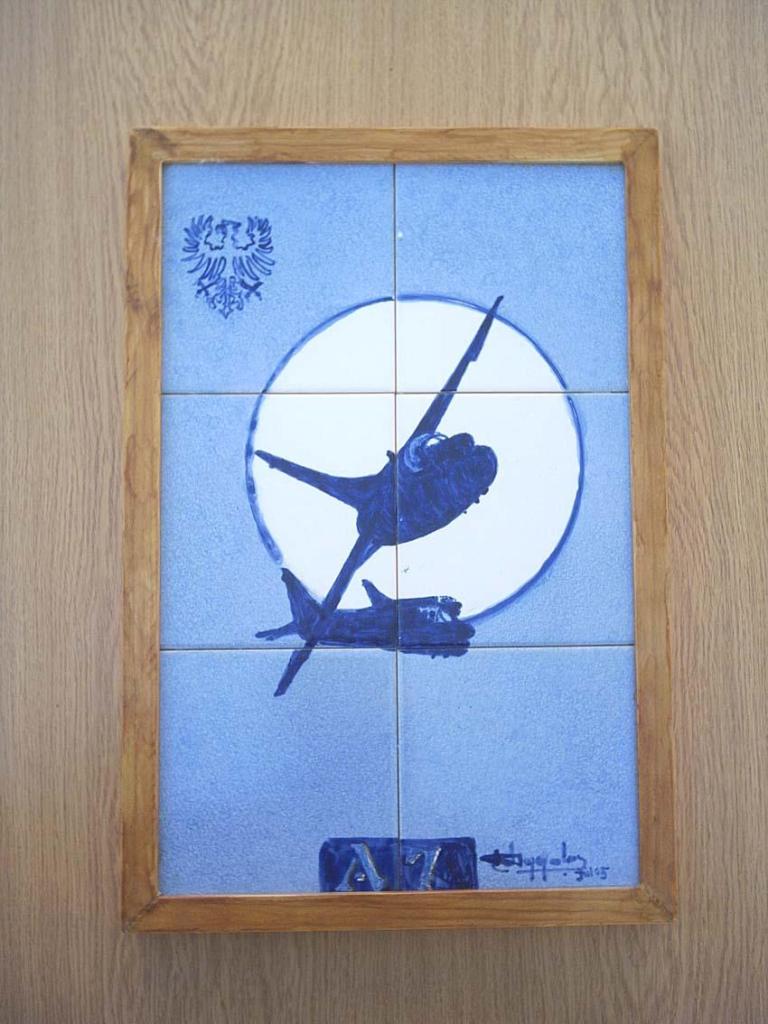
O A-7 Corsair II, foi a resposta da fábrica Vought (1965) a um concurso lançado pela Marinha Norte-americana para a aquisição de um caça-bombardeiro que fosse ágil e robusto com manutenção fácil e económica, com grande autonomia e capacidade de transporte de grandes quantidades de armamento tecnologicamente avançado. O A-7 foi a primeira aeronave a ser dotada de um HUD (Head Hup Display).
O A-7 foi introduzido na FAP, em 1981 (na BA-5, nas Esquadras 201 e 302 – Falcões, e 304 – Magníficos), com o intuito de colmatar o abate da frota dos F-86F Sabre, e, simultaneamente, que introduzir novas tecnologias na FAP.
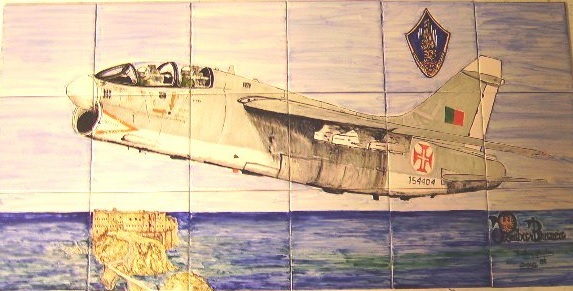
A fim de fazer a conversão dos aviadores portugueses para esta nova aeronave, a Marinha dos Estados Unidos “emprestou temporariamente” uma aeronave bilugar (TA-7 nº154404), a qual mantinha as cores da US Navy (branco) tendo por isso ficado conhecida como “a Pomba Branca”. A “pomba Branca foi devolvida à US Navy em 1985.
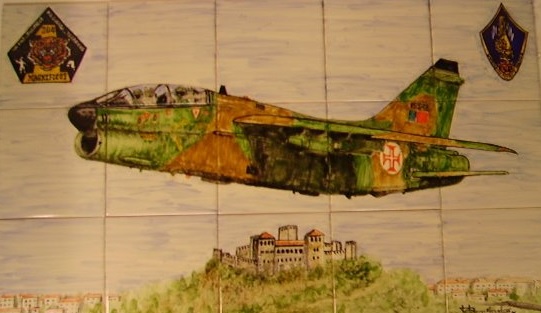
A versão do A-7 português era francamente melhorada que as suas congéneres anteriores, tendo recebido a letra “P” – A-7 (plus); que muitos entendiam tratar-se de “A-7 P”ortuguês. A FAP recebeu 50 aeronaves A-7P e TA-7P (versão bilugar, a qual não restringia a capacidade operacional da aeronave). Com a introdução destas aeronaves, a Força Aérea entrou definitivamente na era das novas tecnologias, uma vez que o A-7 tinha um sistema inercial (INS) para ataque a alvos com precisão e navegação autónoma em alto mar, onde não existem pontos de referência para navegação ou largada de armamento. Possuía um radar de acompanhamento do terreno, que permitia voar a baixas altitudes, executando com eficácia a penetração em território hostil. Tinha um equipamento de Proteção Eletrônica (EPM) ativo e passivo, algo que nenhum outro caça português tinha anteriormente. Para além de estar equipado com Radar Altímetro, PMDS, Computador de Tiro e de Navegação, RWR, ALQ131, Rádios e IFF, seleção de armamento, etc.
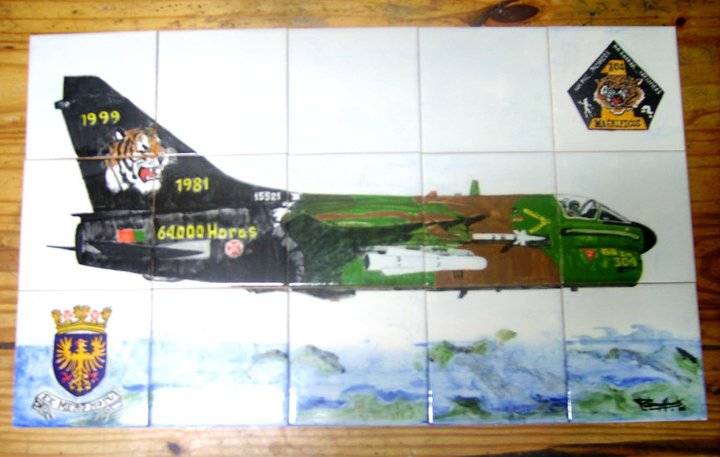
O último voo do A-7P ocorreu no dia 10 de Julho de 1999, com 64000 horas de voo e 18 anos ao serviço da Força Aérea Portuguesa, com o A-7P número de cauda 15521, o qual tinha uma pintura muito especial.
Depois dos Acordos de Dayton entrarem em vigor na Bósnia Herzegovina, impondo a Paz no território a partir do final de dezembro de 1995, as Nações Unidas (UNPROFOR – UN Protection Force) passaram à NATO (IFOR – Implementation Force) a tarefa de monitorizar o cumprimento dos Acordos. A IFOR entrou na Bósnia com cerca de 60.000 militares e uma componente aérea baseada no território. Um ano depois, e após terem decorrido eleições livres no País, a IFOR atingiu a sua data final com êxito na missão e foi desactivada. Em sua substituição a NATO criou a SFOR (Stabilization Force), reduzindo a força no terreno para cerca de 32.000 militares. Posteriormente, com o evoluir favorável da situação de segurança na Bósnia Herzegovina, a SFOR sofreu uma nova redução para 12.000 militares. Dez anos depois (2 de dezembro de 2005), a SFOR foi extinta e a NATO passou a tarefa de monitorização da Bósnia para a União Europeia (EUFOR), que criou para o efeito a Operação Althea (a Deusa Grega que curava as feridas dos guerreiros), operação essa que tinha cerca de 7.000 militares (mantendo uma componente aérea).
Com cada vez menos militares no terreno, e cada vez mais concentrados em poucos locais do País, a EUFOR necessitava de manter um forte e actualizado fluxo de informação, a fim de poder tomar decisões atempadas no tocante ao emprego das suas forças. Desta forma, e uma vez que em 2007 estava prevista uma nova redução da força para somente 1.600 militares, o Comando da Operação Althea decidiu seguir o conceito das equipas de Observadores Militares das Nações Unidas (UNMO), criando as Liaison and Observation Teams (LOTs). Estas equipas foram estabelecidas em variados pontos da Bósnia Herzegovina, cobrindo a totalidade do território.
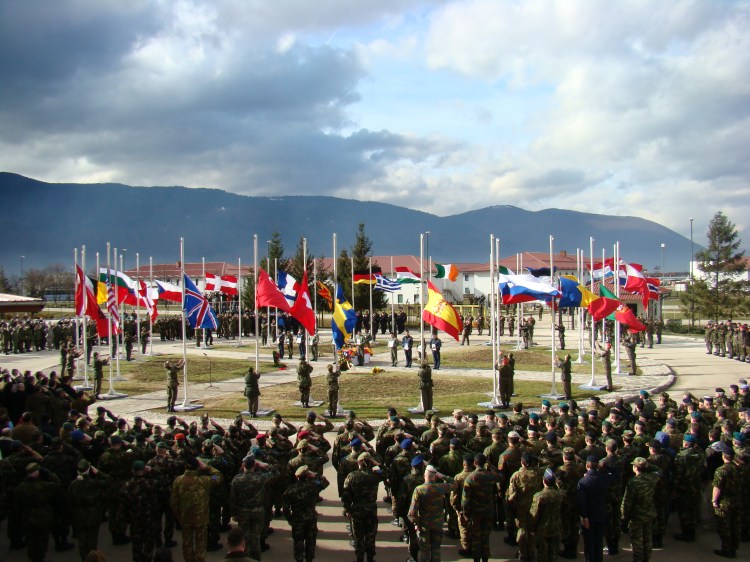
Camp Butmir – Sarajevo – HQ da Operação Althea.
Contudo, contrariamente ao sistema dos UNMO, as equipes dos Observadores da EUFOR não eram multinacionais, nem estavam sob o Comando Operacional ou financiamento da União Europeia; eram o resultado de acordos bilaterais entre os países fornecedores de forças e o Governo da Bósnia Herzegovina, estando, isso sim, sob o controlo e coordenação táctica da EUFOR. Quem definia quantos militares deveria ter a LOT, que meios deveria ter (carros, computadores, armas, etc.), que especialidades, quanto dinheiro deveriam/poderiam usar para financiar projectos locais, etc., eram as nações de origem dessas LOT e não a União Europeia.
Portugal manteve durante alguns anos duas LOT na missão Althea, ambas em território Sérvio no norte da Bósnia. A localização das LOT portuguesas era em Derventa e em Modrica, muito perto da fronteira com a Croácia (cerca de 30 quilómetros entre Derventa e a ponte fronteiriça sobre o rio Sava). Embora tivessem Areas de Operação (Areas of Operations – AOO) distintas, as duas LOT apoiavam-se mutuamente, distanciando cerca de 30 quilómetros entre elas. Cada LOT Nacional era composta por seis militares e três intérpretes.
De notar que o Manual das LOT Europeias, que define o modo de actuação e as diferentes tarefas a desempenhar pelos observadores militares da União, foi aprovado com base no modelo proposto pelos portugueses, cujas LOT foram consideradas o modelo a seguir. Para além dos militares que constituíam as LOT, Portugal mantinha ainda militares em cargos da estrutura de Estado-Maior da Althea, tanto ao nível global da missão como ao nível regional.
As tarefas de uma LOT eram:
– Observar e reportar a situação na sua AOO;
– Investigar e providenciar prontamente respostas a Pedidos de Informação (Requests for Information – RFI) do Escalão superior sobre a sua AOO;
– Fazer contactos e ligação com outras organizações internacionais e forças vivas (civis/militares) da Bósnia Herzegovina na sua AOO;
– Apoiar a recolha de informação e o trabalho da Comunicação Social Internacional;
– Elaborar e manter actualizados planos de evacuação para fora da sua AOO, em caso de agravamento da situação de segurança.
Embora a composição de uma LOT fosse da inteira responsabilidade da Nação que a implementava, o modelo regular implicava que a LOT deveria de ter a capacidade de executar duas patrulhas (auto) distintas, manter condições de segurança física e de comunicações/documental, ter entre 6 e 10 elementos, com a capacidade de manter 75% do pessoal permanentemente na LOT.
Paralelamente às LOT, Portugal também contribuía para a Operação Althea com um contingente da GNR, formado por 34 elementos, o qual recebeu uma Transferência de Autoridade (TOA) do Ministério da Administração Interna para o Ministério da Defesa, e marchou para a Bósnia para integrar a Unidade Internacional de Polícia (militar) da Althea. Este contingente estava sedeado em Sarajevo (Camp Butmir 2) e integrava um pelotão de ordem pública e uma equipa de investigação criminal. De notar que a investigação criminal da EUFOR para a Bósnia Herzegovina esteve sob comando português.
Em 2012, no seguimento de novas reduções na sua estrutura, a EUFOR passou a ter somente 600 militares e assumiou exclusivamente funções de apoio ao treino das forças militares da Bósnia Herzegovina. Algo que se mantém até aos dias de hoje.
During the Bosnian conflict (1992/95), Sarajevo was a besieged City, with Serbian forces (VRS) dominating al the surrounding hill tops around the City. All but one: – Mount Igman. Like all other hilltops, Mount Igman had also been under Serb domination, but during the conflict it changed hands to become a Muslin (ABiH) stronghold. The problem was that, between the Town and Mount Higman’s foothill, there was a vast open land where Sarajevo Airport was. Crossing the runways meant being shot down by Serb snipers/artillery; therefore, the City remained besieged. Whenever the Serbs wished to close the Airport, it would be close; to both land and air transportation. The only way Muslins could go through the Airport … was under it! Therefore, they built a narrow tunnel, starting on the basement of one of the apartment blocks neighboring the Airport; going under the runway; and ending on the Muslin controlled area on the other site of the Airport, at Mount Igman’s foothill.
With the construction of that tunnel the Serbian siege to the City had a flaw, from which the Muslins could bring weapons and first need provisions, as well as transfer people in and out of the City. In 1995 everybody knew about the existence of the tunnel, but only a few actually knew where the access points were. The ABiH concealed that information from most people, in order to avoid the VRS heavy artillery to bomb its entry/exit.
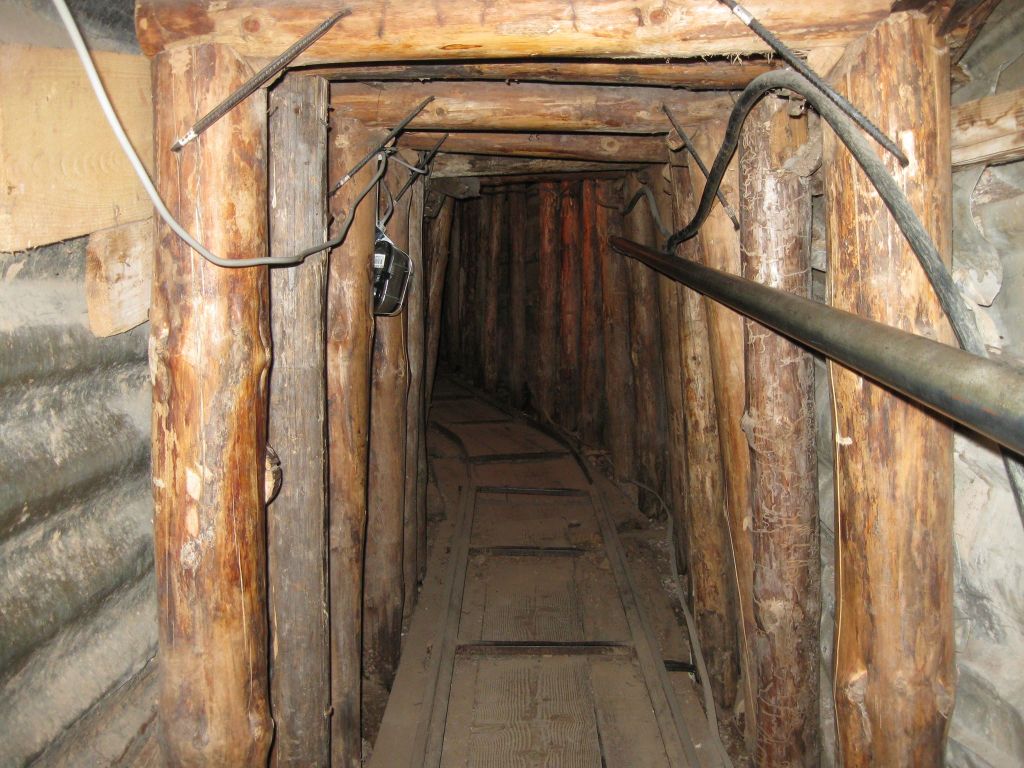
The famous Sarajevo tunnel – Photo by Jerry Tuomioja
Drilling the tunnel was not an easy enterprise, especially if it had to be handmade and in a concealed manner. However, its maintenance was no less hard. The terrains above were not stable, and the constant movement of aircraft was an added problem. In more than one occasion, several portions the tunnel collapsed while people were using it. Reconstruction works were a permanently ongoing, many times fighting with inundations and loose soils. Furthermore, the tunnel was quite long, without air extraction or any time of injection of fresh air, it was customary for people to have serious respiratory problems while crossing it.
The construction, maintenance and use of Sarajevo’s Tunnel are intrinsically a part of the City’s recent history, a demonstration of its population struggle for survival. Years later, after the war ended, the tunnel collapse definitively, but a small part of it became a Sarajevo touristic attraction.
Um dia, no ano de 1995, durante a missão das Nações Unidas na Bósnia Herzegovina – UNPROFOR – ocorreu um episódio numa equipa de Observadores Militares da ONU (UNMO) o qual, para além de estranho, era no mínimo anedótico. Contudo, quem o contava jurava que tinha realmente acontecido.
Numa das zonas Sérvias da Croácia – na Krajina do Sul – a esquadra de polícia local recebeu uma queixa contra o Secretário-Geral das Nações Unidas – Boutrus Ghali. De acordo com o queixoso:
– “Butrus Gali é perigoso e tem a tendência de morder às pessoas que entram nas instalações das Nações Unidas. Deve de ser acorrentado a um poste de segurança ”.
Depois da estupefacção inicial, a cena clarificou-se: o queixoso referia-se ao cão mascote da Equipa UNMO da localidade, o qual guardava com zelo o perímetro cercado da vivenda alugada onde a equipa da ONU residia e trabalhava. Aquando da escritura da queixa o homem referiu-se ao animal pelo nome (que toda a gente conhecia), mas não mencionou que se referia a um cão.
Essa equipa de Observadores Militares da ONU havia adoptado um cachorro bonacheirão, ao qual, por brincadeira e carinho, haviam dado o nome de Butrus Gali – o nome do Chefe máximo da ONU – mas escrito de forma distinta para não ofender o original. O cachorro entretanto foi crescendo e transformou-se num mastim que, embora dócil e brincalhão para com os capacetes azuis, era particularmente zeloso pela guarda do perímetro da casa. Nenhuma pessoa estranha à equipa deveria ter a ousadia de entrar sem se fazer anunciar primeiro, a fim de que os UNMO se certificassem que o cão não seria um problema. Era um procedimento simples, óbvio, e que estava em vigor há bastante tempo. Os elementos da equipa UNMO rodavam com o tempo, mas o animal permanecia sendo a mascote e nunca tinha havido problemas. Havia mesmo um sinal no portão exterior da vivenda que dizia (em Inglês e Servo-Croata):
– “Cuidado com o cão; faça-se anunciar”.
No caso do queixoso, o “cavalheiro” decidiu entrar no perímetro da ONU por motivos ainda por clarificar, à noite, sem se fazer anunciar nem tocar à campainha. Após passar a vedação e a meio do jardim da casa, teve um “encontro imediato do 3º grau” com Butrus Gali. Reconhecendo que havia cometido um erro grave, o “cavalheiro” optou por fugir em direcção aos portões, os quais conseguiu ultrapassar mas não sem antes levar uma tremenda dentada nos “gluteus maximums”. Obviamente que a queixa foi inconsequente, tendo o queixante que se justificar perante a polícia acerca dos seus motivos por ter entrado sem ser convidado e sem se fazer anunciar, à noite, na casa dos UNMO.
Quanto a Butrus Gali e aos UNMO, a vida continuou normalmente, somente com um acrescento no sinal de “Cuidado com o cão” onde se podia ler (também):
– “CAUTION – Don’t fuck around with Butros Gali!
O outro Boutrus Ghali, o original, era uma pessoa muito querida dos UNMO da Bósnia e conhecido por ser afável e simpático, “incapaz de morder a quem quer que fosse”. Contudo, como o respeito pela UNPROFOR era muito baixo junto das fações beligerantes, este episódio teve o efeito de levantar o moral da comunidade UNMO.
Pena que tenha sido o Butrus Galiu errado a fazê-lo!
Upon arriving to Pleso Airport to catch my inaugural flight to Sarajevo, I saw myself sanding in a line with other UNPROFOR fellow soldiers, in the open, next to a counter with a gate-barrier operated by a CIVPOL policewoman. Beyond the gate-barrier, standing alone in the middle of the snowy apron, there was an old Antonov aircraft. The vintage airplane was stubborn to continue flying no matter the year, time, weather or place. It was painted in white … or at least a good part of it was white; not considering the smoke and oil stains on the wings and on the rear fuselage. On its tail, and on its fuselage, it proudly exhibited big black UN letters, showing the world it had enough of Cold War and was now a Peacekeeper.
At the gate, the CIVPOL female agent was making sure the boarding list was correct, checking the travel orders and ID cards of all the passengers.
– “Welcome to Maybe Airlines” – She said. – “I just saw the crew, weather is not too bad and they are not shooting into the air in Sarajevo; therefore, Maybe there will be a flight today!”
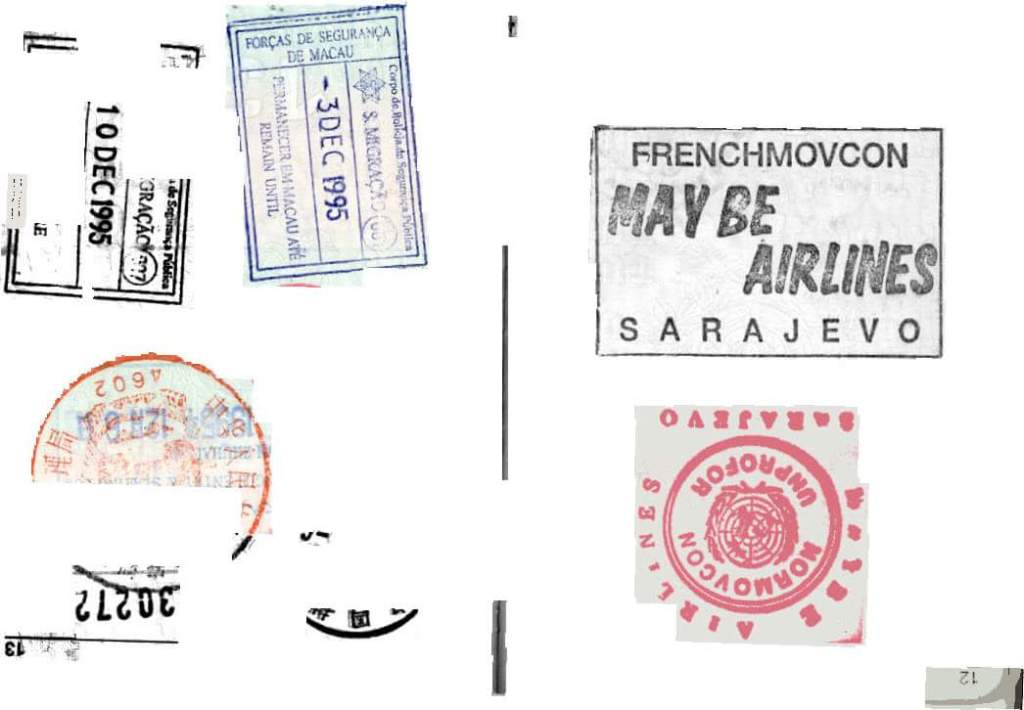
The nickname “Maybe Airlines” was because no one really knew if the scheduled flights were going to take place, or not. It was not a question of availability of the crew, or of the aircraft; it was the overall circumstances that dictated the schedules. “Maybe Airlines” was a tenderness nickname for UNPROFOR air wing that everyone loved. We not only loved it, we were proud to fly on it. There was even a “Maybe Airlines” stamp everybody wanted to collect on their military travel orders; even the (many) civilians visitors wanted to have it on their passports … and they got it!
Maybe Airlines stamp on Passports (photo by Fernando Costa)
Meanwhile, a crew vehicle approached the Antonov, and the policewoman raised the gate-barrier yelling to the queue of blue helmets standing in the cold:
– “Passengers to Sarajevo; please move to the aircraft, show your ID to the crew and board. Leave your luggage here, because we will carry it to the aircraft on a trolley.”
Walking towards the aircraft, we all studied the former soviet veteran, wondering if it was a good idea to board it. I must have had a very suspicious expression, because the Russian load-master guessed my thoughts and said:
– “My friend, welcome to Maybe Airlines; we will be departing shortly and … Maybe we will be arriving in Sarajevo … Care to join us?”
After seating on the cargo bay of the aircraft, the Load Master yelled:
– “This will be non-smoker flight, because we carry ammunition … make sure you seat on top of your bulletproof vest before strapping in … have a good flight!”
The rear ramp closed and off we went.
Although the sexiest destination of “Maybe Airlines” was Sarajevo in Bosnia, they also used to fly to Tuzla (also in Bosnia), to Zagreb and Split (in Croatia) and to Belgrade (in Yugoslavia).
Years later, the “Maybe Airlines” franchising was applied to all UN missions with an air component. However, regardless the place and the situation, I always remember the old stubborn Antonov that refused to be on an air museum and kept on flying.
O Tiger Moth – Uma das aeronaves mais cinematográficas
Os DH-82 Tiger Moth foram construídos após a Primeira Grande Guerra, com o objectivo de aeronave de instrução (civil/militar) e de recreio civil. Estas aeronaves, das quais ainda hoje há várias a voar por todo o Mundo, tiveram uma produção em massa (mais de 7200 aviões) devido ao seu sucesso.
Quando Portugal decidiu substituir os Avro 504 e Caudron G.3, adquiriu um dos (na altura) novos Tiger Moth e Avro Cadete. Fizeram os testes e cegaram à conclusão que o Tiger era melhor. Contudo, o Avro Cadete foi preservado e ainda hoje pode ser visitado no Museu do Ar – em Sintra – sendo a única aeronave do género em toda a Europa e uma das duas únicas originais no Mundo.
Os Tiger entraram ao serviço em 1934, para equipar as esquadrilhas de instrução de pilotagem da Aeronáutica Militar, e da Aviação Naval, num total de 141 aeronaves. Grande parte dos Tiger Moth portugueses foram construídas sob licença nas OGMA.
Esta aeronave, muito manobrável e apta para acrobacia, não tinha travões (usava o atrito do patim de cauda no solo relvado), não tinha comunicações, e nem sequer tinha um manómetro velocímetro, usando para o efeito uma peça metálica no montante da asa, que se deslocava com a deslocação de ar sobre uma escala graduada, dando a noção da velocidade da aeronave.
Aquando da criação da Força Aérea, em 1952, cerca de 30 Tiger Moth ainda estavam a voar, e foram transferidos para o novo Ramo das Forças Armadas.
Foram abatidos ao serviço em 1955, sendo substituídos pelo De Havilland Chipmunk, o qual, aliás, tem a silhueta da fuselagem muito parecida com a da Tiger Moth.
O Museu do Ar tem três Tiger Moth expostos (um em Sintra, um em Alverca e um no Estado-Maior da Força Aérea em Alfragide), entre eles o número 111 (em Sintra) que foi o primeiro DH-82A Tiger Moth recebido pela A.M.
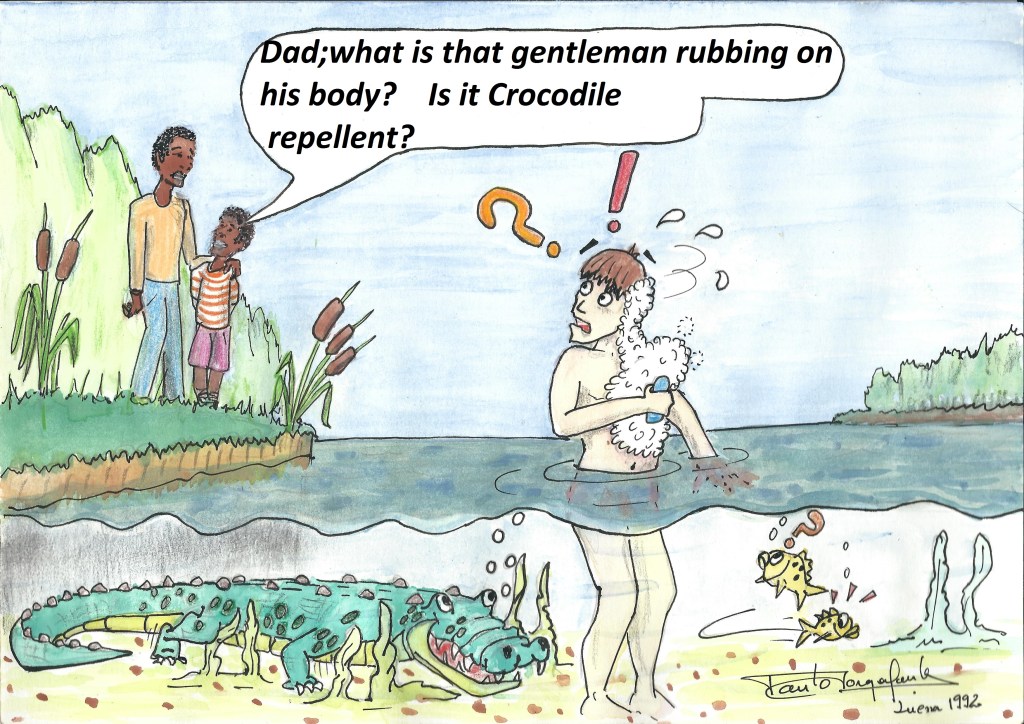
In a Peace Support Mission, each person has a role to play and a Job Description to fulfill. However, there’s always a myriad of little other things to be done, that are assigned to no one in particular and everybody has got to do. Such was the case of collecting water in the Luena River, in Angola, during the UNDP mission 1992. I recall the very first time I went to the river, to replenish the washing water tanks. A Brazilian comrade, who was already a veteran at the site, accompanied me and both of us loaded the UN pick-up truck with one water pomp and a three cubic meters plastic tank.
The Brazilian took the lead of the “Water Patrol” and we drove towards the River. Upon arriving to a spot where the car could literally enter a fluvial beach, we’ve filled the tank and while observing the beautiful African landscape and the local children playing on the river’s shallow waters. Stimulated by the African Summer heat and the kids, we also decided to have a bath. In fact, having a river bath had always been in our mind; hence we have brought along our soups.
“You think it’s OK to have a bath in the river?” – I asked my Brazilian comrade.
“Why not! The kids are having a good time … why shouldn’t we?”
The joyfulness of those children was contagious and after washing ourselves, we also enjoyed a relaxing time in the water. Out of his veteran experience, the Brazilian comrade advised me:
“These are all good people. You can leave your wallet on the shore and no one with touch it. But if you leave your soap unattended … they will take it!”
The long Angolan civil war had imposed severe restrictions to the interior of the Country. Only essential products were being brought in … and a good fragrant bath soap was not on the list. Hence, it was a coveted item. They said the youngsters had never seen such a flagrant soap before. Maybe it was an exaggeration … but … just in case … we’ve hidden the soap among the grass while we had a sort swim.
That was a success, repeated several times in different spots of River Luena, always sharing the waters with the local kids.
Months later, back in Portugal, I was made aware that, in one of the spots we had had a bath, another UN (civilian) fellow tried to do the same and had a dramatically serious incident with a crocodile. Apparently, during the rainy season the water level raises significantly and enters the hidden caves were the crocodiles are hibernating, awaken them up. We had our little adventure together with the children, which knew exactly where and where to do it … the other guy didn’t.
Much later I was also told another Angolan war story, related with the same situation. Allegedly, during the South Africa-Angola conflict, the South Africans tried to infiltrate the Angolan territory for intel. gathering, with scuba divers. Strangely, the intel. teams were not returning with the required information, until someone reminded the military planners that they were sending scuba divers in the season of the year when the crocodiles were active.
No dia 26 de Agosto de 1995, enquanto conduzia em direcção ao Quartel-General das Nações Unidas (UNPROFOR) na Bósnia, a Cidade de Sarajevo foi atacada por uma arma que eu nunca tinha visto, ou ouvido falar, anteriormente: – Bombas Porco (Pig Bombs).
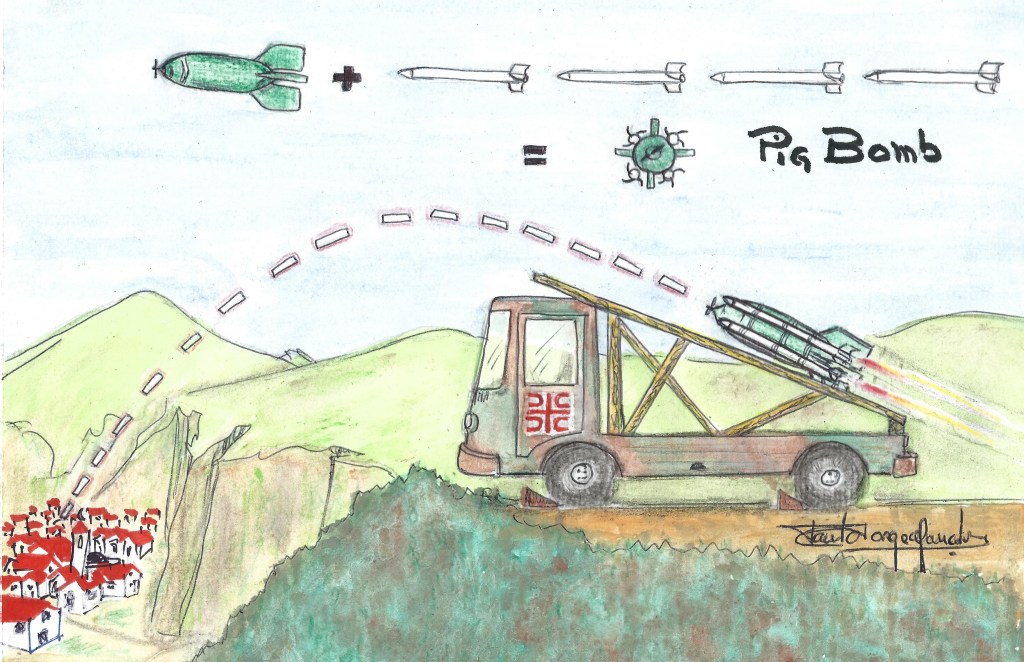
As Pig Bombs (Krme Bomba, em servo-croata) eram ataques aéreos improvisados, sem recurso a aeronaves, usando as mesmas armas que os caças-bombardeiros usariam – Rockets ar-terra e bombas de 250 quilos. Como a Cidade de Sarajevo ficava numa depressão geográfica, completamente rodeada por montanhas e colinas dominadas pelas forças Sérvias, bastava providenciar um primeiro impulso no alto dessas elevações para depois a gravidade fazer o resto do trabalho e levar as bombas para o alvo. A precisão das Pig Bombs era muito medíocre, mas o efeito psicológico (PSYOPS) daqueles ataques era devastador. Faziam um ruido muito particular, como quem estivesse a rasgar lençóis de linho, e, como eram lentas no seu trajecto, ouviam-se com muito bem, durante muito tempo. A população entrava em pânico e por todo o lado se ouvia gente a gritar:– “KRME BOMBA, KRME BOMBA”.
As Bombas Porco eram lançadas de rampas improvisadas em camiões de caixa aberta estacionados no cimo das montanhas sobranceiras a Sarajevo. O dispositivo era constituído por quatro rockets ar-terra fortemente atados em volta de uma bomba de 250 Kg. Depois igniciavam electricamente os rockets provocando o impulso inicial necessário e todo o conjunto “descolava” por alguns metros … espaço suficiente para colocar a bomba num trajecto descendente em direcção à Cidade. A espoleta da bomba era previamente ajustada para a situação vigente.
Alegadamente, havia um outro tipo de Bombas Porco – as Krme dva (Porco dois) que eram bidons de combustível simplesmente empurradas encosta abaixo, com o objectivo de se “espatifarem” contra o primeiro obstáculo (casa) que encontrassem no seu caminho. Nesta opção não havia ruídos nem grande explosões. Eram algo muito ao género do Naplam, uma vez que os Sérvios colocavam um aditivo no combustível que o tornava gelatinoso. Depois juntavam um dispositivo capaz de gerar fogo nesse combustível e obtinham um rasto de fogo que teimava em não se extinguir onde que que tocasse.
Enquanto as Krme dva eram (para mim) uma possibilidade não provada, as Krme Bomba eram sem qualquer dúvida algo que testemunhei. O considerável arsenal aeronáutico Sérvio estava “aterrado” devido à imposição da No Fly Zone, supervisionada pela NATO; mas isso não impediu os Sérvios de o usar.
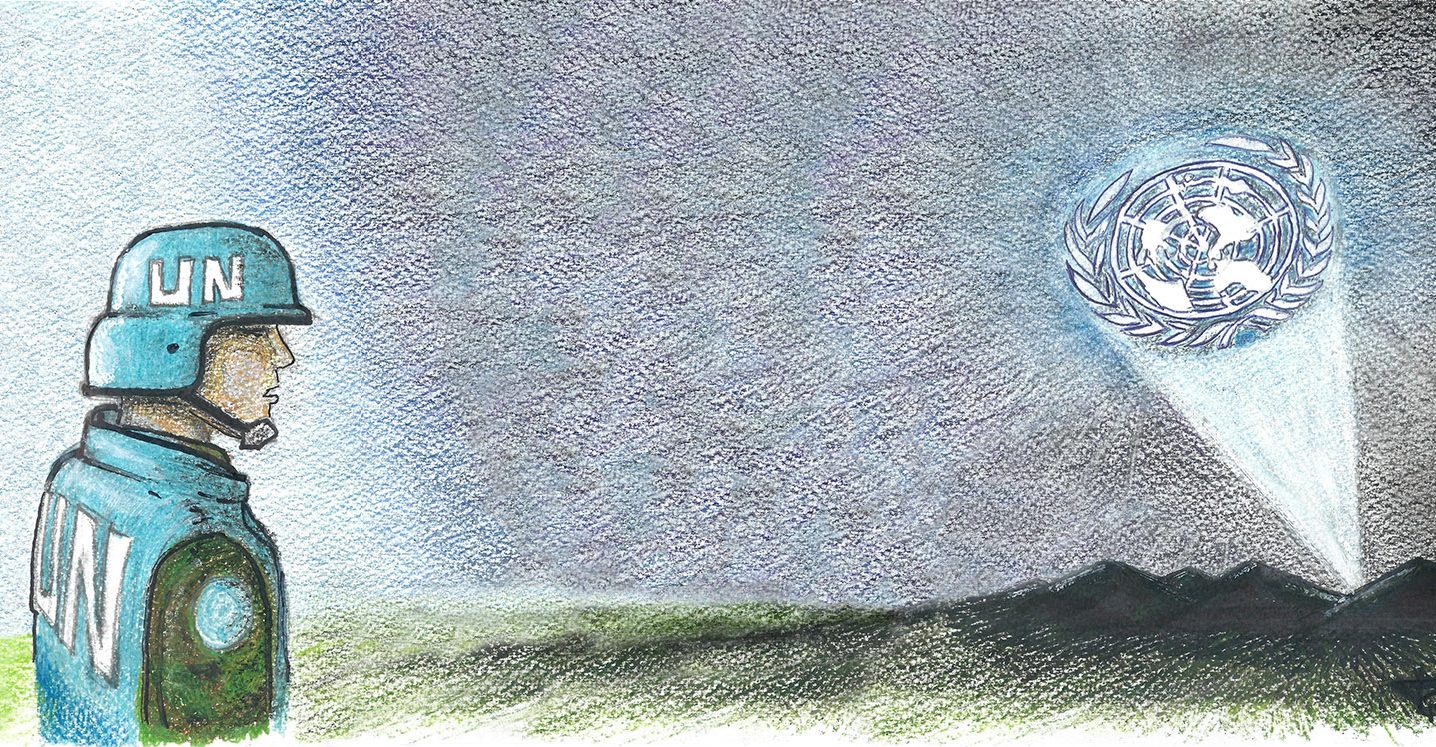
Not many people have noticed that there are two UN(s): – “The Black UN and the Blue UN”. At least; that’s how many of the autochthones of the missions’ host nations see us, when we pass by in our UN vehicles.
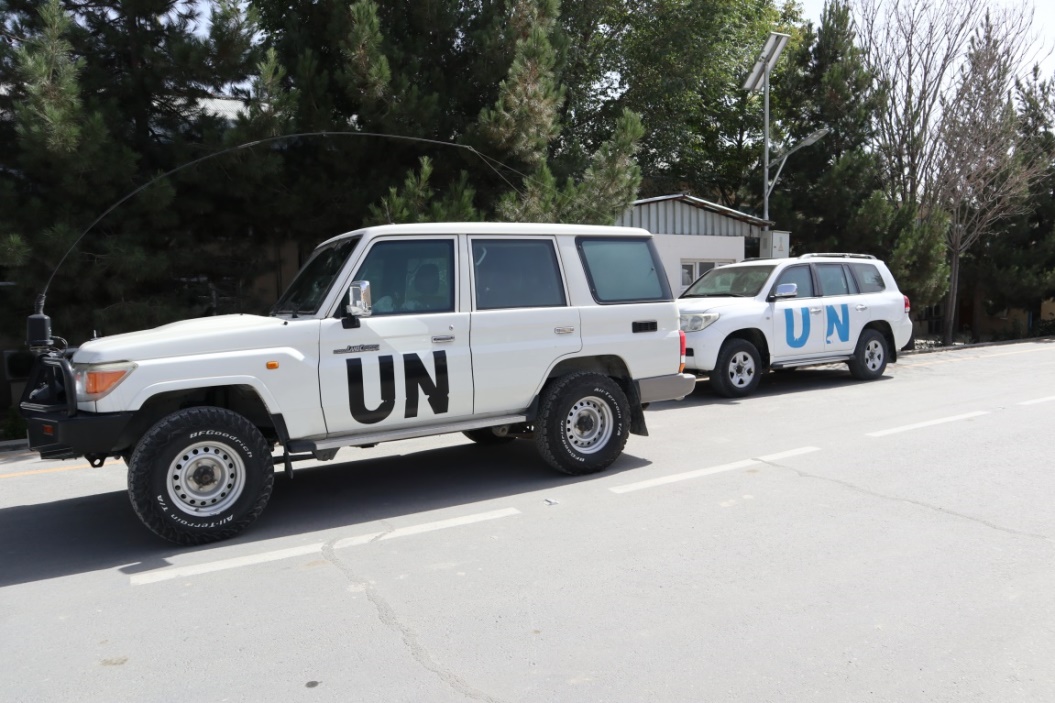
The reason for this distinctive appearance resides on the UN lettering exposed on the organization’s vehicles. Some have the lettering on light blue and others have it on black.
But the chromatic difference is not a random option, neither is it the lack of proper ink. In fact, it exists to differentiate different members of the “UN Family”. The black UN letters (the most seen) are assigned to UN country missions (UNMOGIP, UNAMA, MINUSCA, etc.), whereas the blue lettering is reserved for UN agencies and programs (UNHCR, UNDSS, UNDP, etc.), some of them even display the agency’s logo on the vehicle (but always on light blue).
The problem is the population’s misunderstanding of the two different coloring. The people coming in a Blue UN vehicle, normally arrive to offer goods, to help in medical care, etc. In turn, the foreigners arriving in black UN lettered vehicles are normally inspecting, observing, even military interference with the local activity (especially in warlords’ dominated territory). Result; the locals like the Blue UN better, because they actually give them stuff.
Bottom line, regardless the coloring of its cars, people may like or dislike the United Nations … but they are not indifferent to it.
“The UN was not created to take mankind to heaven, but to save humanity from hell.”
Dag Hammarskjöld – United Nations Secretary-General – 1954
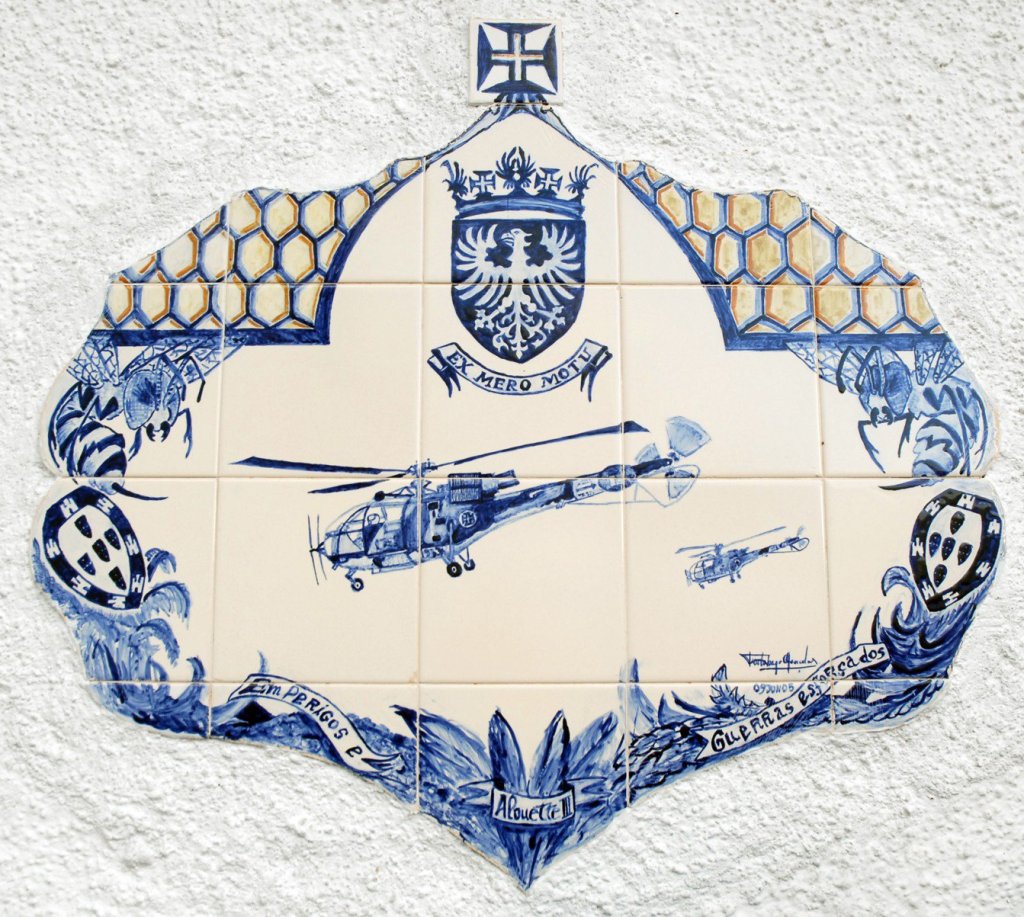
Num dos dias da Força Aérea, onde se fez uma exposição de aeronaves no Centro Comercial de Cascais, ocorreu um episódio que marcou quem estava presente no local. Entrou no Centro um casal sénior acompanhado por seus filhos adultos, e passearam-se distraidamente pelas peças exibidas no recinto. De repente, ao passar em frente a uma das aeronaves expostas, o homem com aspecto mais maduro estancou, caiu de joelhos no chão e chamou a família. Estava em frente de um Alouette III exactamente igual àquele que o tinha salvo na Guerra do Ultramar, quando jazia ferido no meio do capim durante uma emboscada. A admiração daquele homem por aquela máquina era tanta, que não conseguiu conter a emoção e começou a chorar… ali … no meio do Centro Comercial, em frente ao “seu” AL III.
Na colmeias dos Zangões (BA11 – Beja)
Este é o “fado” do helicóptero mais famoso da Força Aérea Portuguesa; vir a ser recordado com amor por muitos por ter salvo vidas, odiado por outros por as ter ceifado na sua versão “Heli-canhão”, admirado por milhares nas acrobacias dos Rotores de Portugal e respeitado por todos os pilotos militares, que aprenderam a arte de voar em asa rotativa nos últimos 57 anos.
O Sudaviation – SE 3160 Alouette III entrou ao serviço da Força Aérea Portuguesa em 1963, a fim de complementar e incrementar o sucesso que o seu congénere mais fraco – o Alouette II – estava a ter nos teatros de operações ultramarinos. A FAP operou 142 AL III no Ultramar, sendo estes caracterizados por serem aeronaves muito manobráveis e versáteis que desempenhavam cabalmente as missões de heli assalto, salvamento, evacuação sanitária, resgate em ambiente naval com guicho, patrulhamento, observação/comando e controlo aéreo, transporte tático e instrução de voo.
O AL III pode transportar 6 passageiros, ou 2 macas e 2 passageiros, ou 800 Kg de carga interna, ou ainda 750 Kg em carga suspensa. No que toca a armamento, pode ser equipado com um canhão lateral de 20 mm de calibre e um sistema de lança-foguetes com capacidade para 12 foguetes de 2,75″.
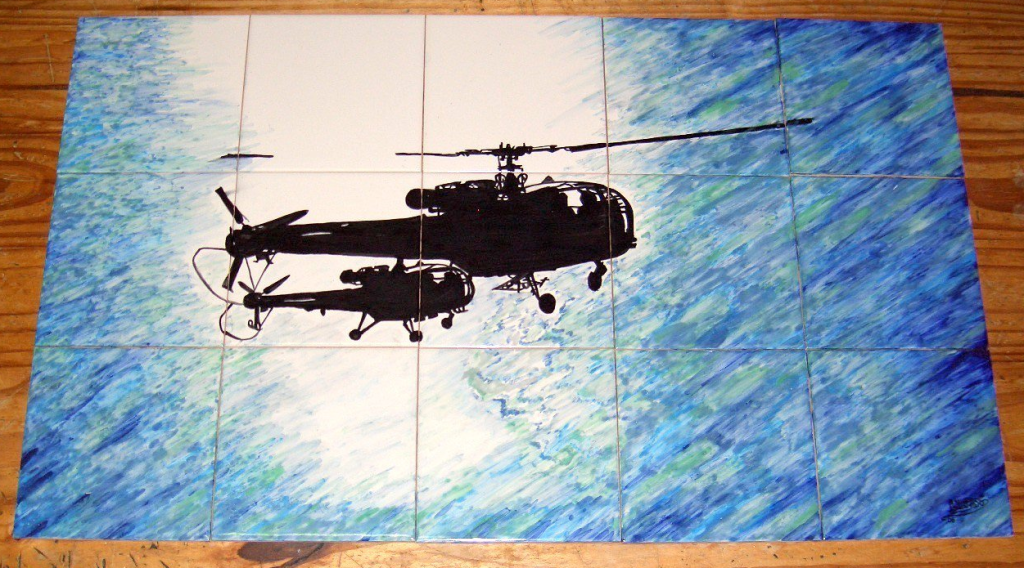
Heli ataque sobrevoando Almourol
Para além da Guerra do Ultramar, os Alouette III da Esquadra 552 (Zangões) foram das poucas aeronaves Portuguesas a manter um destacamento permanente numa missão de Manutenção de Paz das Nações Unidas, nomeadamente em Timor-Leste. Em 2019 a FAP adquiriu o novo helicóptero Koala, o qual virá substituir os Alouette III, entrando estes últimos em “phase out” gradual, até à sua completa extinção.




 OPen samento