Guerra da Bósnia Herzegovina – missão de Manutenção de Paz UNPROFOR – 1995. No dia 18 de agosto choveu bastante durante praticamente todo o dia. Numa situação normal, a pesada chuva seria indício de um dia mais calmo na frente de batalha, com os combatentes recolhidos nos seus abrigos. A inclemência meteorológica é, regra geral, inibidora de grandes iniciativas belicosas. Contudo, naquele dia ocorreu exatamente o contrário, ficando marcado por um injustificado incremento do conflito. O incidente que mais atenção atraiu foi um ataque, por fogo de snipers, a um dos poucos autocarros que ainda circulavam na Cidade, numa zona mais segura de Sarajevo. Nesse transporte público viajavam adultos e crianças e houve muitos feridos e mortos. Os comentários que se ouviam recordavam um incidente parecido, que teria acontecido no ano anterior, onde snipers muçulmanos abriram fogo sobre um autocarro com passageiros da sua própria etnia, a fim de contribuírem para a narrativa mediática de culpabilização aos sérvios.
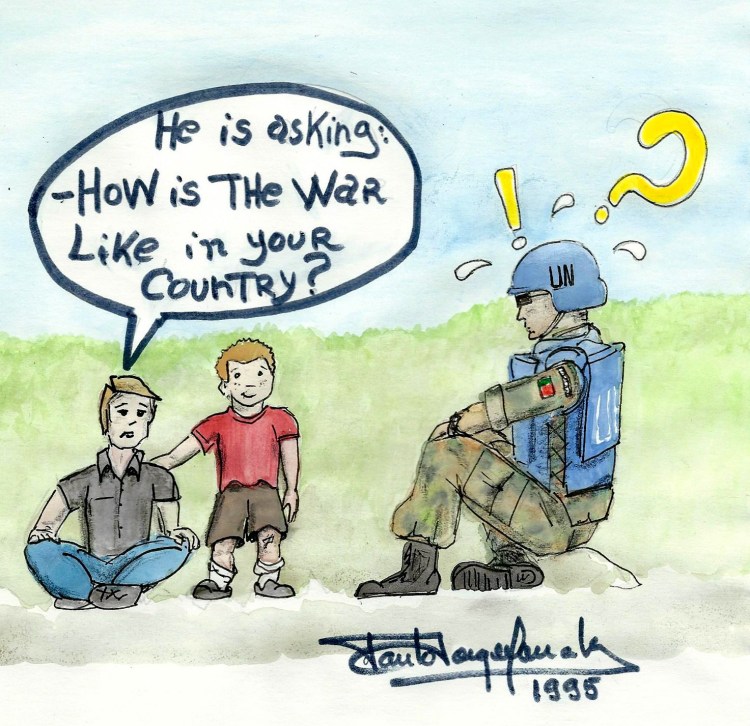
Contudo, a mim, o que mais me marcou naquele dia foi a simples pergunta do de um miúdo que morava na minha rua que, traduzido pelo irmão mais velho, me perguntou: “Como era a Guerra em Portugal?“
Para aquela criança, a guerra era a normalidade e não entendia a coisa de outra forma. Desta forma, todos os países deveriam ter a sua própria guerra, com o ixotísmo próprio de cada região. Com os seus quatro anitos mal medidos, tinha a consciência adaptada aos últimos três anos de cerco à Cidade de Sarajevo. Ele nunca tinha tido a oportunidade de jogar à bola com outras crianças na rua, sem estarem preocupados com os snipers ou a artilharia inimiga. A única brincadeira de rua daquela miudagem era o “jogo das escondidas” … literalmente.
Tradução – “ele está a perguntar como é a guerra no teu País.”
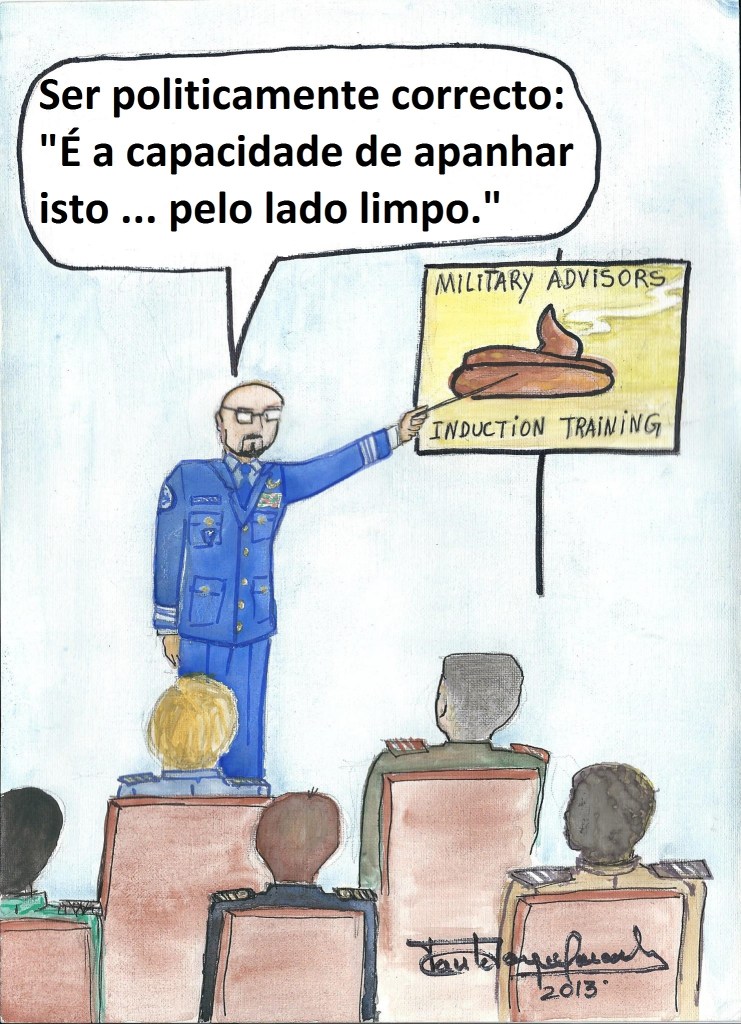
Na outra ponta da Europa, em Lisboa, eu tinha um outro miúdo um pouco mais novo e fiquei impressionado com a situação, ao ponto de ter desenhado este (acima) cartoon para exprimir o que sentia. Este desenho acabou por dar a volta ao Mundo, uma vez que os mesmos camaradas Capacetes Azuis pensavam exactamente o mesmo que eu, e usaram-no também para complementar o velho Grego:- “Os velhos decidem fazer a Guerra mas são os jovens que morrem a combatê-la” … e as crianças que lhe sobrevivem ficam marcadas para a vida!
De acordo com a agência noticiosa Al Jazeera, a Policia Intel./Informações Afegã (National Directorate of Security – NDS) prendeu na última sexta-feira (03ABR2020) o líder do ISIL no Afeganistão – Aslam Farooqi – juntamente com o seu Estado-Maior.
Acto contínuo, e de acordo com a mesma agência noticiosa, os Taliban decretaram que os acordos que haviam feito com os Estados Unidos deveriam ser suspensos, uma vez que os americanos continuam a efectuar ataques com drones às posições Taliban e os prisioneiros que o Governo Afegão tem em seu poder ainda não foram libertados.
Tudo o que se faz no Afeganistão está relacionado com … todo o resto. Não há pedra que se possa mover, sem que um rio tenha de mudar de leito. O país é uma manta de retalhos solidamente colada pelo cimento dos Séculos. As pessoas nas cidades do interior afegão diriam: “sempre assim foi … porque haveria de mudar agora?”
Num país onde existem tantas entidades étnicas que não dá para seleccionar uma maioria. Nenhuma etnia tem sequer 50% da população; eventualmente poder-se-á considerar uma minoria com maior representatividade – uma “minoria maioritária” – os Pashtuns. Porém, tudo fica mais difícil se atendermos que as tribos Pashtuns (porque estamos a falar em ambientes tribais) são as mais conservadoras e resistentes à mudança no estilo de vida. O ambiente ideal para os Taliban se refugiarem e desenvolverem, em ambos os lados da “fronteira” Afegã/Paquistanesa.
O problema é que a Comunidade Internacional está a tentar aplicar conceitos de democracia moderna, numa sociedade baseada em tribalismo medieval.
A verdadeira solução terá de ir à raiz dos problemas, cortar as raízes daninhas e criar condições para algo distinto e francamente atractivo para todas as partes (no Afeganistão e no Paquistão). Porém, numa sociedade medieval, ter-se-iam de impor essas mudanças com “punho de ferro”. Algo impossível de se conseguir dentro dos conceitos modernos de democracia e direitos humanos.
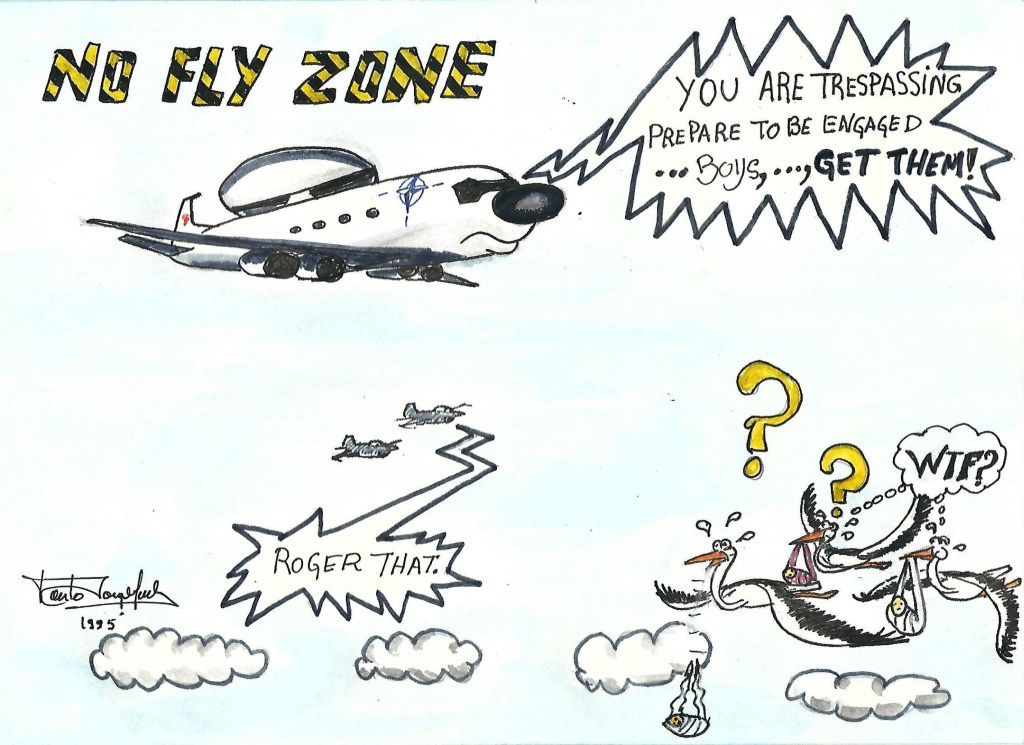
On night of 24 February 1995, I was on duty at the UNPROFOR radar console assigned by the Yugoslav authorities at Belgrade’s International Airport Area Control Centre (ACC). At about 02H00 in the morning, four large targets pumped-up flying over Bosnia, with a separation between radar contacts of about 10 Km (some 20 minutes between each target). The weather was rough, partly clouded with strong winds and reduced visibilities; not good for slow moving helicopters to contour mountain tops in order to avoid radar detection. The only option was to fly above the mountains on a straight line, but very slow, and expect the radar “Moving Target Indicator” filters would assume they were ground clutter and delete them out of the screen.
The initial radar contact was made over the Croatian Southern Krajina and the four large targets crossed the entire Bosnia airspace, eastbound, disappearing after crossing the border with the Serbian Republic of Yugoslavia. The radar blips were consistent and, due to its reduced speed, it took just over two hours between the initial and final radar contact. As the four targets got closer to the Yugoslav radar antennas, I could perfectly see that each large blip was in fact a formation of several other smaller blips.
In order to maintain a transparent and impartial posture, I called the Yugoslav air traffic supervisor and asked his comment. The Serbian supervisor looked carefully to the radar screen and said:
– “Those are migration birds!”
– “Migrations birds? Flying at the speed of an helicopter? During the winter? Going Eastbound? At 2 o’clock in the morning? With this lousy weather? I don’t think so! But okay, I will make sure to add your opinion on my report. We report what we see. The decision if it is or not a violation of the NFZ, is well about my pay grade.”
Although I knew that there were some species of birds that would fly at night on their migrations flights, and some of them flew fast, I was very much aware that birds fly south on autumn to avoid the winter conditions; not east, and not in the middle of the snowy Bosnian winter. Once again, NATO aircraft were in the air, but didn’t seem to react to those slow moving targets; because the AWACS radar filters deleted everything moving bellow 90Km/h (cars speed).
No ano de 2007, por razões do fórum sociológico, a pequena cidade de Siauliai tinha mais de uma dezena de orfanatos, alguns dos quais a debaterem-se com sérios problemas de ordem financeira.
Dessa forma, tinha-se tornado quase uma tradição os vários destacamentos da NATO apoiarem essas instituições, ou as crianças que ali eram recolhidas.
O destacamento da Força Aérea Portuguesa na Lituânia, em 2007, quis dar continuidade a essa tradição Aliada. Porém, uma vez que não era uma função oficial, essa iniciativa não seria suportada por verbas do Estado Português. Desta forma, os militares da Força Aérea na Lituânia juntaram-se e tomaram uma decisão unânime: – “Vamos fazer uma festa de Natal para as crianças; pagamos nós do nosso bolso!”
Com o apoio das Relações Públicas da Base de Siauliai,
Tal como numa operação militar, e sempre com o apoio oficioso da Força Aérea Lituana, foi feito uma acção de intelligence sobre os potenciais “alvos”, tendo sido seleccionado um orfanato, com 98 crianças, que ainda não tinha recebido qualquer apoio do pessoal da NATO. No briefing de intel. Ficamos a saber que as crianças ali internadas tinham idades compreendidas entre os quatro e os dezassete anos, e que estavam organizados em oito grandes grupos, denominados de “Famílias”. Cada “família” tinha capacidades e carências próprias.
Com o “alvo” identificado e caracterizado, passou-se à fase de planeamento da acção, com o levantamento de capacidades do nosso Destacamento.
Verificou-se que um dos militares Lusos, tinha como passatempo tocar saxofone, tendo levado consigo para a Lituânia o seu instrumento para praticar nos seus tempos livres. Este militar fez uma selecção de músicas de Natal e ensaiou um pequeno concerto ao vivo para as crianças.
Após levantamento de necessidades práticas do orfanato em questão, os militares portugueses cotizaram-se, conseguindo a soma superior a 1000 Euros para patrocinar o evento. Uma delegação de airmen Luso/lituana deslocou-se a uma grande superfície comercial de Siauliai e foi adquirido o seguinte material:
– 1 Frigorífico combinado com grande capacidade;
– 4 Fornos Micro-ondas;
– Sumos e biscoitos em quantidade, para um lanche de cerca de 70 crianças;
– 98 Pacotes de doces e drops, para distribuição individual;
– 8 Cabazes de Natal, com brinquedos de utilização colectiva. Sendo cada cabaz constituído por:
– Conjunto de carrinhos miniatura;
– Uma bola de basquetebol ou de futebol;
– Material para colorir ou pintar;
– Um puzzle de grande dimensão;
– Jogos variados (Xadrez, Damas, Dominó, Glória, etc.);
– Dardos magnéticos.
A juntar ao cabaz comprado no supermercado, as crianças receberam ainda:
– Autocolantes e pins com o emblema do Destacamento Português;
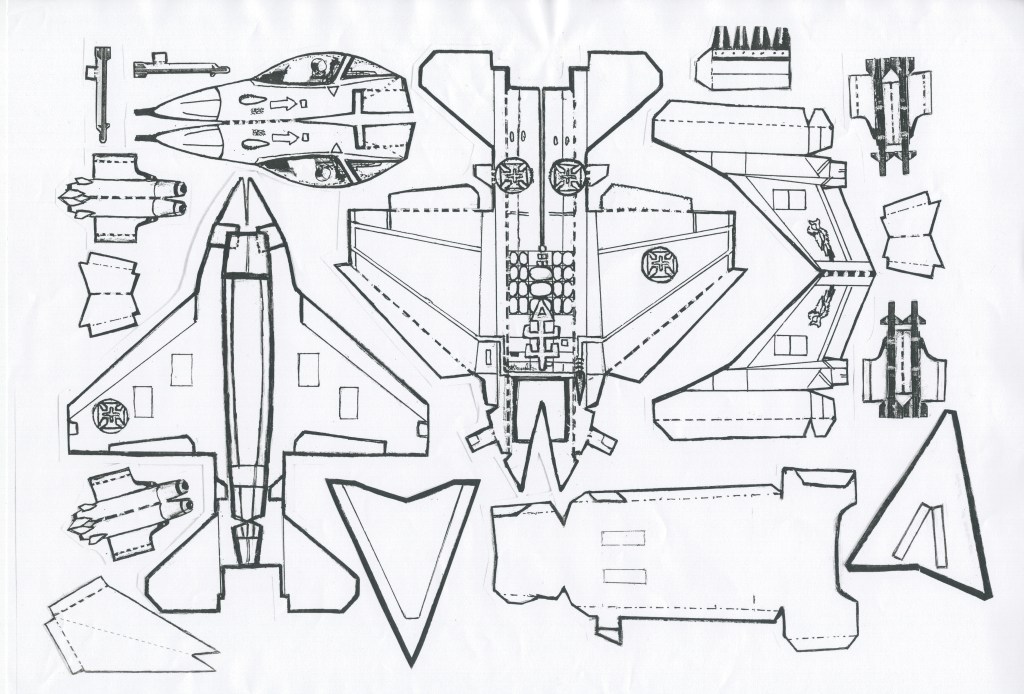
– Cópias de um kit em papel para construir um F16Português (3D), de modo a que as crianças os pudessem interagir na “festa” com o pessoal da FAP que iria participar no evento.
No dia 07 de Dezembro de 2007, pelas 15H00, conforme acordado com o orfanato, após um número significativo de crianças terem regressado das aulas, um grupo de 15 militares do destacamento apareceram na instituição. Cinco foram ter com as crianças e os outros 10 ficaram a tratar das prendas.
As crianças, que haviam sido reunidas na sala de ginástica pelos educadores, pasmaram ao verem três pilotos e um mecânico da NATO chegarem ao orfanato e começarem a tocar músicas de Natal. Em seguida toda a gente começou a construir aviões F-16 da Força Aérea Portuguesa, sob o olhar vigilante e a ajuda dos militares Lusitanos.
Kit em papel para recortar, construir e pintar um F-16 da FAPKit construido e pintado
De repente, o saxofonista, colocou um barrete vermelho do Pai Natal, e reiniciou o concerto com o “Gingle Bells”. Entre gritos de entusiasmo e expressões de espanto, as crianças viram mais 8 militares da Força Aérea Portuguesa, todos usando o barrete vermelho do Pai Natal, entrarem na sala carregados de presentes para lhes oferecer.
Pouco tempo depois, um novo grupo de 3 militares Lusos entrou transportando os aparelhos micro-ondas e o frigorífico. Embora muitas crianças ainda fossem de tenra idade, todos entenderam a grande utilidade que aqueles electrodomésticos constituíam para eles.
Beijos abraços e lágrimas foram as cenas seguintes, com os portugueses a dialogarem perfeitamente (em Português) com as crianças lituanas (em Lituano).
Palavras para quê? A linguagem era universal e cheia de carinho Natalício. Cumpprindo a missão longe dos seus próprios filhos, aqueles militares da Força Aérea Portuguesa aqueceram um pouco mais o Natal de 80 órfãos Lituanos.
Once, a Yugoslav intellectual told me that, the people in the Balkans would always be fighting each other, because they had more History they could hold.
–“You’re Portuguese; you will never understand the Bosnian problematic, because you’re the cultural result of “one single tribe in one same territory”. Here, people are from different tribes in the same territory and, simultaneously, from the same tribe in territories separated apart. It is only a matter of going back a little more in time, and each tribe will find a good motive for a retaliation action against the other(s)”.
This year is the 25th Anniversary of the Dayton Agreements’ signatures. A set of agreements signed by all parties and sponsored by the United States of America, which brought peace to Bosnia Herzegovina. The babies born after the Dayton Agreements are now finishing their studies at the Universities and taking junior leadership positions in the Country’s management. A Country which has exited a fratricide war through an imposition made by a foreigner organization, without having consensual solved their own internal problems.
Let’s hope that, with the potential Deglobalization announced by some international relations’ experts regarding the results of COVID 19 pandemic, we will not see further problems mounting up in Bosnia Herzegovina.
Alguém me disse um dia, que os povos dos Balcãs haveriam de estar sempre em conflito, porque tinham mais História do que podiam aguentar.
– “Vocês, os Portugueses, nunca irão entender isto; … sois o resultado cultural de “uma única tribo num só território”. Aqui as coisas são diferentes, existem várias tribos dentro do mesmo território, e em simultâneo territórios diferentes, e separados, contendo a mesma tribo. Nos Balcãs haverá sempre uma razão para alguém argumentar antecedentes historicos de agressão de uma outra tribo, … é só uma questão de recuar mais um bocado no tempo, e passa a haver uma justificação para um ato de retaliação de uma das partes”.
Cumpre-se este ano o 25º Aniversário das assinaturas dos Acordos de Dayton, que trouxeram a Paz àqueles territórios. As crianças que nasceram depois dessa guerra fratricida estão agora a sair das Universidades para cargos juniores de liderança no País. Um País que saiu de uma guerra por imposição externa, como o problema mal resolvido pelas partes em conflito. Esperemos que a “desblobalização” estimulada pelo COVID 19 não traga novos problemas para dentro da Bósnia Herzegovina.
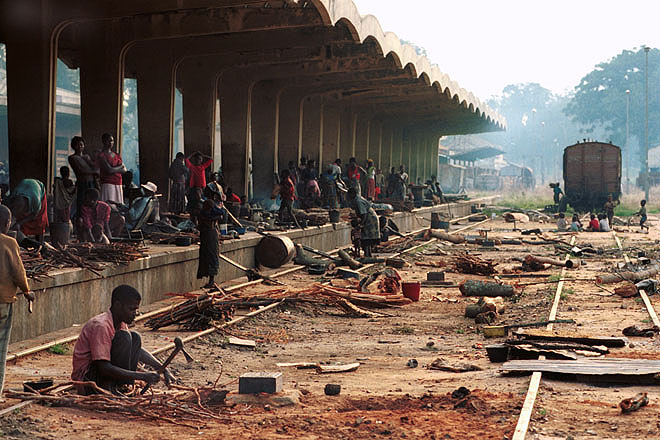
Ao cumprir uma missão para as Nações Unidas em Angola, em 1992, houve uma situação que ficou gravada na minha memória, e na minha pituitária, para sempre: – a visita ao campo de desalojados de guerra, em Luena.
A ida ao Campo de desalojados foi um pedido disfarçado de convite, feito pelo responsável pela delegação de Luena da agência ONU – World Food Program (WFP) – o senhor Carlos S. O Carlos era um simpático peruano que geria as instalações do WFP perto da antiga linha férrea. Homem dos seus trinta e poucos anos, estatura mediana e com demasiado peso, vestia-se sempre com calças de ganga e camisa axadrezada. Como não tinha pessoal de apoio em quantidade suficiente, pedia ajuda a quem ia conhecendo, para levar a bom porto todas as iniciativas que conduzia. Naquele dia Carlos necessitava de ajuda para distribuir géneros alimentícios no campo de desalojados de guerra. Concordei em ajudá-lo enquanto decorriam uns voos de longa distância, que iriam levar cerca três horas a regressar. A minha boa ação, não só respondia a um pedido de um amigo da ONU como me possibilitava ter uma outra perspectiva da sociedade que me rodeava. Carlos foi buscar-me ao aeródromo de Luena no seu velho jeep descapotável. Afastámo-nos da Cidade e, muito antes de chegarmos ao campo de desalojados, comecei a sentir um desagradável cheiro a azedo no ar. Quanto mais nos aproximávamos, mais intenso aquele desagradável odor ficava. Parecia que cheirava a vomitado. Quando finalmente chegámos à estação de caminho-de-ferro abandonada, o cheiro era tão intenso, que fiquei com a sensação que aquela gente vivia dentro de um contentor do lixo, num dia de muito calor. Tentei disfarçar o meu desconforto e sorrir. Para ser simpático, balbuciei algumas palavras no dialeto local e apertei a mão a quem me queria cumprimentar. Disse, em silêncio, a mim próprio:
– “Aguenta o primeiro embate que daqui a um bocado a tua pituitária já se habituou.”
Campo de desalojados de guerra em Luena – foto de Peter Williams.
O Carlos ia-me explicando o que eu via, enquanto oferecíamos os sacos de farinha que havíamos trazido no jeep. Estavam ali entre 7.500 e 8.000 pessoas; ninguém sabia o número exacto. Eram como zombies, num dealbular triste pelo recinto sem qualquer ocupação ou destino. Por todo o lado ouviam-se pessoas a tossir. Uma tosse cavernosa indiciadora de maleita. Sempre que tocava em alguém, era assaltado pelo pensamento que, a seguir, teria de tomar um duche de descontaminante. Não era por snobismo ou segregação, mas porque aqueles carentes desalojados estavam imundos e doentes. O risco de ser contagiado por alguma maleita era realmente elevado. Contudo, continuei a cumprimentar toda a gente, porque senti que mereciam a minha consideração. Quase senti vergonha de mim próprio por pensar em evitar aquelas pessoas. Ali ninguém tinha optado por aquela viva miserável; todos tinham sido empurrados para aquele local pela força das armas.
Dentro do grande edifício fabril, as solas dos sapatos colavam-se ao chão de tão sebento que estava. A sensação que eu tinha e o ruído que as minhas botas faziam, eram como se estivesse a andar num soalho coberto com papel para agarrar moscas. Havia trapos pendurados a servir de parede para separar famílias. O telhado tinha grandes buracos e, devido ao mal estado de conservação da infra-estrutura, chovia em quase todos os compartimentos. Abundavam rolos de plástico com o logotipo do Alto Comissariado da ONU para os Refugiados –UNHCR – com os quais se tentava colmatar a ausência de vidros nas janelas e telhas na cobertura. Contrariamente ao meu desejo, a minha pituitária recusava-se a habituar-se ao cheiro do local. Era um cenário de miséria humana, que me marcou e me faz ter muito respeito pela temática dos refugiados e desalojados de guerra. Seres humanos como nós, que não fizeram nada por merecer tais condições. Só tiveram o azar de nascer, ou estar, no local e altura errada. Fui assaltado por uma vontade estranha de lhes pedir desculpa, por usufruir de melhores condições de vida do que eles. O Carlos prescindia quotidianamente do seu bem-estar para ajudar os outros, colocando-se ao serviço do próximo.
Como militar, entendia bem o que era vocação para servir um bem comum; mas os voluntários da ONU, seus programas e agências, passaram a merecer toda a minha admiração e respeito.
In August 1995, during the Bosnian conflict, I witnessed something I had never seen before – War Tourism. It all started with a simple Military Observers’ (UNMO) patrol, in Mont Igman (Sarajevo), while driving on a dirt road I hadn’t travel through before. Inside the UNMO vehicle traveled three UNMO (a Portuguese, a Dutch and a Belgian) plus our “Yellow card” – the Bosnian interpreter. That mountain road had been opened through Igman’s pine trees forest, which protected us from any inconvenient sniper’s visors. The pavement was in very bad conditions and their car was raising more dust than a sand storm; however, according to our interpreter, that was the fastest path to exit Mount Igman towards Konjic (our patrol’s destination).
Suddenly, on the narrow road’s edges, we started to see military bunkers and trenches, manned by Bosnian (ABiH) soldiers. For my greatest surprise, there were “street sale” vans bordering the trenches, and a number of civilians, in a cheerful racket, taking pictures of everything and everybody.
My expression of astonishment was such that my Belgium comrade, a veteran of the Bosnian conflict, decided to explain:
– “Relax; it’s just some War Tourists; it’s a new fashion in Europe.”
I was appalled, and I stopped the vehicle to observe the details of that scene. It really looked like the coffee break of a movie production about the Yugoslav War, with the actors having a beer and a hot-dog, still wearing their military outfit and the production crew wearing civilian cloth concentrated in the adjustments to cameras. The only thing missing was the Director to yell “Lights & Action”.
My Belgium comrade pulled out his national scrolls and explained the concept, which turned out, was not new at all. War tourism actually started with the Battle of Waterloo. There were spectators at the top of a hill, watching and appreciating, in an organized manner, the battle developments.
– “This is perverse.” – I exclaimed – “Some of these soldiers may be Killed In Action this very afternoon … Besides, what if these, so called, tourists encounter an illegal checkpoint? … What then? …Who’s going to risk his live to save them?”
At that point, the cameras turned towards the UN vehicle, and we became the perfect souvenir picture; “the photo” missing on the tourists’ album – a real UNPROFOR car, with real Blue Helmets on it; a Portuguese, a Belgium, a Dutch and a Bosnian civilian. We felt like we were the wild bests of a photographic safari. It was time to move and restarted the vehicle.
One of the war tourists approach our car and, with a strong Dutch accent, asked how the situation was in Sarajevo and if we could escort them to town. At that point, our Dutch comrade, seating on the back seat with the interpreter, told him to “f҉҈k-off”, and I drove away discreetly. We vacated the area without any fuzz, in order not to upset the Bosniak soldiers, that having their 15 minutes of fame. The war tourists were treating them as warrior heroes and gave away all sorts of little presents in exchange for a picture with them.
Esta coisa dos militares estarem a dar apoio e a trabalharem em modo de Planeamento Civil de Emergência (diferente de Proteção Civil), está a provocar azia a alguns elementos da nossa sociedade. Isto começa a fazer-me lembrar as quezílias de algumas NGOs (Organizações Não Governamentais) nos Teatros de Operações de Manutenção de Paz, que não gostavam nada de serem apoiadas pelas forças militares que estavam no terreno. Mais; não gostavam nada de verem os militares a fazer Cooperação Civil Militar (CIMIC). Diziam que não queriam ter nada e não queriam ser conectados com a tropa aos olhos da população que estavam a tentar ajudar. Porém, a verdadeira razão era que os seus patrocinadores, ao verem que essas NGOs tinham apoios, cortavam-lhes os (chorudos) financiamentos.
Posso ao estar a ser “politicamente correcto; mas questino-me se estou certo … ou se estou certo?!
Numa certa madrugada gelada de 1995, após chegar ao Aeroporto de Pleso, em Zagreb – Croácia – a fim de embarcar no meu voo inaugural para Sarajevo, deparei-me com uma fila de capacetes azuis junto à cancela que dava acesso directo para a placa dos aviões. Juntei-me ao grupo dos camaradas da UNPROFOR e verifiquei que era ali mesmo, no exterior, que se fazia o check-in e embarque. Nada de luxo de terminais resguardados da neve com ar condicionado. Junto à cancela, recolhida numa guarita com o logotipo da ONU, estava uma mulher polícia da CIVPOL – a Unidade de Polícia Civil das Nações Unidas. Olhando para além da cancela podia-se ver um velho avião Antonov, sozinho no meio da placa meio nevada. Aquele teimoso veterano dos ares contrariava o seu aspecto museológico com as imensas horas de voo marcadas com manchas de óleo e fuligem na pintura (quase) branca da ONU. Na empenagem vertical da cauda, assim como na fuselagem, exibia orgulhosamente grandes letras negras a dizer UN, mostrando ao Mundo que se tinha fartado de “Guerra Fria” e agora era um “Guardião da Paz” (Peacekeeper).
Debruçada sobre a janela da sua guarita, a mulher polícia ia verificando as “guias de marcha” dos futuros passageiros, certificando-se que estavam na sua lista de embarque.
– “Bem-vindos às “Linhas Aéreas do Talvez” (Maybe Airlines) – Disse a polícia – “Acabei de ver passar a tripulação; a meteorologia não está francamente má; e ninguém está a disparar sobre os aviões em Sarajevo … desta forma “Talvez” vocês voem hoje”.
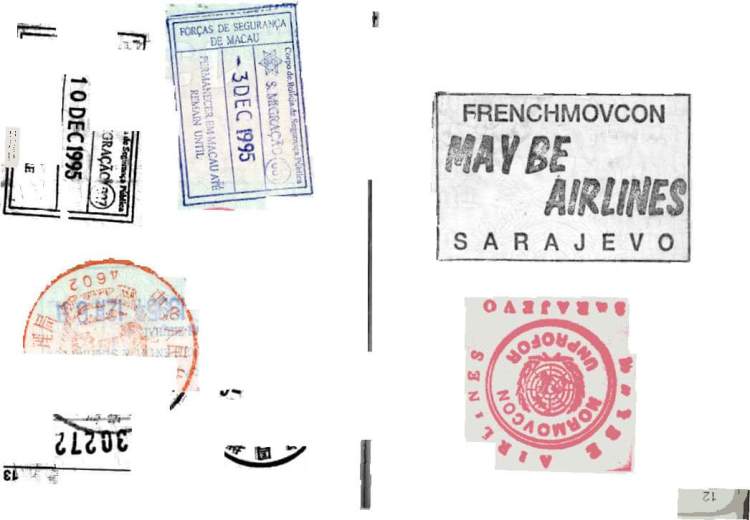
A alcunha (carinhosa) de Maybe Airlines devia-se ao facto de nunca se saber se havia voo ou não, se o voo ia chegar a horas ou não, ou mesmo se o destino era o inicialmente previsto ou não. Regra geral, não era um problema de falta de tripulações, ou mesmo de aeronaves; era, isso sim, um conjunto de situações que quase sempre tinham uma implicação negativa no planeamento da actividade aérea. Porém, não se pense que o pessoal da UNPROFOR estava desgostoso com as suas Maybe Airlines, pelo contrário, havia mesmo certo orgulho em voar naquela já afamada transportadora aérea. Havia até um carimbo disponível para carimbar guias de marcha e passaportes dos passageiros que o desejassem … e a maior parte deles faziam questão em ter esse carimbo nos seus documentos de viagem; tanto os militares como os civis.
Carimbo das Maybe Airlines num Passaporte (foto de Fernando Costa)
Entretanto, em Pleso, a mulher polícia levantou a cancela e gritou a plenos pulmões:
– “Passageiros para Sarajevo! Por favor dirijam-se à aeronave, mostrem o vosso cartão de identificação UNPROFOR à tripulação e embarquem. Deixem ficar aqui as vossas bagagens devidamente identificadas, porque seguiram num atrelado para o avião.”
Enquanto caminhava para o Antonov ia estudando o antigo Soviete, questionando-me se seria boa ideia ir para o ar dentro “daquilo”. A minha expressão deve de ter sido tão esclarecedora, que o tripulante responsável pelo porão de carga (load master) adivinhou os meus pensamentos e disse-me:
– “Meu amigo, bem-vindo às Linhas Aéreas do Talvez” vamos descolar dentro em breve e … TALVEZ cheguemos a Sarajevo; deseja vir connosco?”
Já sentados nos bancos de lona, e no meio de todos os ruídos e barulhos característicos de uma aeronave vintage, o load master voltou a falar (aos gritos):
– “Senhores e senhoras, este voo será “Não Fumadores”, porque as caixas à vossa frente são munições; … certifiquem-se que se sentam em cima dos vossos coletes à prova-de-bala e apertem os cintos; … tenham um bom voo!”
A rampa traseira fechou-se e lá fomos nós.
Embora o destino “mais sexi” das Maybe Airlines fosse Sarajevo, eles também voavam para Tuzla (na Bósnia), para Split (na Croácia) e para Belgrado (na Jugoslávia). Anos mais tarde o “franchising” de Maybe Airlines passou a aplicar-se a todas as missões da ONU que tivessem uma componente aérea. Contudo, independentemente do local e situação que voasse nessas aeronaves, nunca mais me esqueci do velho Antonov, que se recusava a ir para o Museu e continuava a voar na Bósnia Herzegovina.




 OPen samento