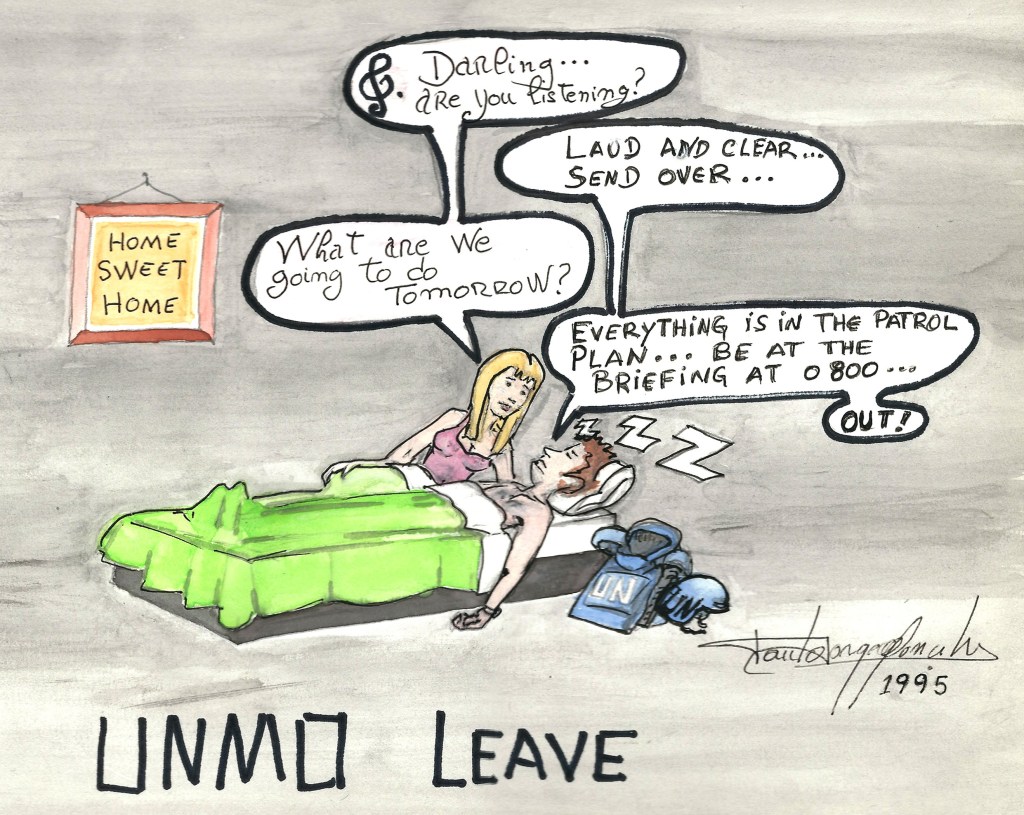
When we return from a long mission peacekeeping in a conflict area, the re-adaptation to the family environment and to a peaceful civilian atmosphere is not always easy to handle. Little things – such as the proper/civilized way to address other people – have got to be readjusted. The tone in which we talk, the technical phraseology (military jargon), the command orders, even returning to speak in our own mother language; all contribute for potential misinterpretation of the newly arrived peacekeeper’s intentions.
There are reports of military personnel with serious issues in their social relations, after returning from the mission. The soldiers become nervous and, without realizing their own attitudes, they behave in a mistrusting and aggressive way, even to their loved ones.
However, if one has his/hers return well plan and organized, things may be easier. The family relations play a very important role in receiving the peacekeeper. At first, it might be weird, but everybody rapidly re-adapts to his/her reintegration. In my experience, it usually takes about two weeks to reconfigure and recharge the batteries for what’s next after returning home.
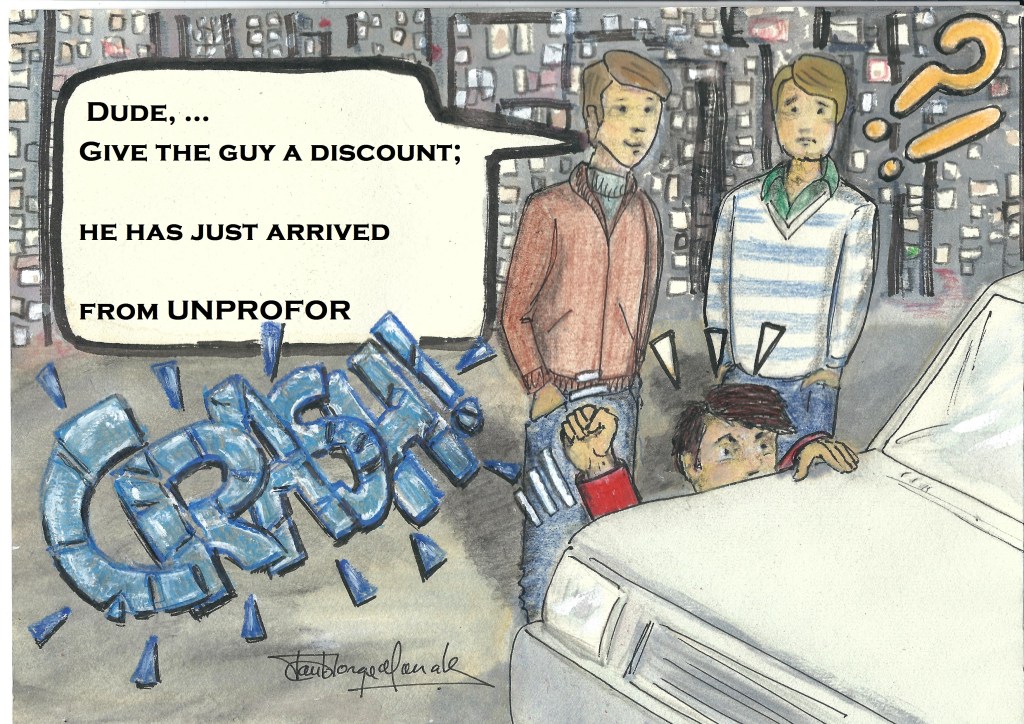
Vehicle traffic is the very first test/ indicator of re-adaptation to a civilized social life. Crossing streets without looking is the normal attitude in a conflict area, but that is a dangerous attitude in a major western urban area. The way we react to the unjustified stupidity of other drivers is also something that should be self-monitored. Some social peculiarities of urban areas can be difficult to digest, to the newly returned peacekeeper.
I remember one scene that I made a full of myself in the middle of an European Capital, because I was still breading the smokes of war in Bosnia. I had just arrived from Sarajevo for some meetings in Zagreb, and I was walking down one of the City’s main streets with a national companion. It was 12H00 and we were looking for a restaurant to have proper/civilized lunch. At that time, the traditional time signal of Zagreb – old customary cannon gunshot – took place. Instinctively, I crouched down in the pavement embarrassing my national comrade in the middle of the sidewalk. Local people were passing by and looked at the two weird foreigners with a disapproval semblance.
– “You’re not going to start screaming INCOMMING … are you?” – Asked my national comrade.
That minor event worked as a wake-up call that, when I would return definitively home, I would have to readjust and pay more attention to my behavior. In fact, when I did return home there were some construction works in my neighborhood. It took me some time to accept peacefully the sounds of pneumatic hammers, vehicle exhausts’ shots and breaking glasses.
I was lucky for not suffering from Post-traumatic Stress Disorder (PTSD), but many (too many) of my peacekeeper comrades did/do. Domestic violence, divorces, sleeping problems, anxiety disorder, etc. are all collateral damages from peacekeeping missions, in areas of great human suffering.
Na noite de 24 para 25 de Fevereiro 1995, eu estava de turno à posição radar cedida à ONU no Centro de Controlo Aéreo de Área (ACC) de Belgrado, para a vigilância da Zona de Exclusão Aérea (No Fly Zone) sobre a Bósnia. A uns meros 100 quilómetros da minha posição, decorria o mais sangrento conflito na Europa desde a Segunda Guerra Mundial.
Cerca das 02H00 da manhã surgiram quatro alvos no monitor do radar dentro da Zona de Exclusão Aérea. Havia uma separação em distância e tempo, entre cada um, de aproximadamente 10 quilómetros, ou 20 minutos, e todos se deslocavam para Este em direcção à (então) Jugoslávia, a cerca de 90 quilómetros por hora. Após consulta da informação meteorológica verifiquei que o céu estava bastante nublado, com nuvens baixas, ventos moderados a forte e queda de neve. Em suma, não havia condições atmosféricas sobre a Bósnia para voos de contacto visual com o terreno.
Caso aqueles blips no ecrã fossem helicópteros não poderiam voar baixo, contornando vales e montanhas, para fugir à cobertura dos radares de terra. A única possibilidade era subir acima da altitude da montanha mais alta e voar directo para o destino, com uma boa separação entre aeronaves. Eventualmente, como medida extra de precaução, deveriam voar o mais lento que fosse possível, a fim de que os filtros dos radares que eliminavam alvos fixos ou demasiado lentos (Moving Target Indicator) os escondessem dos monitores dos aviões radar (AWACS) da NATO. Uma vez que os AWACS “olhavam” de cima para baixo, os seus radares podiam ver entre vales e montanhas, mas apanhavam todo o tipo de veículos terrestres, pelo que os filtros de movimento eliminavam alvos lentos para não confundir os operadores. Voar a menos de 90 quilómetros por hora (potencial velocidade de um carro/comboio) poderia dar invisibilidade às aeronaves prevaricadoras. Porém, isso não resultava com os radares terrestres que olhavam para cima. A única forma de fugir ao cruzamento dos dois sistemas era voar a velocidades baixas entre montes e vales. Naquela noite, a segunda premissa não era possível e lá estavam os quatro blips a brilhar no meu radar, sobre a Bósnia Herzegovina.
O contacto radar inicial foi feito praticamente na fronteira Oeste entre a Croácia e a Bósnia; ou seja, saindo da Krajina Sérvia do Sul. Os alvos atravessaram toda a extensão da Bósnia Herzegovina em direcção a Este, desaparecendo horas depois próximo da fronteira com a Jugoslávia, onde a morfologia do terreno era mais plana. Os alvos eram um retorno consistente com velocidade constante, não havendo espaço para ser um erro de sistema ou retorno de terreno.
DE modo a manter uma postura de transparência nos relatórios da ONU, convidei o supervisor dos controladores Jugoslavo para verificar aquela potencial violação da Zona de Exclusão Aérea. Ele observou cuidadosamente os blips, verificou os meus apontamentos das posições radar que haviam feito, e concluiu:
– “Isto são aves migratórias.”
– “Aves migratórias?! – Exclamei incrédulo. – “A voar a 90 Km/h? Durante o Inverno? Em direção a Este? Às duas da madrugada? Com queda de neve e tudo? … Acho que não!
Porém, vou registar nas observações do relatório a sua opinião. Nós reportamos o que vemos … alguém acima do meu escalão há-de decidir se é ou não uma violação”.
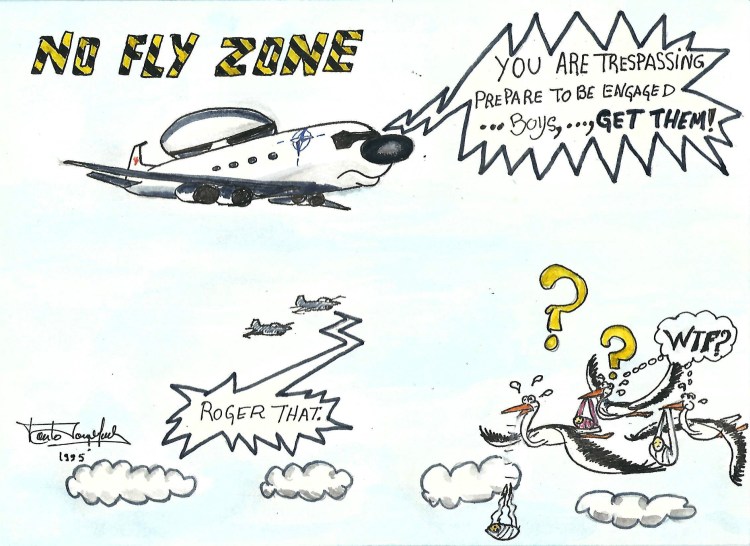
Tradução – Vocês estão a violar (a zona de exclusão aérea) preparem-se para serem interceptados … rapazes … apanhem-nos!
Embora eu soubesse que efectivamente havia aves migratórias que voam à noite nas suas migrações, e que alguns até voavam depressa, esses voos eram feitos no Outono/Primavera e nas direções Norte/Sul para evitar as condições inclementes do Inverno; nunca para Este e nunca no meio de um nevão.
Dois dias tarde, um relatório vindo das forças UNPROFOR no terreno informava que naquele dia, àquela hora, tinham ouvido o barulho de helicópteros a voar em direcção à Jugoslávia.
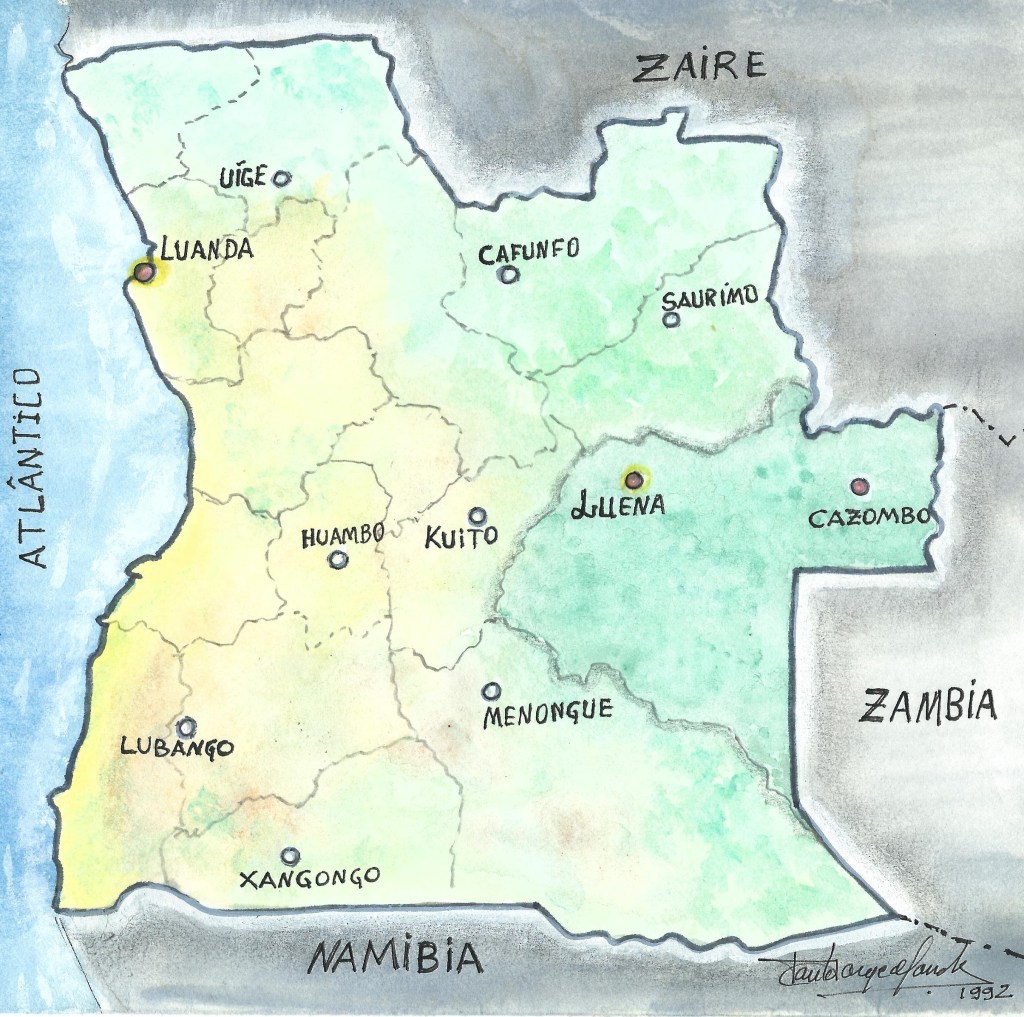
Em 1992, numa das primeiras missões de Apoio à Paz que as Forças Armadas Portuguesas efectuaram, um grupo de 10 oficiais da Força Aérea Portuguesa partiu em missão da ONU para Angola, a fim de gerir os 54 helicópteros e 12 aviões que as Nações Unidas haviam contratado para o apoio às primeiras eleições livres Angolanas. Após receberem as necessárias instruções, em Luanda, esses 10 oficiais foram distribuídos por outros 10 aeródromos para cobrirem todo o território Angolano.
Distribuição dos oficiais da Força Aérea para gestão das frotas aéreas da ONU.
Com essa ampla distribuição territorial, os oficiais portugueses aperceberam-se que quase todas as infraestruturas aeronáuticas do País estavam fortemente militarizadas. A razão dessa realidade não só era devida à guerra civil com a UNITA, mas também devido aos ataques aéreos da Força Aérea da África do Sul (SAAF). Efetivamente, as incursões militares Sul-Africanas em Angola, durante os anos 70 e 80, eram uma constante. O motivo de tal atitude era a existência, em território angolano, de acantonamentos de guerrilheiros da SWAPO (South West Africa People Organization). Estes guerrilheiros usavam Angola, alegadamente com o consentimento do Governo de Luanda, para atacar o território Sul Africano com táticas terroristas. Enquanto Luanda apoiava a SWAPO, Pretória apoiava a UNITA. Desta forma, certos aspetos da guerra civil Angolana tiveram nuances de guerra convencional entre dois Países vizinhos. As incursões do Exército de Pretória em busca de guerrilheiros SWAPO tinham, regra geral, cobertura aérea da SAAF. Os Sul-Africanos fizeram dezenas de operações aéreas, com milhares de saídas de aeronaves de combate e apoio logístico em território angolano. A Força Aérea Angolana, que na altura gozava de um forte apoio da União Soviética e de Cuba, enfrentava as aeronaves SAAF com uma credível capacidade de defesa aérea. Aviões Mirage Sul-Africanos e MIGs Angolanos combatiam e eram abatidos, com regularidade, nos céus angolanos. Por todo o lado havia sistemas de misseis e batarias antiaéreas, esperando uma incursão dos helicópteros da África do Sul. Foi uma guerra aérea pouco conhecida, mas de dimensões consideráveis.
A certain day in 2014, while I was serving the United Nations’ mission for Afghanistan (UNAMA), I had to fly from Kabul to Dubai with an Afghan Airliner. After an enormity of problem solving concerning the scheduling and purchasing of the ticket, the machine finally printed the ticket; I got a window seat, number 39A.
On the scheduled day, after having passed most of the afternoon waiting for the aircraft at the Kabul Airport departure lounge, we’ve learned that the aircraft was still in Dubai solving some details before departure to bring us back to the United Arab Emirates.
Depois de passar a tarde inteira no terminal de Cabul à espera de uma aeronave que, afinal, ainda nem sequer tinha descolado do Dubai para vos vir buscar, lá apareceu um Boeing 737 com o nome da companhia escrito na fuselagem.
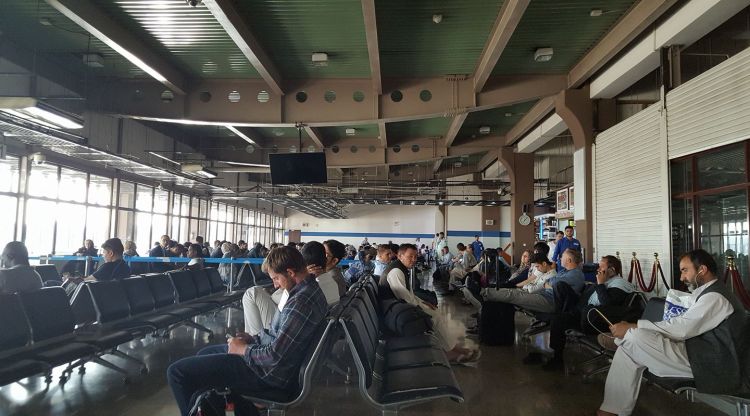
Kabul departure lounge
When we finally boarded the Boeing 737 I started to look for seat number 39A; but I couldn´t find it. The seat numbering jumped from number 38 to number 40. I call the flight attendant and asked an explanation and a solution. The young Philippine lady immediately assigned me number 40 A and accommodated the passenger seated there in her own seat, saying she would seat in the cockpit. While she was solving the problem she explained that number 39 was a cursed number for the Afghans, but the ticket machines were international and hadn’t been programmed to jump from 38 to 40. In fact, I later noticed that number 39 was a “taboo” number all over Afghanistan. Allegedly it had something to do with ancient times organized crime, prostitution and all sort of despicable activities which used that number as a code. As time went by, that number raised from – “to be avoid” – into a superstitious – “taboo”. Even the numbering of Afghan political committees or the sequential numbering of the doors in Kabul streets, jumped from 38 to 40.
I accommodated my hand luggage on the overhead compartment and sat down at the window, on number 40 A. At that moment something very weird happened; the aircraft’s window frame fell into my lap. I was speechless and couldn’t believe what was going on. I called again the flight attendant, which looked overwhelmed with problem solving prior to departure, and shown her the window frame. She took it and, acting as if it was a routine, adjusted it to the aircraft window, punched it three times and hooked it back into its original place, saying:
– “Don´t worry, the real window is outside of the aircraft, that one is a mere decoration.” – And she went away to some else’s problem.
Of course I knew the real window – the one that prevents depressurization – was on the outsider, but that didn’t eased my concerns regarding the maintenance servicing of that aircraft … especially after having been issued seat number 39 on an Afghan B-737.
In July 1995, the most discussed issue in UNPROFOR’s corridors was Srebrenica.
After the fall of Krajina’s Sector West, in May 1995, the entire situation in Bosnia reached a tipping pint; for the worst! The Serbian residents of the other sectors of the Krajina started to abandon their lands, fearing the same destiny as Sector West. The rate of Serbian refugees entering Bosnia aggravated the work of the UN humanitarian agencies, which claimed they didn’t have capacity to accomplish their mission anymore. Simultaneously, the increased numbers of Serbian men able to fire a gun was an excellent recruitment opportunity for Republika Srpska. The Serbs had all the military gear they needed, but were short on manpower. The income of Krajina male refugees was solving the Serbian Army (VRS) manpower, and their forces were biffing-up.
In the other hand, encouraged with the falloff the Serbian stronghold in Croatia (Sector West) Bosnian Muslin (ABiH) residing is Srebrenica – the enclave protect by the UN – started regular incursions outside the Muslim pocket, attacking Serbian outposts and villages. The Serbs complained to UNPROFOR that there should be no weapons inside the enclave, because it has been declared a “UN Save Area”. According to the Serbs, not only there were weapons inside Srebrenica, the ABiH was using the “UN Save Area” as a jumping point to perpetrate their attacks to Serbian villages. In response, the Serbs surrounded the enclave with tanks, and everybody feared the worse.
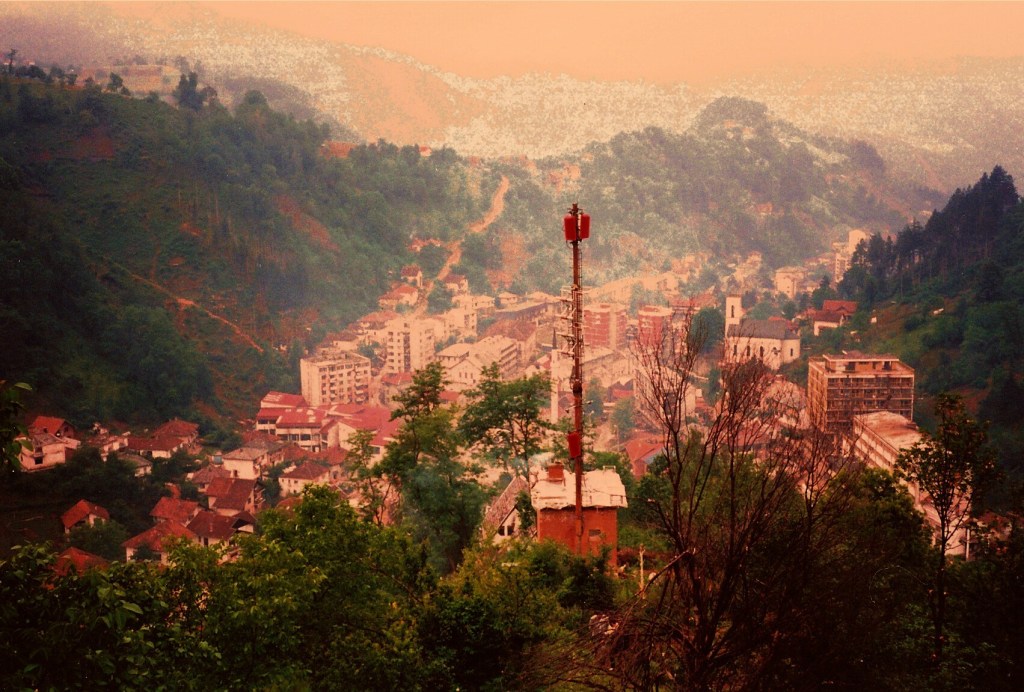
Srebrenica – Photo by Miguel Machado
The Serbs kept claiming that the ABiH had crossed the “red line”, and, since UNPROFOR was not doing anything about it, they were going to put a stop to it. By the end of May 1995 the VRS initiated military manoeuvres in Srebrenica and in Zepa, threatening the status of those two UN Safe Areas. Leaded by the (in)famous General Ratko Mladic, the VRS moved in and, although in a restrained manner, it did not spare the UNPROFOR units located in those enclaves. The blue helmets were threatened and even submitted to direct attacks. Those initial restricted actions against the UN were merely to test the capacity of the UNPROFOR forces to protect the enclaves.
The Serbian forces had notorious superiority over the ABiH and the Dutch Contingent protecting Srebrenica. The VRS engaged in an aggressive posture towards all personnel of international organizations. The Serbs were not provoking anymore; they were deliberately launching military actions against UNPROFOR.
On the 1st of July a Dutch Observation Post (OP) in Srebrenica, known as “OP E (Echo)” was overrun by the VRS. That OP had a privileged view over the accesses to the enclave. There were no casualties to report among the Dutch, but the Serbs humiliated the blue helmets, and expelled them out of that OP. For everybody’s surprise, the UN decided neither to retaliate nor to retake that OP. The Dutch contingent was reminded that Self-defence opportunity had ended when they were overrun by Serbs; retaliation or a counter attack didn’t qualified as self defence, therefore it could not be done. That lack of attitude passed a message of impunity to the Serbian soldiers, and the situation entered a negative spiral cycle.
Peacekeeping Rules can get Blue Helmets killed … In a war environment
On 8th of July the VRS attacked another Dutch OP – “OP U (Uniform)”, and kept several blue helmets imprisoned. General Mladic wanted to use as human shields should NATO decide to do airstrikes.
The Serbs had eliminated the two OPs that could have warned the Town of Srebrenica about the advance of Serbian tanks and infantry.
On the 9th of July the VRS entered the Safe Area with all its fire power, stopping only at Srebrenica’s Town gates. They waited to see the reaction; but there was no reaction.
On the 10th of July General Ratko Mladic himself ordered the VRS to bombard the Town of Srebrenica, including the Dutch Battalion.
During all those days, the Dutch Contingent requested Close Air Support to protect them and the civilian population. The Dutch didn’t have heavy weapons to respond to the VRS indirect fires. However, the NATO fighters never showed up.
Why? – was everybody’s question. Was it because the Serbs still had UN hostages in their power? Was it because the Serb Units were too close to the civilian population and NATO feared collateral damages? Was it because of the weather conditions? The answer was never provided to the soldiers on the ground, but they all felt that the Mission’s leadership in Zagreb had put the political details ahead of the safety of UN personnel and the live of Srebrenica’s civilian population.
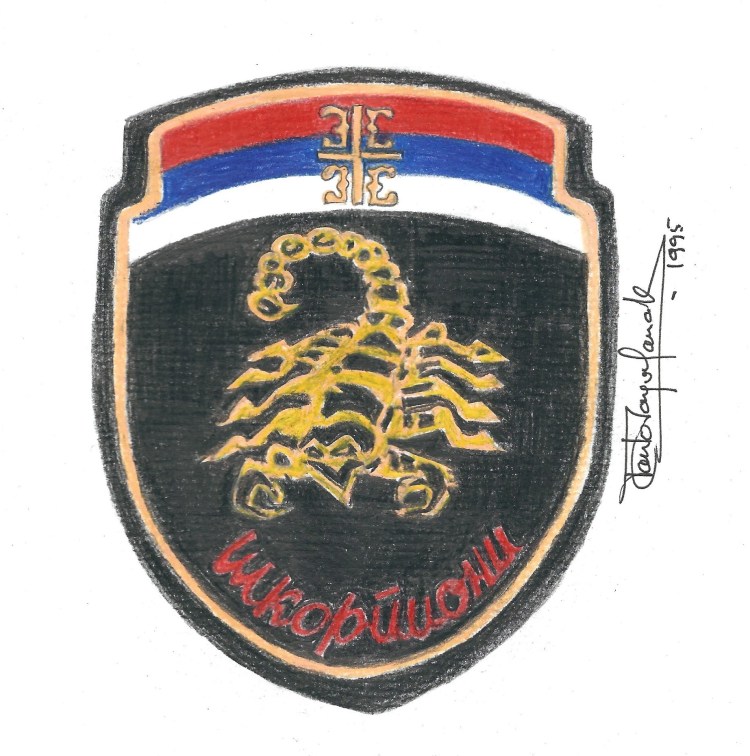
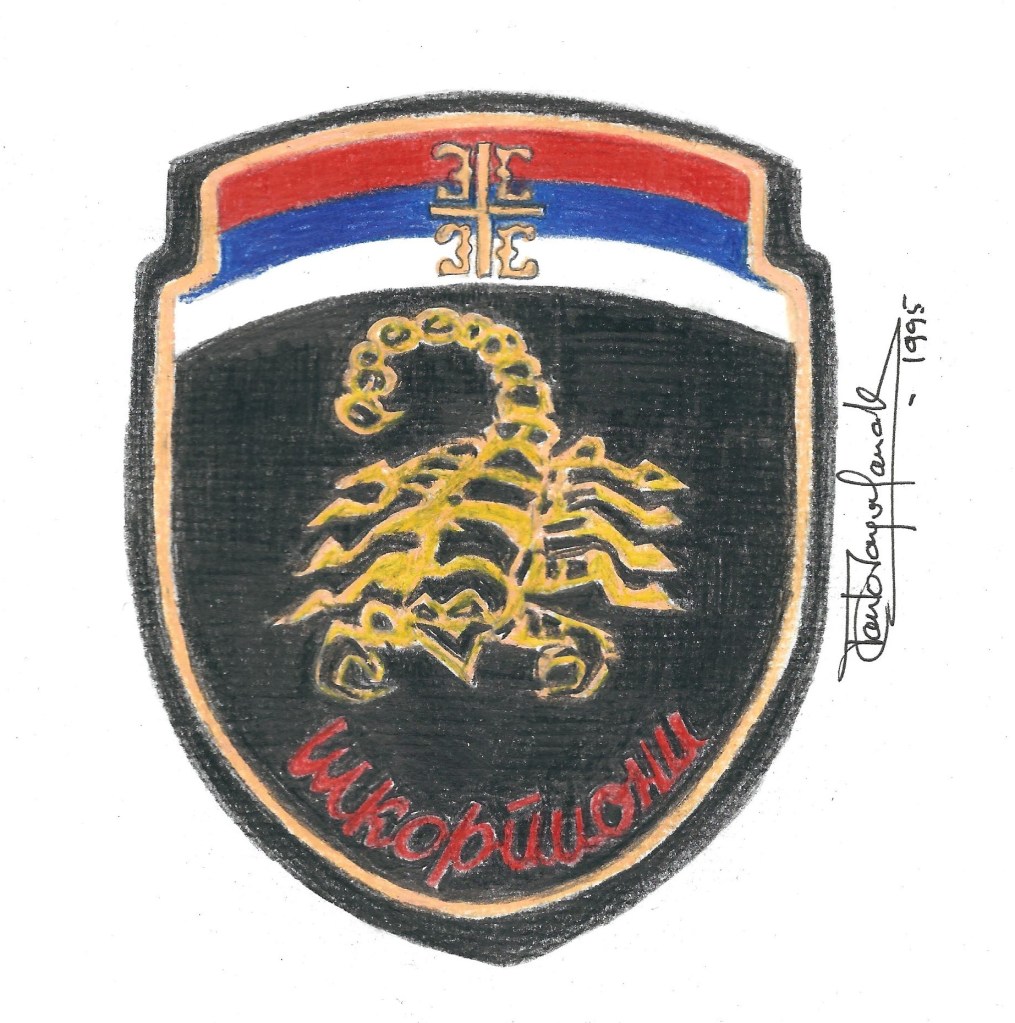
On the 11th of July the VRS occupied the Town provoking an exodus of 25.000 people. General Mladic brought along with him a paramilitary group called “The Scorpions” to “solve unconventional situations”. This was a group of unscrupulous men claiming to be volunteer combatants for the “Greater Serbia”. They would do the dirty jobs forbidden by the international conventions, whenever, wherever it was necessary.
Serbian paramilitary Group – The Scorpions – emblem
Many muslin families sought refuge inside and around the Dutch Contingent’s compound. They were hooping the Serbs would respect the UN flag and no harm would come to them; but they were wrong. In order to kept General Mladic, and the VRS, clear of blame, the “Scorpions” embraced the task to “deal with that situation”. The men were separated from their families; some were executed at the site and others were taken away, never to be seen again.
On that day’s afternoon the NATO jets finally appeared; but it was too late, attacking the VRS inside the town meant killing blue helmets and civilians. Mladic had the entire Dutch Battalion in his hands and threatened to kill them if NATO would strike.
After having the situation under his control, General Mladic authorized the opening of a corridor connecting Srebrenica to Tuzla – a large muslin city in the Bosniak territory – allowing the muslin families to exit Srebrenica using their own means. As a result, a long column of people walked for five days, through mountain roads, in the direction of Tuzla. During that forced march they were attacked several times each day.
On 16th July at 17H00, the column reached Tuzla, and reported that between 5.000 to 8.000 Military Age Men had been shot dead and thrown into mass graves.
On 25th of July, the VRS did exactly the same thing in yet another Safe Area – Zepa – Serbian impunity was the master word. .
The massacre of the Muslim population running from the VRS was considered the worst mass murder since the World War Two. Even if the Dutch would have made a “creative interpretation” of their Rules of Engagement, their pistols and rifles could not have stopped the Serb tanks. Srebrenica defenders were not equipped to do the job, and the essential Close Air Support never arrived.
The Dutch contingent was not to be blamed for the fall of Srebrenica – it was the fault of the International Community, which did not take the necessary decisions to avoid it.
Em julho de 1995 o assunto mais sério que se debatia na UNPROFOR eram os acontecimentos de Sebrenica.
No início da guerra na Bósnia, em 1992, a pequena Cidade de Sebrenica estava dentro dos domínios da República Sérvia da Bósnia, e sob controlo das forças do Exército Sérvio (VRS). Posteriormente foi tomada pelo Exército (muçulmano) da Federação da República da Bósnia Herzegovina (ABiH), tornando-se num enclave muçulmano rodado por território dominado por sérvios. Sebrenica era um dos três enclaves muçulmanos (Gorazde, Zepa e Sebrenica) dentro de território Sérvio, e sabia-se que o ABiH queria unir essas localidades a Sarajevo e a Tuzla. Não conseguindo atingir o seu objetivo pela força militar, o ABiH deixou as populações que habitavam nessas localidades aos cuidados do Alto Comissariado da ONU para os Refugiados (UNHCR) que tentava mitigar as restrições de cidades sitiadas em termos do apoio de bens essenciais à sobrevivência. Em 1993 a situação era tão dramática que a ONU declarou Sebrenica como um santuário de proteção ONU (UN Safe Area), enviando capacetes azuis para o enclave.
Srebrenica – Foto de Miguel Machado
No início de 1995, a representação da ONU em Srebrenica passou a ser assegurada por um Batalhão Holandês, com a missão de proteger o enclave. Contudo, a presença desses militares era meramente simbólica, uma vez que estavam mal equipados para combate e nem sequer tinham Regras de Empenhamento (ROE), definidas superiormente na ONU, que os autorizassem a usar, se necessário, a “força letal” para proteger a população civil.
Entretanto, na vizinha Croácia, ocorreu algo que teve tremendas repercussões na Bósnia Herzegovina – a Operação Flash – e a conquista militar pelas Forças Armadas Croatas do Sector Sérvio da Krajina Oeste. Este evento teve como reflexo dois aspectos com impacto directo nas operações militares da Bósnia. Primeiro o conceito de invencibilidade Sérvia caiu por terra, encorajando os muçulmanos bósnios a acções mais temerosas contra os sérvios. Por outro lado, as populações sérvias dos outros sectores das Krajinas Croatas, receosas de terem o mesmo desfecho do Sector Oeste, começaram uma migração em massa para a Bósnia, incrementando exponencialmente a disponibilidade de mais combatentes para Exército Sérvio Bósnio, cujo principal problema era exactamente a falta de manpower.
A UNPROFOR começou a receber queixas da República Sérvia, reclamando uma tomada de atitude em relação a Srebrenica, uma vez que tinha sido considerada uma UN Safe Area, não devendo existir armas dentro do enclave. Contudo, as forças ABiH estavam a usar o enclave como ponto de refúgio e apoio para incursões sobre aldeias sérvias. A UN não tomou qualquer atitude para resolver as reclamações dos sérvios e o VRS começou a assediar o enclave.
No dia 1 de junho o Posto de Observação (OP) holandês – conhecido por OP “Echo” – foi tomado de assalto por militares sérvios, que expulsaram os militares holandeses da posição. Para admiração de todos na UNPROFOR, as Nações Unidas optaram por não responder com a força militar. De novo, os holandeses foram recordados que só em caso de legítima defesa é que poderiam usar a força bélica, sendo que um contra-ataque não validava o conceito de legítima defesa. A situação entrou numa espiral negativa e, no dia 8 de julho, os sérvios atacaram os holandeses num outro posto de observação – OP “Uniform”. Desta feita, encorajados pela ausência de reação da ONU um mês antes, os sérvios mantiveram como reféns vários capacetes azuis holandeses. No dia 9 de julho os sérvios entraram na Safe Area até às portas da Cidade de Sebrenica e, no dia 10 de julho, bombardearam a Cidade e as posições holandesas.
Os militares holandeses pediram apoio aéreo para legítima defesa, uma vez que não estavam equipados com armas que contrariassem um bombardeamento de artilharia. No entanto, a resposta aérea não aconteceu. Os militares holandeses ficaram indefesos à mercê das armas sérvias. No dia 11 de julho o VRS ocupou a Cidade, provocando um êxodo de 25 000 pessoas. O general Ratko Mladic trouxe um grupo paramilitar, de homens sem escrúpulos, auto denominado “os escorpiões”.
Símbolo do grupo paramilitar Sérvio – “Os Escorpiões”
Nesse dia, à tarde, dois aviões de combate da OTAN atacaram as posições sérvias. Mas já era tarde demais porque os sérvios estavam na cidade e tinham os holandeses nas suas mãos. O general Mladic – Comandante das forças VRS – ameaçou matar os reféns holandeses se os ataques aéreos da OTAN continuassem. Os residentes de Srebrenica acantonaram-se em volta das instalações militares dos holandeses, na esperança de não serem molestados em frente à ONU, mas de nada lhes valeu. Os militares VRS separaram os homens muçulmanos com idade de serviço militar – MAM – das suas famílias. Alguns foram executados no local e muitos outros foram levados para longe onde se lhes perdeu o rasto. Uma extensa coluna com milhares de civis marchou durante cinco dias em direção a Tuzla, tendo sido atacada pelo VRS durante todo o percurso. Às 17H00 do dia 16 de julho a coluna chegou a Tuzla, onde reportaram que entre 5 000 a 7 000 homens teriam sido sumariamente fuzilados pelo VRS e enterrados em valas comuns.
No dia 25 de julho, o VRS repetiu impunemente em Zepa o que tinha feito em Sebrenica.
Sebrenica foi considerado o maior assassinato em massa da Europa desde a Segunda Guerra Mundial. O juiz Fouad Riad, em novembro de 1995, indiciou, no tribunal de crimes de guerra de Haia, o general sérvio Ratko Mladic de genocídio em Srebrenica. Segundo os relatórios em seu poder, havia evidências de uma “inimaginável selvageria”. Milhares de homens executados e enterrados em valas comuns; centenas de homens enterrados vivos; homens e mulheres mutilados e massacrados; crianças mortas diante das mães; um avô obrigado a comer o fígado de seu próprio neto; etc.
As forças holandesas foram injustamente criticadas por não terem protegido os civis em Srebrenica. No entanto, a culpa foi da Comunidade Internacional, que não lhes deu as Regras de Empenhamento, o equipamento militar necessário, nem o apoio aéreo atempado que impedisse a entrada de Mladic na Cidade.
Regardless if you are a religious person or not; regardless the faith you profess; Easter is all about HOPE, FAITH; two fillings of the upmost importance in the times we’re all living with COVID-19.
We will win this war … I wish you to have a blessed Easter.
Paulo
Former Portuguese Armed Forces chapel at Camp Warehouse – Kabul, Afghanistan Antiga capela das Forças Armadas Portuguesas em Camp Warehouse – Cabul, Afeganistão.
Independentemente se fores religioso/a ou não; independentemente da fé que professas; o tempo de Páscoa é essencialmente uma época de ESPERANÇA e FÉ; dois sentimentos da maior importância nesta terrível crise do COVID-19.
Nós vamos ganhar esta guerra … Desejo a todos vós uma Páscoa abençoada.
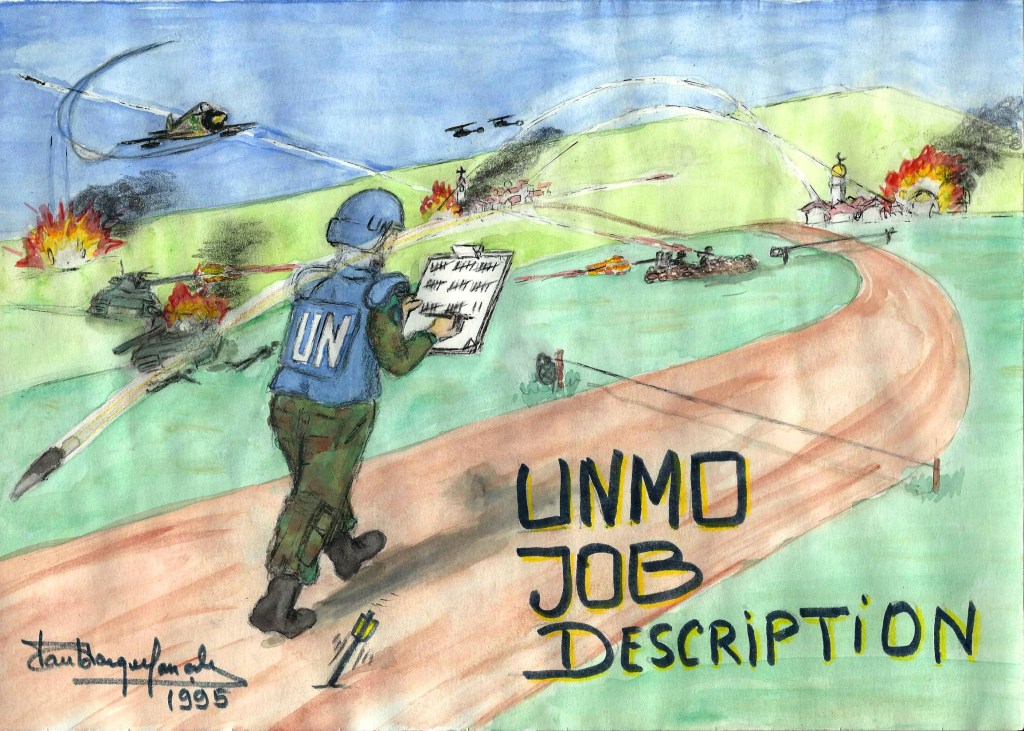
UNPROFOR Military Observers’ teams (like in most other UN missions) had to live among the population (mandatory). We could support our teams at the UNPROFOR military contingents, but we could not live inside those compounds. We were supposed to rent a team house and buy/prepare our own food. That particularity was due to the fact that the UNMO reports were not only on the combats’ development, we were also supposed to give a perspective of how hard was the living of the local population.
During the war in Bosnia, the prices of the primary needed goods were exorbitant for the common citizen. In muslin cities where the Serbian forces had set a siege the situation was even more complicated. Sarajevo was one of such places, but the situation in Gorazde was particularly grave.
One day, we were tasked to go out in the field and make a comparison of the essential products between Sarajevo and Gorazde, in September 1995. At that time, the currency most people (in Bosnia) preferred to deal with was the German Mark – one German Mark was equivalent to one Euro/US Dollar. These were the prices we reported (prices in force in 1995):
1 Lt of cooking oil – 25€ in Gorazde and 4€ in Sarajevo; 1 kg of sugar – 30€ in Gorazde and 3€ in Sarajevo; 1 kg of potatoes – 2€ in Gorazde and the same price in Sarajevo; 1 kg of apples – 2€ in Gorazde and 1,5€ in Sarajevo; 1 egg (unit) – 2€ in Gorazde and 1,5€ in Sarajevo; 1 kg of onions – 7€ in Gorazde and 2,5€ in Sarajevo; 1 Kg of carrots – 7€ in Gorazde and 2€ in Sarajevo; 1 kg meat – 10€ in Gorazde and 17€ in Sarajevo; 1 Lt of diesel (fuel) – 15€ in Gorazde and 5€ in Sarajevo; 1 Lt of gasoline (fuel) – 35€ in Gorazde and 7€ in Sarajevo.
However, the most ridiculously expensive product of them all, in Gorazde, was the salt, which, on the 21st of September 1995, reach the price of 110€ per kilogram.
After the Dayton agreements, with the end of the combats and the opening of corridors, the humanitarian agencies started to move in and the quality of life increase exponentially in those places.
In my first land trip to Sarajevo (early August 1995), I was travelling in a UN vehicle with a Brazilian UNMO comrade. We’d been driving during the night, which was not advisable to do during the Bosnian War; hence we decided to stop and spend the night at the UNPROFOR Malayan Battalion (MALBAT) in Konjic. After making the necessary check-in procedures, we were shown where we would sleep for that night. The “officer’s in transit” accommodation was a large tent, installed inside an industrial semi-destroyed hangar, packed with dozens of other tents.
Due to the advanced night hour, most of the MALBAT soldiers had gone to sleep. Therefore, the interior of the hangar had no illumination and darkness prevailed inside the tents. Silence was of essence not to disturb our hosts. We fumbled around inside the tent, and discovered two empty field beds. Acting very carefully, we silently took off our flak jackets, put off our boots and untied the belts, loops and clasps of our campaign uniforms. We were going to have less than four hours of rest; therefore, there was no need to undress, I didn’t even take off my socks. The sleeping bag was basically used as a blanket, although those summer nights didn’t require much of a cover.
I set my wristwatch’s alarm to 04H45, put my helmet and flak jacket at hands reach, and tried to have some sleep. We could still hear in a distance the rhythmic firing of the machine guns, remembering us that we were not on a camping place somewhere in Western Europe.
It had been a long day but, regardless the trip tiredness, those firearms burst and the hot summer night prevented me to easily fall asleep and, when I managed to fell asleep, my mind was focused on the possibility of an attack to MALBAT.
Military Observers’ Insomnia
In what seemed to be minutes, after I started my napping, all the loudspeakers of the hangar’s sound system went on, with a shrill call in Malay language. I woke up, in a shock, gasping profoundly in scare. It was about 04H30 in the morning, because my wristwatch hadn’t activated the wake-up alarm yet.
I couldn’t understand what the alarming loudspeakers were saying; but it was for sure an attack warning … what else could it be at 04H30 in the morning?
I reacted with instinct, jumped out of the field bed, grabbed my helmet, flat jacket and boots, and ran to my Brazilian comrade’s bed screaming:
– “AN ATTACK! IT’S AN ATTACK; GET THE F∩₪Q OUT OF THAT SLEEPING BAG, AND RUN FOR THE SHELTERS.”
The Brazilian Captain was an UNPROFOR veteran and he didn’t seem too concerned. I ran out of the tent, through the hangar’s doors and into the outside open space heading for the bunkers. Outside the hangar the first lights of dawn were announcing a hot clear summer day. I was trying to reach the coverage of shelters; barefoot, with my helmet on, my boots on one hand and the bullet proof vest on the other hand.
The loudspeakers wouldn’t stop stressing the Malay rambling, while I was looking around for my Brazilian comrade, swearing in Portuguese.
Gradually, I noticed that I was the only one acting desperate. Everybody else was quietly starting their daily routine, looking at me in a perplexed way.
The Brazilian got out of the hanger, wearing his helmet, his flak jacket and his boots, and asked:
– “Dude … don’t you recognize the Islamic call for pray?”
– “What? This is a call for pray? At 04H30 in the bloody morning?” – I asked rhetorically, in a mix of irritation and embarrassment.
I dropped the flak jacket and the boots, set on the ground, and smiled to the passing soldiers … apologizing for the ridiculousness of my little show. Some Lessons; you have to learn the hard way!
The hot month of June 1995 arrived to the Balkans on a Thursday, while I was on night shift at Belgrade radar site, surveying the Bosnia No Fly Zone. Just when I was leaving the radar room, on the next morning, I noticed something strange was happening. All the Serbian controllers were very excited, but at start, I couldn’t understand what it was. Suddenly some said that an American aircraft had been shot down.
According to the civilian controllers, a pair of NATO F-16 fighters had been doing the normal patrol tour over Bosnia, in what was known as “Normal Operations”. The Bosnian Serb air defence systems were active and vigilant, because of the recent NATO airstrikes around Srebrenica. The two fighters flown in direction of the Banja Luka air base and, somewhere between Bihac and Banja Luka, in the vicinities of a small village called Mrkonjic, a Surface to Air Missile (SAM 6) mobile station was activated and fired its missiles shooting down one of the aircraft. The second F-16 stayed on site for several minutes, after which it went away, back to its departing point in Italy – most probably Aviano Air Base.
I rushed back to the radar site and I saw a radar screen so full of radar blips, there’s no more space over Bosnia to fit in additional aircraft. NATO had scramble all its birds to the crash site.
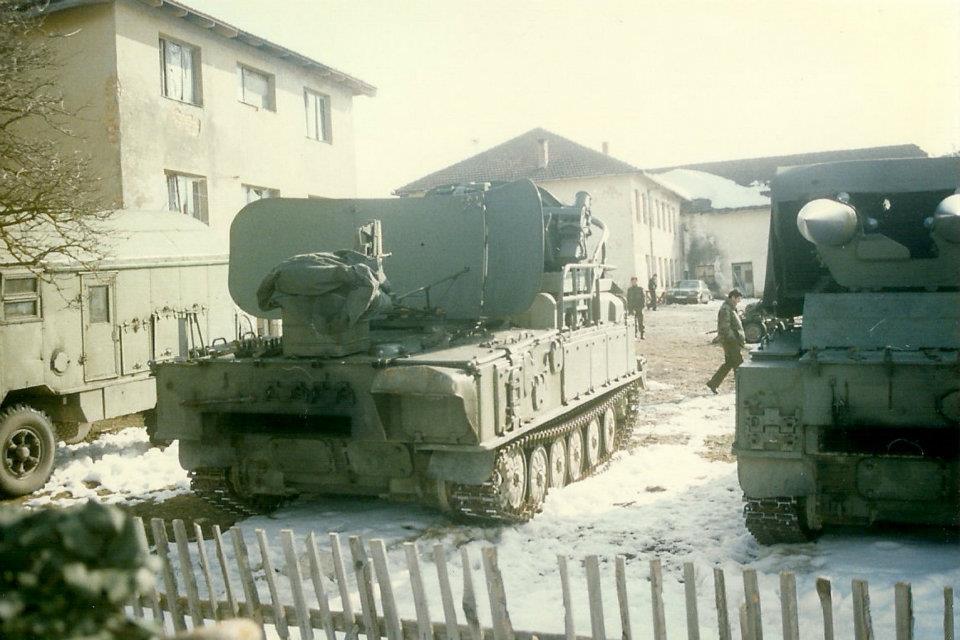
Bosnia Serb SAM 6 system; on the left the radar – on the right the missile launcher. Photo by Carlos Oliveira.
This was the famous incident where the US Air Force Captain Scott O’Grady, was shot down, during a routine patrol flight over Bosnia.
The SAM 6 missile exploded a few meters away from Captain O’Grady’s F-16, seriously damaging it. The aircraft had lost its capability to fly; therefore the pilot ejected himself out of the falling aircraft.
During several days the VRS looked for Captain O’Grady, but he managed to hide and escaped the Serbian soldiers. He was saved much later, during a night raid operation, by US Special Forces using helicopters from an aircraft carrier in the Adriatic.
The incident was largely covered by the international media, and has inspired the Hollywood film “Behind enemy lines”, staring Owen Wilson, Gene Hackman and the Joaquim de Almeida.
Routines tend to lower one’s defenses
On the night of the 2nd of June, CNN was making a story about the incident, demonizing the Serbs and inviting people to phone to their Atlanta studios and participate on the debate. Some of the interviewed, with responsibilities in the US Governmental system, were in favor of bombarding Belgrade and everything with a Serbian connection. Those persons were acting in a very irresponsible way, forgetting that there was international staff on the ground, and they had just put their life in danger.
Bottom line, O’Grady’s shot down was providing antenna time to hardliners on both sides of the equation, and everyone could see that the Serbs were going to lose that “media battle”. The CNN journalists were not acting as impartial reporters; the evening news anchorman was not reporting facts, but expressing opinions and commenting the news report. CNN used to refer to the Yugoslav Federation as: – “The Serb Dominated Yugoslavia”.






 OPen samento