Sarajevo Landing

During UNPROFOR Times, the final approach procedure to Sarajevo’s airport was considered the aeronautic ex libris of the mission. So much so that it got the designation of: – “Sarajevo Landing”.

Due to the permanent threat of small arms fire onto the landing aircraft, when the pilots got closer to the ground, they performed a “tactical landing” procedure, as a safety measure, that had some particularities.

In certain aircraft, the crew’s loadmaster would turn to the passengers and inform they were going to initiate the descend to Sarajevo; therefore, the passengers were invited to seat on their flak jackets, place their helmet on the floor and put their feet over the helmet. This way, if any crazy fighter decided to fire up, into the aircraft’s belly, during the landing, the bullets could eventually be stopped by those protections … eventually! 

Next thing a passenger would notice was that the aircraft would be reaching the vicinity of the landing strip still very high. One would expect the aircraft to turn left, or right, losing altitude over the city and perform a circling landing partner. Pending on the type of aircraft and the amount of windows available, some passengers even tried to prepare the photographic machines, expecting to take pictures over Sarajevo. However, that was not the case; the excess of altitude was not a calculation error … it was the procedure to avoid small arms fire. About 900 meters from the runway threshold, the pilot would push hard the yoke, pitching down the aircraft in a 25 degrees slope. That was ten times the tilting of a normal glide slope for an airliner to land. In about 30 seconds the aircraft would dive down, land and exit the runway. The passengers were offered the opportunity to feel the G (gravity) forces at work. The initial 20 seconds negative Gs, and the last 10 seconds positive Gs. It was like doing a roller-coaster inside a washing machine!

Some tactical transport aircraft (C-130 type) were equipped with missile countermeasures, such as flares and shafts. Therefore, when those aircraft were doing their landing approach, the air show was complemented with fireworks, providing outstanding photo opportunities for those on the ground aware of what was going to happen. The entire procedure was known as “Sarajevo Landing”, and it became a standard tactical landing maneuver for high intensity conflict areas.

O que é um Assessor Militar das Nações Unidas?

É frequente ver-se nas missões da ONU oficiais desarmados, trabalhando fora do contexto dos contingentes armados dos Capacetes Azuis, com tarefas de Estado-Maior nos quartéis-generais da ONU em apoio à decisão político-militar. Regra geral, esses oficias são Assessores Militares (Military Advisers –MilAd) da ONU. Mas, o que é que um Assessor Militar das Nações Unidas faz?

Na linguagem ONU, os MilAd são considerados “Peritos de Missão”. Eles/elas têm normalmente o posto de Tenente-coronel (OF4) e podem ser oriundos de qualquer Ramo das Forças Armadas, dando-se preferência por armas combatentes ou especialidades operacionais.

As suas tarefas são, normalmente:

Providenciar ao escalão superior conselho e análise da situação de segurança/militar para assessorar a tomada de decisão;

Fazer a “ligação” com as forças militares/militarizadas/segurança no terreno da Nação Hospedeira a fim de promover a mutua compreensão, cooperação e, quando apropriado, desconflituar situações com as actividades da Missão e/ou outras agências das Nações Unidas;

Fazer a “ligação” com as forças internacionais presentes no terreno, promovendo o entendimento mútuo com as Nações Unidas, bem como a cooperação e, quando apropriado, desconflituar os interesses dessas forças com a “família ONU” em missão na Nação Hospedeira;

Interagir com as forças vivas locais, em especial com o sistema governativo Provincial e Nacional da Nação Hospedeira, a fim de promover o trabalho da ONU e providenciar apoio e “bons ofícios” no tocante à reforma dos sistemas de defesa e segurança;

Apoiar as acções de desarmamento de grupos armados ilegais;

Apoiar a elaboração dos relatórios de “assessoria da situação de segurança” para a “família da ONU”;

Quando apropriado, apoiar as actividades dos oficiais de Direitos Humanos;

Apoiar as actividades de “Ajuda Humanitária” e a preparação da resiliência da Nação Hospedeira no tocante à gestão de catástrofes naturais, em colaboração com as autoridades das Nações Unidas;

Quando apropriado, e quando solicitado, providenciar assistência na resolução de conflitos ao nível local e regional, negociação, mediação oferecendo os seus bons ofícios. Adicionalmente, quando necessário, atuar de modo a construir relações de confiança entre as forças opositoras no terreno;

Participar no esforço de Comunicação Estratégica da ONU, e da Comunidade Internacional, interagindo com os interlocutores da Nação Hospedeira;

Produzir relatórios técnicos sobre a situação de segurança na Nação Hospedeira.

Os MilAd não devem ser confundidos com os Observadores Militares da ONU (UNMO), embora em muitos casos as suas acções possam ser semelhantes. Os UNMO são Capitães (OF2) ou Majores (OF3) e trabalham em equipas internacionais no terreno, com áreas de atuação táticas limitadas, em apoio ao conhecimento da situação; enquanto os MilAd são oficiais de Estado-Maior, com uma área de atuação e assessoria ao nível estratégico em apoio à decisão superior.

História Aeronáutica Portuguesa – o F-84

O Republic F-84 Thunderjet

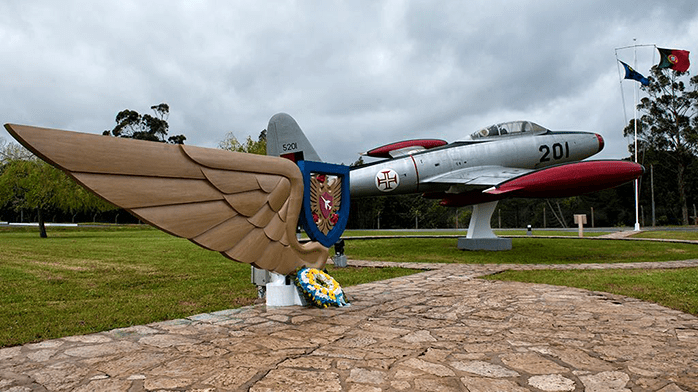
F-84 numa passagem baixa junto ao Forte de São Julião da Barra.

Ao abrigo do programa de assistência militar (MAP) Norte Americano, Portugal  recebeu e operou mais de uma centena de aeronaves F-84 entre os anos de 1953 a 1974, as quais foram utilizadas na chamada Guerra do Ultramar. Em Portugal (europeu) estavam baseados na BA-2 (Ota) e no Ultramar estavam na BA-9 (Luanda – Angola), tendo também operado a partir da BA-10 (Beira – Moçambique).

Consta que, aquando da substituição do P47 Thunderbolt, os aviadores portugueses desejavam receber os P51 Mustang; mas os Americanos insistiram que estaria na altura da Força Aérea saltar definitivamente para a era do jacto, e disponibilizaram os seus excedentes de F-84.

What is an United Nations Military Adviser?

In UN missions it is natural to see unarmed military officers, out of the context of the national contingents, working at the UN (civilian) leadership level. They are the UN Military Advisers (MilAd). But what does a MilAd do?

A UN Military Adviser (MilAd) has the status of “Expert on Mission”. He/She is normally a Lieutenant Colonel (OF4), from any Service, ideally a combat/operations specialist. His/her tasks normally are:

To provide military analysis, advice and support to the UN Mission’s leadership;

To liaise with the Host Nation military/security forces promoting mutual understanding, cooperation and, when appropriate, deconfliction with the UN Mission and other UN agencies;

To liaise with the International forces, promoting mutual understanding, cooperation and, when appropriate, deconfliction of Civ/Mil objectives;

To liaise with Provincial and National governance structures, promoting the work of UN Mission and supporting the growth of good governance in the security/defense sector;

To support the Disarmament of illegal armed groups;

To support the “security situation assessment” process, with the UN Mission;

When appropriate, support the work of the Human Rights’ officers;

Support the Humanitarian Affairs, in the development of Host Nation disaster preparedness, and disaster relief capabilities, in close cooperation with, and at the request of the UN Mission authorities;

Where appropriate and where required, provide assistance in solving regional or local conflicts through, negotiation, mediation, monitoring and the offer of good offices. Additionally, where necessary, work to build confidence between parties;

Actively communicate the UN Mission and the International Community’s aim and objectives to all interlocutors thereby supporting Strategic Communication and Outreach;

Provide observation analysis and recommendations in the field of security to the UN Mission in the form of written reports and papers.  

MilAds should not be confused with Military Observers (UNMOs). Although both of these experts are officers, operating unarmed and, in some cases, with similar tasks, UNMOs are Captains (OF2) or Majors (OF3) and they operate out in the field embedded in International Teams; while MilAd are Lieutenant Colonels (OF4) staff officers and they work at the Mission’s HQ decision level.

História aeronáutica Portuguesa – DH-88 Comet

DH 88 Comet – SALAZAR

O famoso Comet (de que a fábrica só fez 3 exemplares) e que era o avião mais rápido da sua época, foi adquirido pelo Governo Portguês como simbolo de modernidade do Estado Novo. Originalmente batizado como “Black Magic”, o avião recebeu o nome “Salazar” em Portugal, tendo sido atribuido à aeronáutica militar e baseado em Sintra. Nesta pintura a óleo sobre tela, o “Salazar” prepara-se para uma passagem baixa sobre os hidro-aviôes da Marinha de Guerra Portuguesa, na Doca de Bom Sucesso.

Depois de ser deactivado o Comet foi esquecido tendo sido mais tarde adquirido por Ingleses. Segundo consta, esta aeronave sobreviveu e está a ser restaurada no Reino Unido para voltar a voar (mas com as cores britânicas … naturalmente).

Angolan demobilized combatants – 1992

According to the Bicesse Agreements, sign in May 1991, the two major opposing parts in the Angolan conflict (MPLA and UNITA) should demobilize their combatants and plan for elections on the following year.

Both political parties initiated the demobilization of their contingents but, allegedly, the modality of disarmament was somehow … tolerant … regarding the assigned side weapons.  In result, everybody had a AK-47 Kalashnikov, and several magazines packed with ammunition, at home.

… keep the rest …

The demobilization, disarmament and reintegration (DDR) process is a matter to be dealt with by the local authorities. The International Community may help, advise, even sponsor, but they cannot interfere or substitute the governmental process.

According international sources in Luena, there was a major difference in the behavior of the UNITA and FAPLA (Governmental) demobilized people. The UNITA people gave their names, formed a column of three, and march right back to the Jamba (UNITA’s stronghold); the FAPLA people tried to sell their side weapon and moved to the local aerodrome trying to cash a ride to the Capital – Luanda.

A military pistol was being sold by 8000 Kwanzas and a Kalashnikov 12 000 Kwanzas. It was a modest price, equivalent to a volume of 10 cigarette packages. If the rifle’s butt had an artistic craved scene, the price would go up.

In Luena, the visible part of the (poor) DDR process was at the aerodrome. In October 92 there was about 400 demobilized FAPLA soldiers wandering in the facilities, which included the aircraft ramp and access taxiways. Some even had their family with them. They all waited the change to board an aircraft to fly out, preferably to Luanda. However, the UN aircraft could not take these people without a specific prior request from the Angolan Government to UNAVEM; only them we could help the demobilized on their quest.

One day, the Portuguese Air Force C-130 that had been tasked to support the United Nations regarding the electoral process of Angola, received an official request to bring 90 demobilized people from Luena to Luanda.  There was no list and no criteria … just 90 people out of Luena … into Luanda. After they’ve landed, I went to the cockpit to great my comrades. I was noticed that he navigator, a friend of mine, was looking out of the window trying to see something on the wing. Something had hit the aircraft on the approach path.

PRT Air Force C-130 that has flown in that mission (6801) – Photo by Américo Jesus

– “It must have been a bird-strike.” – Said the navigator. – “When the birds are very small you can see it from here.”

Due to the boarding confusion outside the aircraft, I went out to help organizing the crowd. When we finally managed to put 90 bodies inside the Hercules, the doors closed and it went away; leaving several dozens of other demobilized, complaining violently for not having been selected.

Latter I’ve learned that the aircraft was not been hit by a small bird; it was hit by two bullets of Kalashnikov; one of them missed by centimeters an important mechanic component that, if it had been hit, the return flight to Luanda would have been seriously compromised.

Desmobilizados angolanos 1992

De acordo com os Acordos de Bicesse, assinados a 31 de maio de 1991 pelas partes em conflito em Angola, durante o processo eleitoral Angolano que deveria decorrer em 1992, as duas principais forças em confronto militar (UNITA e MPLA), deveriam reduzir os seus efetivos e desmobilizar combatentes. Ambos os partidos iniciaram efectivamente a desmobilização de grande parte dos seus combatentes, mas, alegadamente, haveria uma grande tolerância no tocante a ficarem com as armas ligeiras que lhes estavam distribuídas. Em resultado disso, toda a gente tinha uma AK-47 Kalashnikov e vários carregadores cheios de balas em casa.

… e podes ficar com o resto …

A questão dos desmobilizados era, talvez, o maior problema na situação do pós-conflito que Angola viveu em 1992. Segundo constava (fontes internacionais em Luena), havia uma notória diferença comportamental entre os dois partidos em conflito.

– “Os desmobilizados da UNITA dão o nome no centro de desmobilização, formavam a três e regressavam à Jamba. Os desmobilizados das FAPLA (forças do Governo MPLA) tentam vender as suas armas no mercado e vão para o aeroporto à espera de transporte para Luanda.”

Uma pistola militar custava, no mercado local, 8 000 Kwanzas e uma Kalashnikov 12 000 Kwanzas. Um modesto valor que, no caso da AK-47, seria equivalente ao preço de um volume de tabaco com 20 maços de cigarros. Se a coronha da arma tivesse um trabalho de gravação esculpido, o preço seria um pouco mais caro.

Em Luena, a parte visível do problema dos desmobilizados, estava no aeródromo. Em Outubro de 1992, vagueavam pelas instalações do aeródromo cerca de 400 ex-militares das FAPLA, alguns acompanhados da respetiva família. Todos aguardavam um avião que os levasse para Luanda. Por definição, em qualquer conflito, as matérias relativas à desmobilização de combatentes são um assunto das autoridades locais. As Nações Unidas podem assessorar, apoiar ou até mesmo financiar, mas podem intervir na decisão e processo seleccionado para o efeito. É uma forma de fortalecer a autoridade e soberania Nacional dos governos empossados. Em resultado disso, as aeronaves ao serviço da ONU, entre elas um avião C-130 da Força Aérea Portuguesa em missão de apoio às eleições Angolanas, não tinham autorização para embarcar esta gente, a não ser que recebessem a tarefa específica para o fazer pelas autoridades de Luanda; o que acontecia pontualmente, através de um pedido expresso do Governo Angolano à UNAVEM.

C-130 Hércues que voou em Angola em 1992 – 6801. Foto de Américo Jesus

Um certo dia o C-130 português apareceu em Luena com a missão de levar 90 desmobilizados para Luanda. Dirigi-me à aeronave, a fim de saudar os meus compatriotas, colocando-me à disposição para os ajudar no que fosse necessário. Quando entrei na cabine de pilotagem – cockpit – a tripulação comentava que algo teria batido na asa esquerda durante a aterragem, mas não se via nada significativo daquele ângulo.

“Provavelmente foi um bird-strike [colisão com uma ave] – disse o navegador espreitado pela janela “quando os pássaros  são muito pequenos não se consegue ver bem!”

Depois de muita confusão no exterior da aeronave, lá se conseguiu carregar 90 passageiros, de entre as muitas outras dezenas que ficaram em terra a protestar violentamente.

Mais tarde soube que o impacto na asa esquerda do Hércules, não tinha sido uma ave, mas sim duas balas de kalashnikov. Uma delas ficou alojada a escassos centímetros de um componente fundamental da aeronave o qual, se tivesse sido atingido, iria por certo causar sérios problemas no voo de regresso a Luanda.

Operação Flash – Guerra de Independência Croata

01MAIO1995 06:00 – Em plena viagem de carro pela auto-estrada de Zagreb para Belgrado, ao aproximarmos o Sector Oeste da Krajina, de repente, a serenidade da paisagem transformou-se num cenário de guerra. Havia explosões e movimentos militares por todo o lado. Inadvertidamente, nós estávamos no sítio errado à hora errada; tinha começado a “Operação Flash”, lançada pelos Croatas contra as posições Sérvias do Sector Oeste.

As Krajinas eram territórios habitados pelos Sérvios dentro da Croácia. Havia quatro Krajinas (Sector Norte, Sector Sul, Sector Este e Sector Oeste) sendo que o Sector Oeste era o menor de todas as Krajinas, e nada de muito significativa se tinha passado naquela parte da Krajina. Havia mesmo um ditado na UNPROFOR que dizia “Sector West is rest” … pois bem, naquele Dia do Trabalhador de 1995, a coisa parecia ter mudado … muito!

Embora o Sector Oeste fosse o mais pequeno, com apenas 558 quilómetros quadrados, sem grande valor industrial ou agrícola, tinha uma importância relevante porque ficava no meio da auto-estrada Zagreb-Belgrado, unido o território Croata a Norte, e continha uma linha de caminho-de-ferro importante. Para além disso, ficava na bacia de exploração petrolífera da Croácia (petróleo e gás natural) contendo sendo atravessado pelo oleoduto que transportava esses produtos. Para além disso, politicamente falando, os Sérvios tinham instaurado a sua própria república, sem qualquer ligação ao sistema legislativo/fiscal/governamental Croata. O Governo de Zagreb não tinha qualquer controlo ou influência sobre aquela parte do (alegadamente) seu território; e isso tinha de acabar! Estas eram os verdadeiros objectivos da Operação Flash: (re)estabelecer a soberania Croata sobre aquele território e controlar as linhas de comunicação a Norte do País.

Durante as primeiras horas do ataque Croata, os Sérvios tentaram ripostar. Para além da resposta bélica, os Sérvios assaltaram as várias instalações da ONU, prendendo e usando mais de 100 elementos da UNPOL (polícias da ONU) e outros elementos militares e civis das Nações Unidas como escudos humanos.

Conduzindo como maníaco, literalmente de pá sobre o acelerador, regressámos a Zagreb. O primeiro ataque Croata não conseguiu ultrapassar as defesas Sérvias e, entretanto, os Sérvios residentes nas outras partes da Krajina começaram a reagir. O Sector Norte disparou sete misseis (Orkan) sobre Zagreb, atingindo a Capital Croata na zona do Aeroporto (Pleso) e no Centro da Cidade. Naquele ataque de Orkans morreram sete pessoas tendo outras 205 ficado feridas.

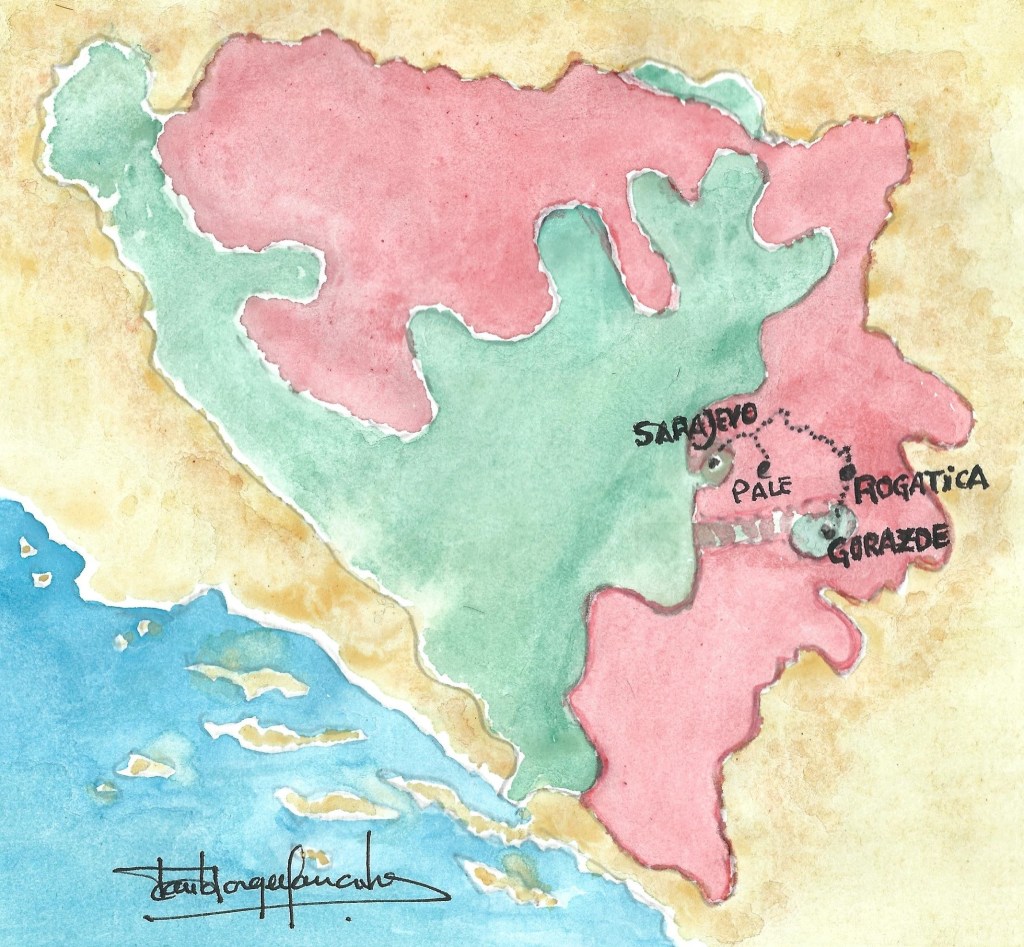
Na Bósnia a situação de segurança subiu de “calma mas tensa” para “muito perigosa”, e recomeçaram os combates entre Bosniaks (muçulmanos) e Sérvios.

No dia 3 de Maio de 1995 estava tudo acabado … já não existia Sector Oeste. A Operação Flash tinha sido um sucesso da Guerra de Independência da Croácia. Durante aqueles 3 dias de combate as forças Croatas sofreram 42 baixas fatais e 162 feridos. Os Sérvios tiveram 283 mortos, 1.200 feridos e mais de 14.000 desalojados. Desalojados esses que se tornaram refugiados na Bósnia, aumentado a tensão étnica e os problemas humanitários naquele outro País. No final da Operação Flash somente cerca de 1.500 Sérvios restavam naquela parte da Croácia.Um número ridículo comparado com a sua população inicial. As Nações Unidas passaram a estar preocupadas com as horríveis acções de “Limpeza Étnica” que se seguiram.

Independentemente de “quem fez o quê, a quem”, os actos de limpeza étnica praticados nos conflitos da ex-Jugoslávia atingiram níveis de impensável brutalidade. Matavam-se os animais domésticos; queimava-se o gado vivo dentro dos currais; torturava-se e matava-se independentemente do sexo ou idade as pessoas da etnia oposta; atiravam-se cadáveres para os poços de água potável para a tornar imprópria para consumo, envenenavam-se tanques de água potável com raticida, combustíveis diesel ou com óleos; destruíam-se as casas; vandalizavam-se cemitérios; minavam-se e armadilhavam-se os acessos a povoações inteiras para evitar o regresso dos seus habitantes expulsos.

A Operação Flash destruiu o conceito da invencibilidade militar Sérvia … estava obvio que dentro em pouco outras acções iriam ocorrer … e ocorreram.

“Operation Flash” Croatian Independence War

01MAY1995 06:00 – Driving on the highway from Zagreb to Belgrade, suddenly we were right on the middle of a Croatian attack to Sector West of the Krajina. “Operation Flash” had just started and we were on the wrong place, at the wrong time!

The Krajina were Serb populated territories inside Croatia. There were Several Sectors of Krajina (Sector South, Sector North, Sector West and Sector East) being Sector West the smallest one, were nothing “major” really happened during the Serb/Croatian conflict. There was an UNPROFOR saying: “Sector West is rest”. Although  Sector West was a small territory of about 558 square kilometers, without any industrial or agricultural value to Croatia, it had a great importance because it was right in the middle of Croatian’s northern most important highway; it has a railway connecting Zagreb to the far East of the Croatian territory; it is on the oil and gas extraction basin, with a pipeline across it; and, politically speaking, it’s a rogue region within Croatia’s territory – with its own laws, taxes, government, etc. The Government of Croatia had no control or saying about the governance of an up most important region of its territory, central to Croatia’s northern lines of communications. That’s was the strategic value and the reason for Operation Flash – to restore the Croatian sovereignty and gain full control of the lines of communication.

The Serbians inside the pocket tried to fightback but they were outnumbered and under equipped for that fight. They immediately took hostage about 100 UN CIVPOL police officers, and other UN staff members that were operating inside Sector West as peacekeepers, and used them as Human Shields.

Driving like maniacs in an empty highway, we were completely helpless while the Serb mortars started to retaliate the Croatian attack, hitting positions dangerously close to the highway tarmac. We barely managed to make a “U” turn, and head back to Zagreb standing on the vehicle’s accelerator.  

The Croat’s first advance failed to overtake the Sector “in one single flash movement” and the other Krajina Sectors reacted strongly to the Croatian audacious operation. The Serbs in Sector North fired seven missiles (Orkan) towards Zagreb, hitting the Croatian Capital in the Airport (Pleso) and the central of Town. There were “Air Raid” sirens alarming the population to take cover and it looked like a scene from the Second World War. The Orkan missile attach to Zagreb had caused seven deaths and 205 wounded.

In Bosnia the situation escalated from “tense but calm”, to “very dangerous”, due to the outbreak of combats between Bosniaks and Serbs in several locations of the separation line.

On the 3rd of May 1995, it was all over. The Serbs had lost their possession of Sector West and

Operation Flash was the first one of a series of military operations, planned to finish definitively the “Croatian War of Independence”. There was no more Serbian authority in Sector West. In fact, that reference completely disappeared from all maps; there was no more Krajina in that zone, only Croatia.

During the three days of combat, the Croatian forces suffered 42 fatal casualties and 162 wounded. The Serbs suffered 283 fatal casualties, 1.200 wounded and over 14.000 displaced people, which became refugees in the Serbian territories of Bosnia, giving a humanitarian dimension to the problem.

One month after Operation Flash was finished, there were only 1.500 Serbs living in that region. A ridiculous number when compared with the several dozens of thousands that lived there before. The UN was now concerned with indications of ethnic cleansing perpetrated by Croats over the Serbian families.

Regardless who did what to whom, ethnic cleansing in that conflict reached levels of unsinkable brutality. The farm animals were shot down or burned alive in the corrals; people were tortured and killed merciless, in spite of their age, sex or social status. The cadavers were thrown into fresh water wells in order to contaminate the populations’ drink water. In urban zones the water tanks were poisoned with rat poison, diesel fuel and oil. The houses were destroyed and the cemeteries vandalized. The population of entire villages was forced out of their houses and the accesses were mined and booby trapped for them not to return … ever.

Taliban “Price List”

Back in 2012, right after arriving to Kabul, I was made aware that I should be permanently cautious, wherever I was, because my head was worth 20.000 US Dollars (USD). That was how much the Taliban shadow Government would pay anyone that would kill a foreigner officer.

That specify price made me wonder if there was a list of targets and rewards; a “Taliban price list” … and there was. In fact, it was published in a Taliban social network site permitting anyone interested to have access to it. In their propaganda, the Taliban distorted the Afghan Mujaheddin concept, and turned it in some sort of an invincible religious “Jedi”; a “Mu-Jedi-in”; attracting all sort of unemployed/uneducated and starving youth to their cause. Being a martyr for the cause was their ultimate glory.

Death in combat was not something they feared, but rather wished.

But there was a material aspect to take into consideration. The salary of a Taliban mujaheddin fighter was about 10 USD per day. Furthermore, the fighter could increase significantly his payment according to a “list of interesting targets” (and if the fighter would die on the process, his family would receive the price).  

According to a Taliban website, the price list was:

                200 USD – Attack and destroy a bridge;

                200 a 400 USD – Assassination of a teacher/professor;

                900 USD – for attacking a school and avoiding continuation of lecturing;

                1 000 USD – For each ISAF low ranking soldier killed;

                6 000 USD – For the destruction in combat of an ISAF vehicle;

7 500 USD – For the poisoning of Afghan military/policeman in their units/posts;

                10 000 USD – For the bombardment (rockets) of a City;

                10 000 USD – For the complete destruction of a school;

and … 20 000 – For the capture and beheading of a foreigner military Officer.

In a countryside with long traditions of war-fighting and manhood culture, where most males had a weapon of their won, receiving such high payments represented the assurance of well being for an entire family. That was something worth thinking about, regardless their sympathy towards the international presence in their lands.   

Crie um site como este com o WordPress.com
Comece agora