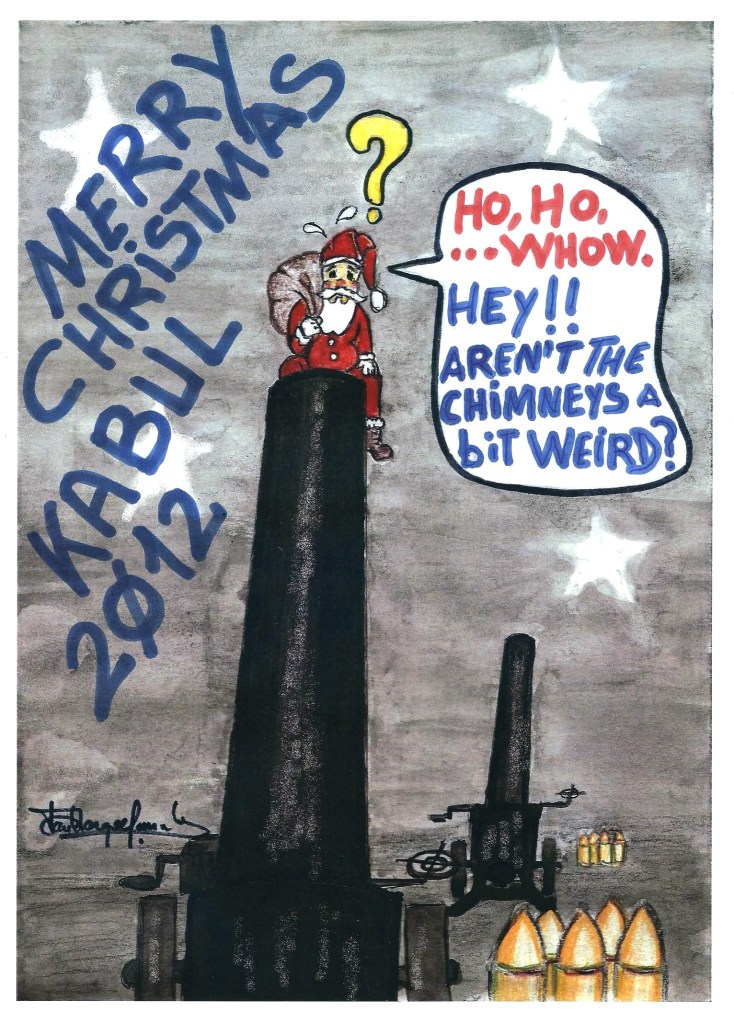
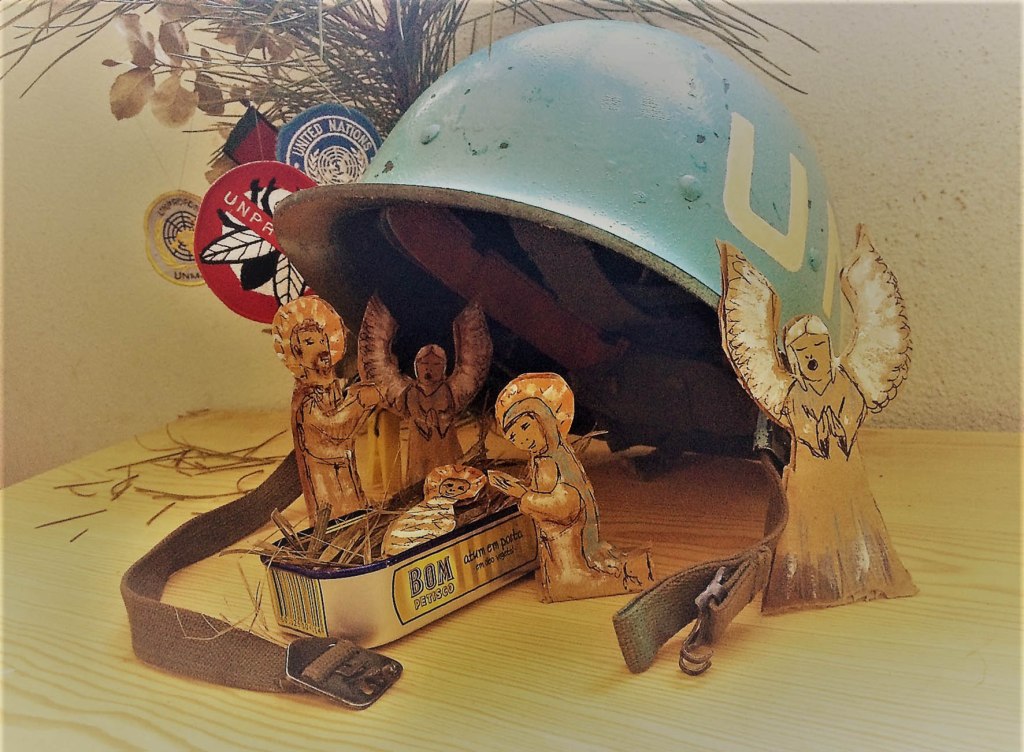
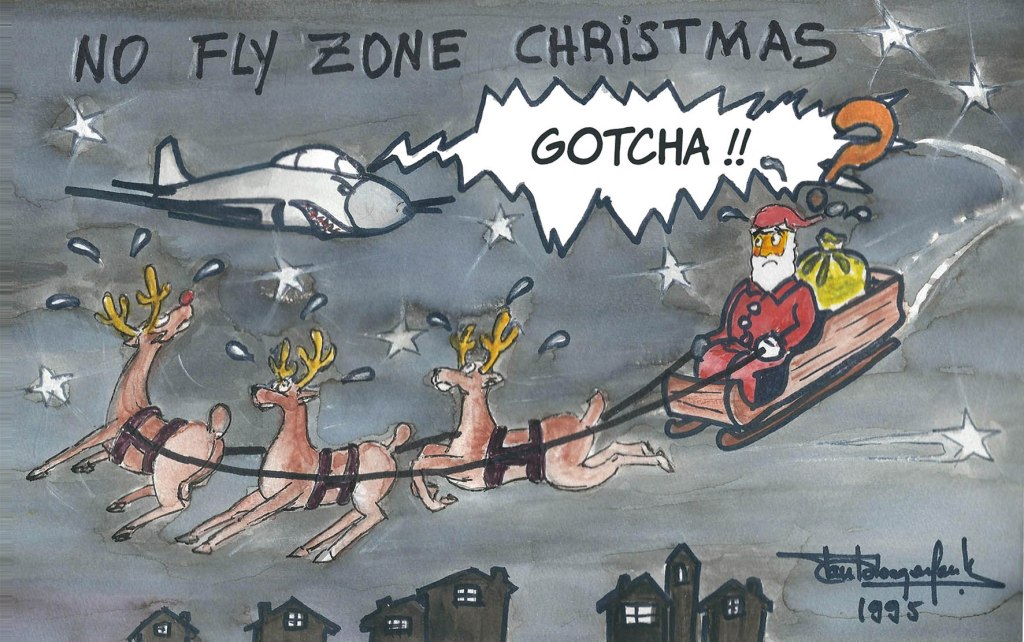
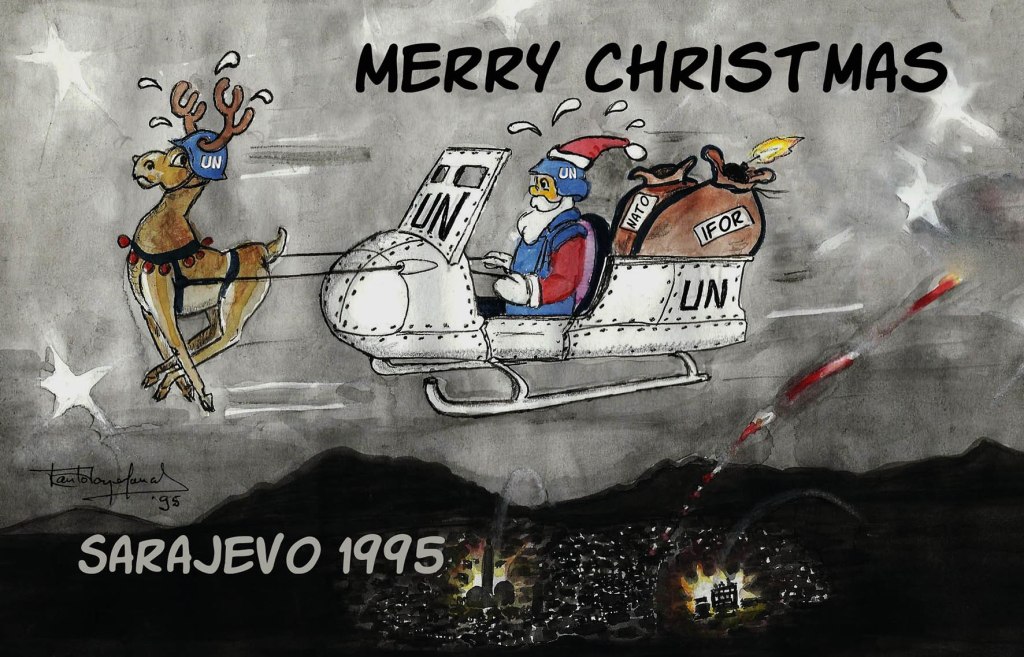
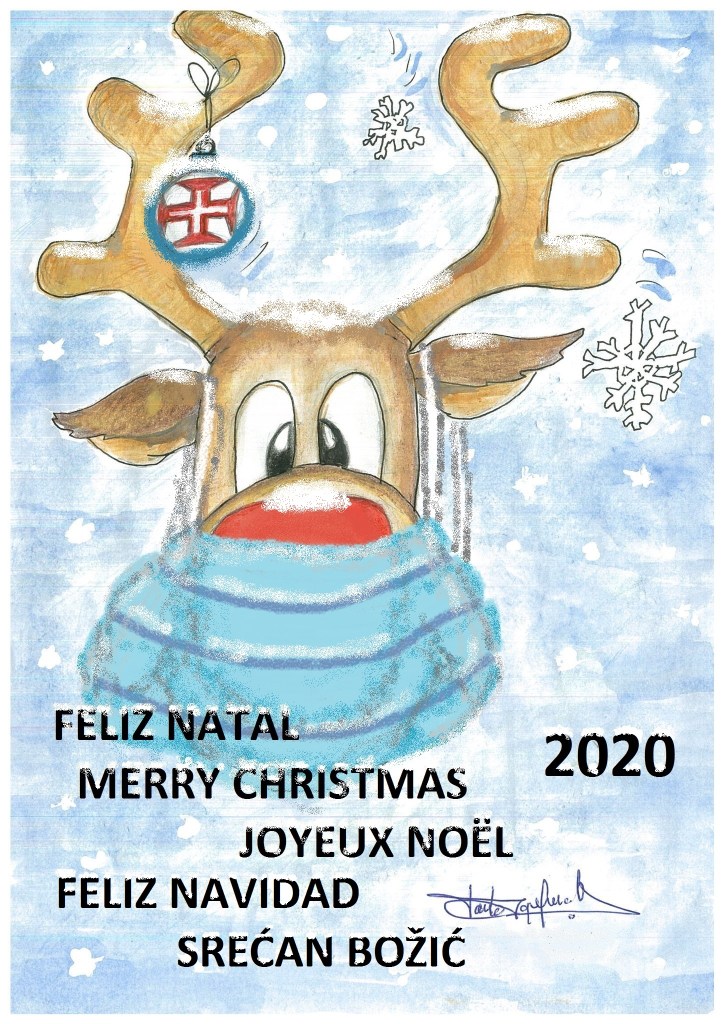
Spending the Christmas season in a mission area, away from the loved ones, is always something difficult to endure. However, someone has got to do it and we always have some creativity to overtake difficulties.
I wish a Merry Christmas to all sailors, airmen, soldiers, police agents and civilian personnel serving in EU/NATO/OSCE/UN and all sort of NGOs around the World peacekeeping and crisis response missions.
We’ve been seen for the past few days (weeks) a new hope in the ongoing negotiations for a lasting Peace Agreement in Afghanistan. Should the negotiators (both parts) be able to overtake their differences, it would be a major achievement in that turmoil part of the World. However, let us not forget that Afghanistan still lives what could be defined as a Civil War, that has been ongoing for several decades, and the modus operandi of those populations has adjusted to that (sad) reality. There should be no doubts that it is a Civil War we are taking about; because:
The Taliban constituted an opposition group, with a political leadership properly structure in exilium in Pakistan. With a shadow Government (with ministers, regional governors, etc.) transmitting instructions to their followers on the ground.
– The Taliban did declare officially that there was a state of war between them and the Government of Afghanistan;
– The Taliban had a system of recruitment, training and maintenance of a permanent core of fully armed fighters;
– The conflict was using non-conventional tactics and was being fought inside exclusively the borders of Afghanistan;
– It was a long lasting conflict;
– The Afghan (secret) Police reported (2014) over 3 000 insurgency groups active in the country;
– It had “high intensity” because:
a. It provoked more than 1 000 fatal victims per year, in which far more than 5% of the casualties were made by the weaker faction;
b. It managed to drag the presence of fighting International Forces.
However, although there was a civil war ongoing, in many parts of the country the combats were not constant (hence the non-conventional tactics). There were periods of time when people could go around in their business;
Afghanistan was severely destroyed by decades of conflict, which opened space for all sort of international entities to congregate in the country. There were hundreds of NGOs dedicated to all sort of matters (even sport), trying to help the Afghanis. There were International Organizations of all sort (NATO, EU, World Bank, ICRC, practically all programs and agencies of the United Nations family, OSCE, etc.). There were embassies and consulates of all the major countries, with strong staff implementation on the ground and bilateral development programs; etc. etc.;
The Afghan territory is bigger than the Iberian Peninsula (653 000 square kilometers), with extremely different geography landscapes, ranging from deserts to forests, mountains of Hindukush (beginning of Himalaya system) and flat plains, dry areas and wild rivers; hence the distribution of the international community was wide spread, pending on their interest. In fact, Afghanistan occupies 0,44% of the overall land mass of Hearth, ranking of place nr. 41 of the Worlds, countries and territories;
The Afghani population had a very low level of scholarship; only 19% of the people could read and write;
Religion and cultural heritage had a great importance in the Afghan life. Their family education of the (fundamentalist) view of the Koran made it possible for radicalization of young educated people. These radicalize youngsters were infiltrated among the Governmental and international structures and became a major issue in the so called “Green on Blue” attacks. These were Afghanis that we used to trust and which suddenly turned their weapon towards their international comrades/instructors and opened fire, killing whoever was around.
The presence of high numbers of International staffs, introduced yet another issue in the country – organized crime and resentment toward the locals that were employed and had foreigner salaries. Not only were they subject of envy, they were “targets” of extortion. Many times were heard stories of interpreters that had members of their family kidnaped for a ransom, live threatening, illegal taxation, etc.
All things taken into account, the Peace Process that is being negotiating will be nothing short of extremely difficult, and the International Community should be ready to support it, in order to last.
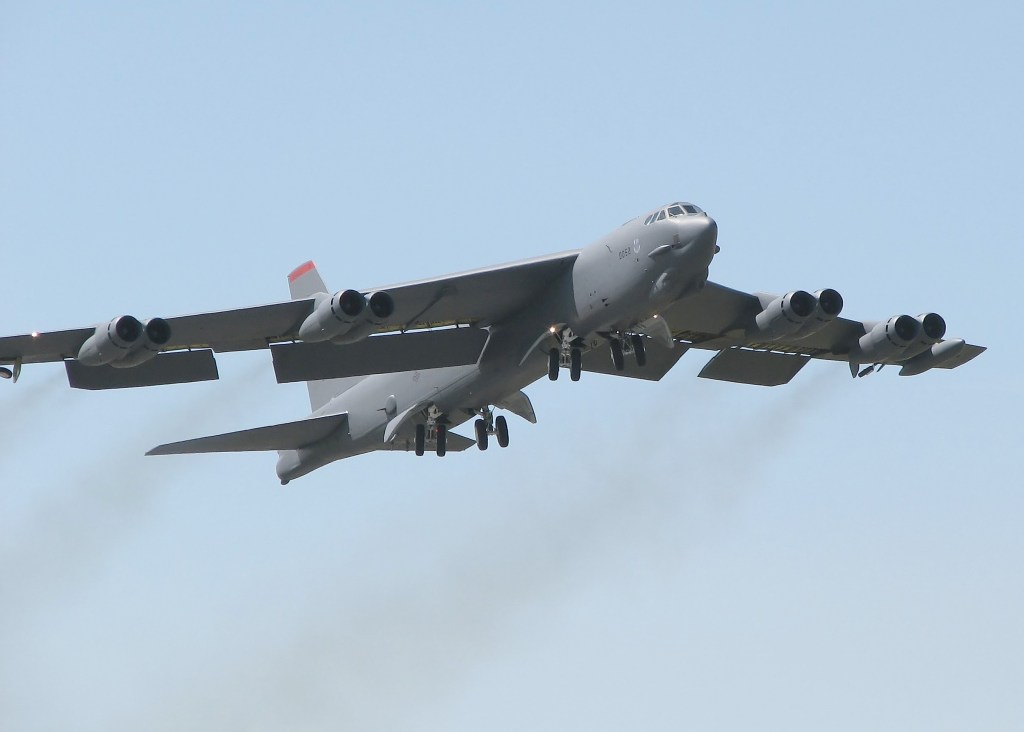
Donald Trump’s Administration can be characterized as not having engaging in a new major combat operation, somewhere in the World. In fact, America is reducing its presence in Iraq and in Afghanistan. However, as the time to exchange staffs in the “Oval Room” gets closer, that seems to be changing, because the US deployed long-range bombers to Middle East to deter Iran. This is the second time that the US Air Force launched its B-52 (Stratofortress) heavy bombers for a short-term deployment to the Middle East, in less than a month,.
B-52 Stratofortress
It appears that these efforts are meant to deter potential hostile Iranian military activity as Washington reduces its military presence in Iraq, roughly a year since the targeted bombing of Iranian Maj. Gen. Qasem Soleimani in Baghdad.
The B-52 deployment comes less than two weeks after Iranian Supreme Leader Ayatollah Ali Khamenei called for retaliation for the assassination of a senior Iranian nuclear scientist in an attack that officials in Tehran have blamed on Israel.
Interpreters always have a funny nick name or callsign. In Bosnia they were “Yellow Cards” because of the distinctive color of their UN id. cards. In Afghanistan some called them “Fnoos”. However, regardless the nickname we attribute them, they are absolutely indispensable in any crisis response deployment, peace/development negotiation and in all major achievements.
In fact, every problematic country/territory requiring International presence has the same situation. Either in Asia, Africa, Europe or South America, every crisis resolution deployment of an International (Civilian/Police/Military/Diplomatic/Non-Governmental) organization has got to have them.
Afghanistan is not a small country. In fact, its territory ranks in number 41 of the largest countries in the World, occupying 0,44% of earth’s land mass. It has 653 000 square kilometers, with extremely different geography landscapes, ranging from deserts to forests, mountains of Hindukush (beginning of Himalaya system) and flat plains, dry areas and wild rivers; hence the distribution of the international community was wide spread, pending on their interest. But they all needed to speak with the local population; and that was always a problem, because Afghanistan is a very heterogenic country. It has tribes from different ethnic groups, such as Pashtuns, Hazaras, Almaks, Balutchis, Turkmen, Uzbeks, Tadzhiks, and some others less representative. All of them had a different version of the same Dari or Pashtun languages. An Afghan from the north could hardly understand someone from the south, let alone a foreigner.
The need for local interpreters was very high, but the problem was: – Where to find them?
The Afghani population had a very low level of scholarship; only 19% of the people could read and write – in a country that had a past with Soviet influence – let alone speaking English;
The average salary of a (male) urban Afghani was less than 150 USD per month. An Air Traffic Controller (which had to have domain of the English language) had a salary of 300 USD per month.
These international missions had two things in common:
The vast majority of the international staff did not have previous education on the local languages (which are not easy to learn);
The staff rotated in and out of the mission area quite fast (no time to learn the local language);
They all had US Dollars and no problems in spending it.
Therefore, following the market demand/offer system, the salaries of the Afghani that could speak English started to rise considerably. One driver could made about 1 000 USD per month working for an International organization. A proper linguistic expert made more than 2 000 USD. There were cases of Air Traffic Controllers quitting their job to become local employees of International Organizations. The problem started to be so big that the Afghani institutions were struggling to retain their educated staff, and they were (also) loosing that battle. In many cases, the way to maintain the Governmental jobs was through corrupted solutions, having “other sources” of payment that could compensate (if possible – supplant) what the foreigners were offering.
This introduced a new type of constrain – resentment toward the ones that had foreigner salaries. Not only were they subject of envy, they were “targets” of extortion. Many times were heard stories of interpreters that had members of their family kidnaped for a ransom, live threatening, illegal taxation, etc.
The other issue was Security related. Being easy targets of the Taliban (and organized crime) the interpreters were constantly approached by the insurgency tin order to operate as spies. They attended meetings with important people, therefore they knew stuff nobody else knew among the Afghani population, and that privileged information was crucial for the Taliban to plan their combat campaigns.
That was how they got their nick name – Fnoo. Some military contingents tried to protect their interpreters, and their family name was never mentioned. They were addressed by their birth name and registered as Family Name Unknown (FNU), which sounded like “Fnoo”.
Regarding the quality of the translations, there was something to take into consideration: the best interpreters were the ones hired in the same region of operation. Bringing someone from another region of Afghanistan could jeopardize the quality of the translation. Afghanistan is a patchwork of different ethnicities, and the way each ethnic group and local community looked at foreigners was not always the most favorable way, hence they would not open entirely to outsiders.
Yet another issue related to Afghan interpreters was the women, and all maters related with gender. Women were the ones that possessed most of the (non-combat) information, but the access to them was quite “obscure”. It required not only female international interlocutors but, above all, female interpreters. In this case, the interpretation went well beyond the pronounced words, because a simple gesture or even the silence had to be “interpreted” into a meaning.
The Afghan Government tried to look very Westernized – incorporating women in their ranks – but it was an absolute artificiality. The women wanted to go into that direction but the society is still divided between urban areas and rural areas. The urbans accept it with a smile in the face and cautiousness in the heart, but the rest of the country was not ready for it.
The demobilization of interpreters was heart breaking. Sometimes the Intel services revealed that the person we started to be attached to was in fact someone with close contacts with the insurgency, and we had to cease abruptly our relation with those “friends”. Other times, we had to close our compounds and living facilities in certain regions (reduction of international presence) and the interpreters were not needed anymore. That was the most difficult part of it. The result of closing compounds depended a lot on the organization and the nation in question. If it was a civilian international organization the interpreters were simply dispensed. Eventually they could be transferred to other areas with fewer personnel, but it did not always work. Most of the times the contracts simples ceased, and that was it. Normally that was the “Pay Back Time” and everybody jumped on them for having had a good salary while working for “infidels”. In case of International military compounds (pending on the nation) sometimes the interpreters were lucky to be working for a National contingent that would take care of them (bringing them with their family to the windrowing country), but that was not always possible, and they were simply left behind.
As a last note, allow me to say that a Taliban combated made 10 USD per day and, should he be able to assassinate an Interpreter, he would receive and extra payment of about 500 USD.
We may not notice but, in our own perspective, the entire World’s population (with only one single exception) is constituted by “The Others“.
We hardly see yourself in the other guy’s shoes; hence it is easy to criticize and point out negative aspects, without having to present alternative solutions.
The problem is that it normally costs two or three times as much to correct a faulty situation, as it would have cost to prevent it. And if that faulty situation involves an armed conflict, the corrective budget goes ballistic. Furthermore, the longer it takes to solve the issue, the more difficult it will be to serenade the grievances between the parties in conflict, the grim numbers of victims will escalate and, of course, the International Community’s costs in blood and treasure will also express an exponentiation.
Therefore, let me appeal to the western citizen selfishness and remind that it is easier, cheaper and faster to help all those populations struggling to survive, than to wait for their situation to escalate from unbearable to quarrelsome, to conflict.
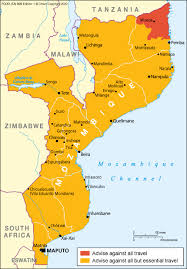
That is what is happening in Mozambique at this stage. Do not wait … or we will have a very nasty situation to solve latter on.
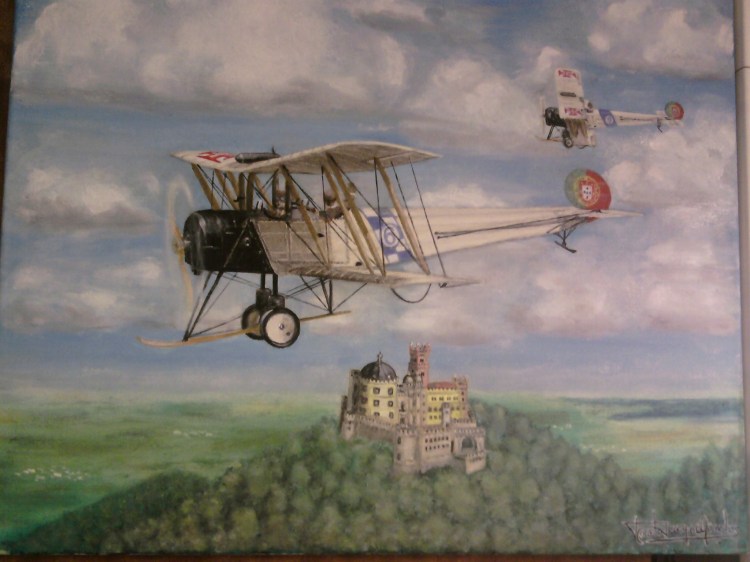
Há 95 anos, em 30 Novembro de 1925 – O Exército Português criou o quadro permanente de Oficiais e Sargentos da Arma de Aeronáutica. Na altura existiam: a Inspeção-Geral da Aeronáutica Militar; o Parque de Material Aeronáutico; a Escola Militar de Aviação; a Escola Militar de Aerostação; a Esquadrilha de Aviação de Treino e Depósito; o Grupo de Esquadrilhas de Aviação e a Companhia de Aerostação de Observação (Decreto 11297 D.G. 259 Série I)
95 years ago, on November 30, 1925 – The Portuguese Army created the permanent staff of Air Force Officers and Sergeants. At the time, there were: the General Inspection of Military Aeronautics; the Aeronautical Material Park; the Military Aviation School; the Military Aerostation (Balloons) School; the Training and Deposit Aviation Squadron; the Aviation Squadron Group and the Observation Aerostation (Balloons) Company (Decree 11297 D.G. 259 Series I)
Opportunity for Veterans! Any service — any nation!
New Musicals Inc (NMI) in the United States is adapting veteran’s stories into ten-minute musicals to be filmed as part of a web-series to honor military veterans of all and any nation.
Veterans whose stories are selected for development will receive a $1000 (USD) honorarium and hold on to the rights of their stories.
Don’t let the “musical” aspect dissuade you. In fact, you don’t have to be musical at all. NMI just needs a compelling story from your military background – just one story – not a compilation — and they will bring a composer, lyricist, and professional actor together to turn it into song. They will also welcome you into the collaboration process if you want to be included on the creative side.
See the link for info and a very short video that explains the project.
On October 24, 1945, 51 countries came together and created the United Nations Organization (U.N.). The Second World War had just finished, and these countries pledge the promote peace and cooperation around the world.
Today, we have 193 sovereign member states in the United Nations, and all have equal representation in the UN General Assembly.
We are living very difficult times, with an invisible enemy that threatens our lives regardless who we are, where we are or what we do. An enemy that cannot be fought unilaterally, it has to be dealt with in all dimensions, by all nations, involving every human being in the Planet.
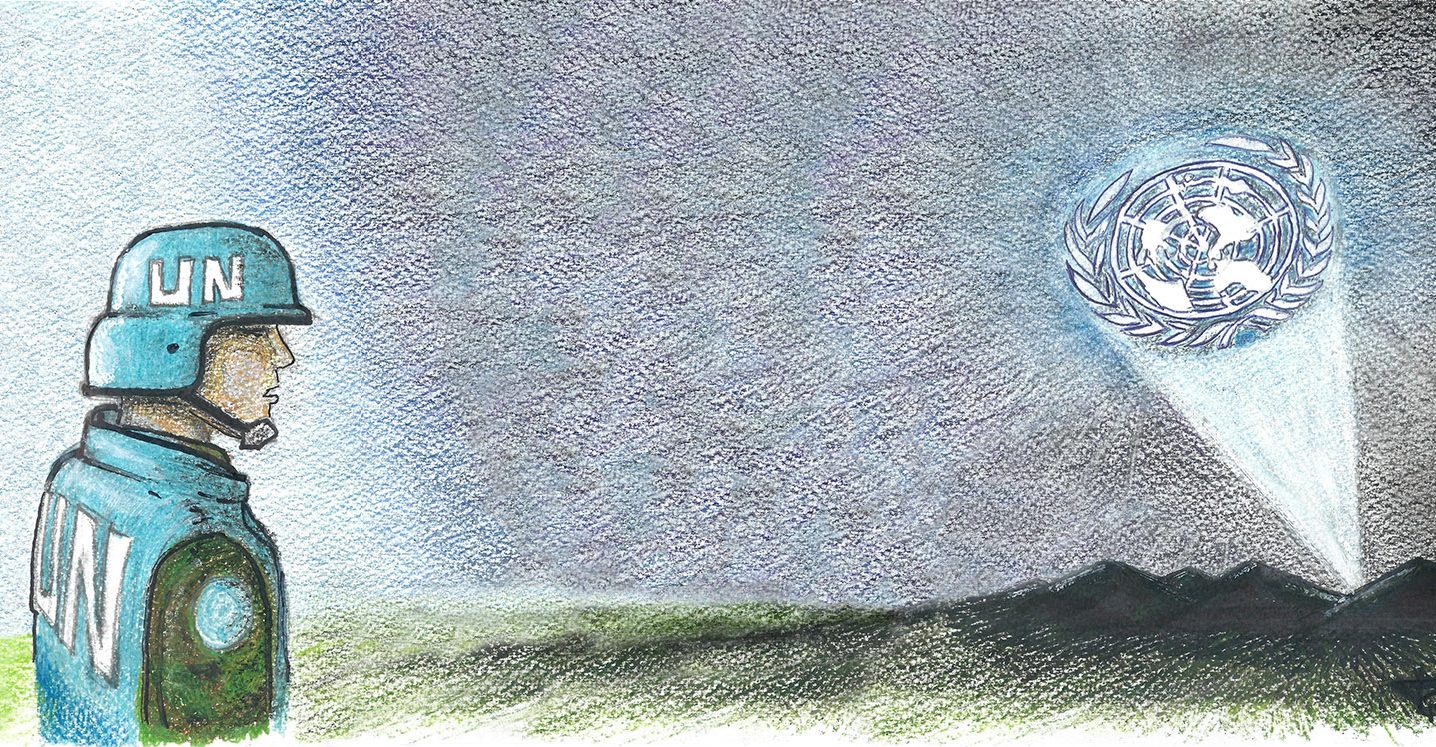
However, as turbulent as the high dark cloths can be, we know the sky above is peacefully blue, and we have a place where we can present our differences, discuss our needs and coordinate our actions; World Wide. That place is call The United Nations.
Oil painting “Blue Skies above” – by Paulo Gonçalves
The main function of the United Nations is to preserve international peace and security. Therefore, regardless the virus, the opposing faction, the scarcity of essential resources, we should all embrace this “blue wave” and start helping each other.
The abstract entity we call – International Community – shelters its values at the United Nations (UN) headquarters, in New York. A forum of 193 sovereign countries, with equal rights and representation in its General Assembly. The UN General Assembly embraces a large variety of cultures, wills and political systems. However, as different as they may be, they are all committed to maintaining international peace and security, developing friendly relations among nations and promoting social progress, better living standards and human rights.
Another thing the International community (at large) militates for is the observance for free and fair elections; a sacrosanct matter for social stability and the desired Global Democracy. “Free and fair elections” became a sound bite, but not many people actually realize what it means. What are the conditions for an electoral process to be considered “free and fair”?
The electoral observer’s checklist is quite extensive, but, to summarize, one can say that the electoral process should be transparent, inclusive, accountable, and there must be equitable opportunities for different people to compete in the election.
These conditions are not easy to achieve in stable and democratic countries; let alone countries and territories that had just emerged from a long dictatorial period, or from internal conflict, where the democratic concepts that are loudly broadcast, but little practiced. The rule is that the desire of the majority of the voters will prevail; but the exceptions confirm that rule. An electoral process carried out in a post-war environment, with leaders little motivated for democratic compromises, does not usually foster national unity, quite the opposite. Unfortunately, this is exactly what happened in Angola in 1992.
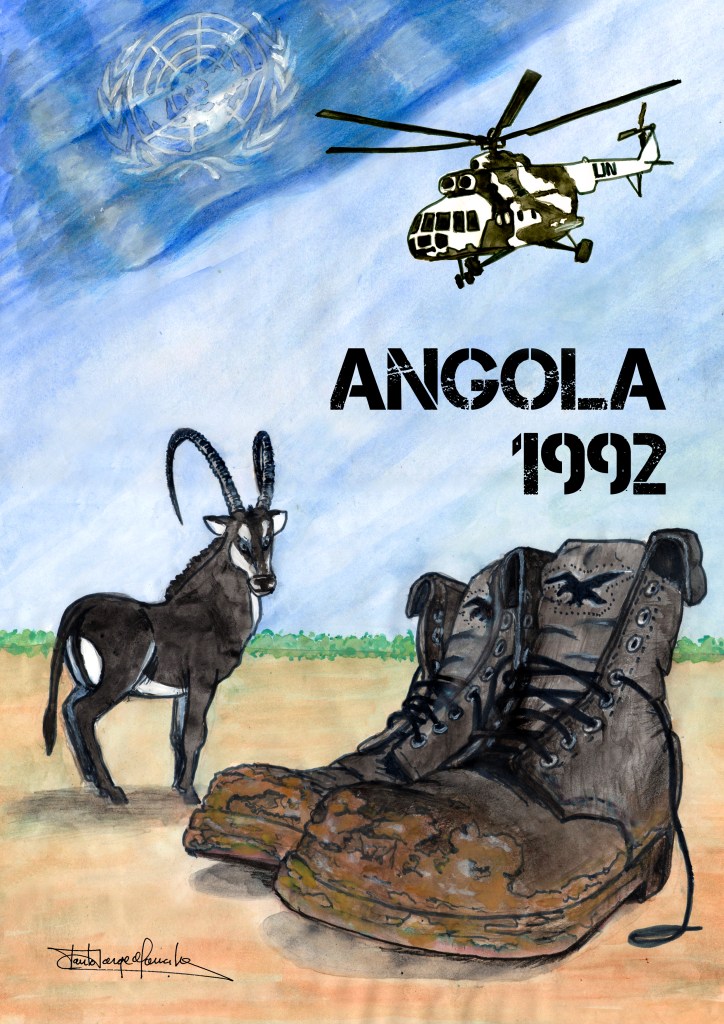
My next book unveils the content of a Peace Support Operation’s Mission Diary, written during the conduction of Angola’s “First Free Elections” (1992). An enterprise conducted by the UN in one of the most land-mined territories of the World, which became the largest UN air operation by that time.
Air Force boots on the ground
Upon arriving in Luanda, the sighting of snow-cleaning vehicles, in an African airport, presented itself as a surrealist picture , awakening a critical look at the reality that surrounded me. From that moment on, I started to observe everything in “another way”, trying to see beyond my stereotyped concepts, through a critical-constructive prism, with a touch of humor; but always respecting the values of the United Nations. Gradually, I felt the need to record all those experiences that escape the banality of everyday life. This was achieved both in the version of the word writing, and drawing cartoons, which was all registered in a Mission Diary.
On the year that the United Nations celebrates its 75th Anniversary, the Angolan Mission Diary was revisited and gave rise to this book. All situations are real, but the names of the characters are fictitious in order to protect their identity.
I’ve just started it and I hope you’ll like it as much as you did the Bosnia 95 book.



 OPen samento