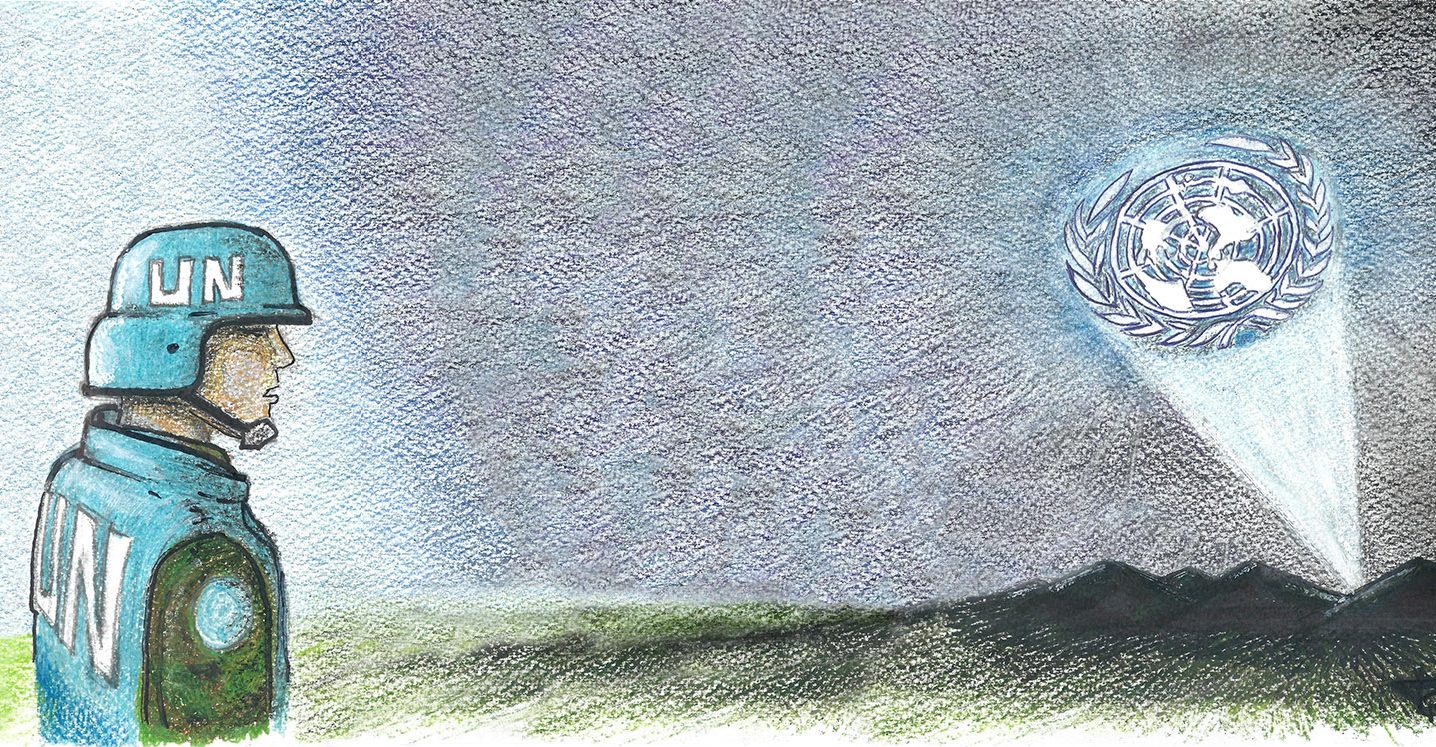
In order to do a proper analysis of a certain situation, one has got to scan it from the outside. We’ve got to put some distance between the study object and the observer and look at all the external facts that influence that particular situation. If you are too close and a part of it, you tend to miss the big picture.
A peacekeeper cannot avoid being a part of the studied object situation, because he/she was normally embedded on it. The only distance the peacekeeper can implement; is time! We have to let time go-by in order to serenade sensations/feelings, and make a critical assessment of what went right and what went wrong. Frequently we reach the conclusion that we lived situations that had everything to go wrong; very wrong! We’ve only lived to tell the story because the “lucky” factor had (too much) influence in the outcome of that situation.
I recall a certain day, during a UN mission in Luena – Angola – 1992, where I did everything wrong and only the “lucky” factor saved me. Something that gave experience to survive other missions in Bosnia, Afghanistan, and other parts of the world.
We were in the UN ramp of Luena’s airfield preparing the cargo load and organizing some passengers to board a UN aircraft that was flying inbound. At that a given moment, a group of demobilized soldiers entered the aircraft maneuvering area, looking for an aircraft that could eventually fly out of Luena, to Angola’s Capital – Luanda. When they verified that there was absolutely no chance to achieve their intentions, they became aggressive towards everything and everybody. Some of them had weapons and they opened fire randomly over several people/locations.
At the aerodrome’s UN corner, there were several journalists waiting for the arriving aircraft; a soon as they heard the first bursts they immediately jumped to the ground and took cover. People were crying and screaming in Flemish, Portuguese, English and some Angolan dialects.
I just kept on working. There was a lot to do before that aircraft’s arrival and, in all fairness, it was very common to hear shooting in Luena. The sound of those Kalashnikov was like the sense around of a movie … and all those people were just extra actor in that film … my film.
Suddenly, I felt something hitting the ground very strongly, just in front of my right foot; only after I heard the sound of a single shoot. That shot had been fired in my direction and, because the bullet traveled faster than sound, I only heard the sound after the projectile. Immediately after, I felt a wind blow with a hiss on my left ear. The sound of yet another shot came right after that. My brain evaluated all those inputs and, in a micro second, I realized that those were not lost bullets; someone was actually firing at me. I think I blushed when I recognized the stupidity on my behavior. Boldness was not synonymous of dedication and overconfidence leads to irresponsible attitudes that can get you killed.
I also jumped to the ground and hid my silhouette behind some carton boxes waiting to be loaded on the cargo plane. At that time a all lot of shooting started at the airfield. The Angolan special police (the Ninjas) had just arrived, and they were not solving the problem with sticks. When the firing was over, there were several bodies lying on the apron’s tarmac and the situation was under control. Several demobilized soldiers were arrested which, in the hands of the anti-riot police, was not a very auspicious situation.
The sound of a landing C-130 and its reverse engine procedure filled the air. Our aircraft had just landed. When the journalists boarded the aircraft they had red eyes for having been crying; I just had that stupid look on my face of someone that had just escaped from being shot in the head … by mere luck. I committed the traditional mistake of lowering the guard due to routine operations.
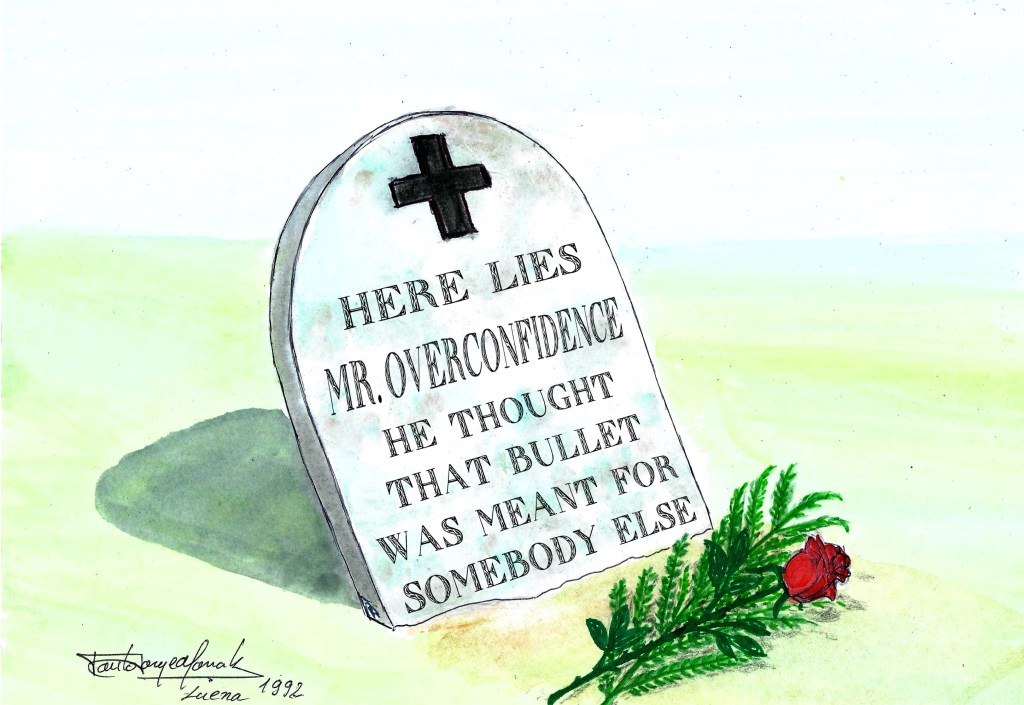
I registered yet another Lesson Learned: – “Overconfidence can get you killed.”
Experience is something one gathers by surviving to one’s mistakes. That experience enables the veteran peacekeeper to anticipate situations, because he/she has already outlived them. It is the perfect “on-time”; and “at the site”; substitute for the analytical distancing. The veteran experiences a sensation of “déjà vu”; a jump in time to other similar situations and its solutions, assisting the instantaneous decision making to adapt and overtake.
There’s a military aviation saying that applies to such Lessons Learned culture:
–“In the civilian society, the more you live – the more you learn; in conflict resolution missions, the more you learn – the more you live”.
 OPen samento