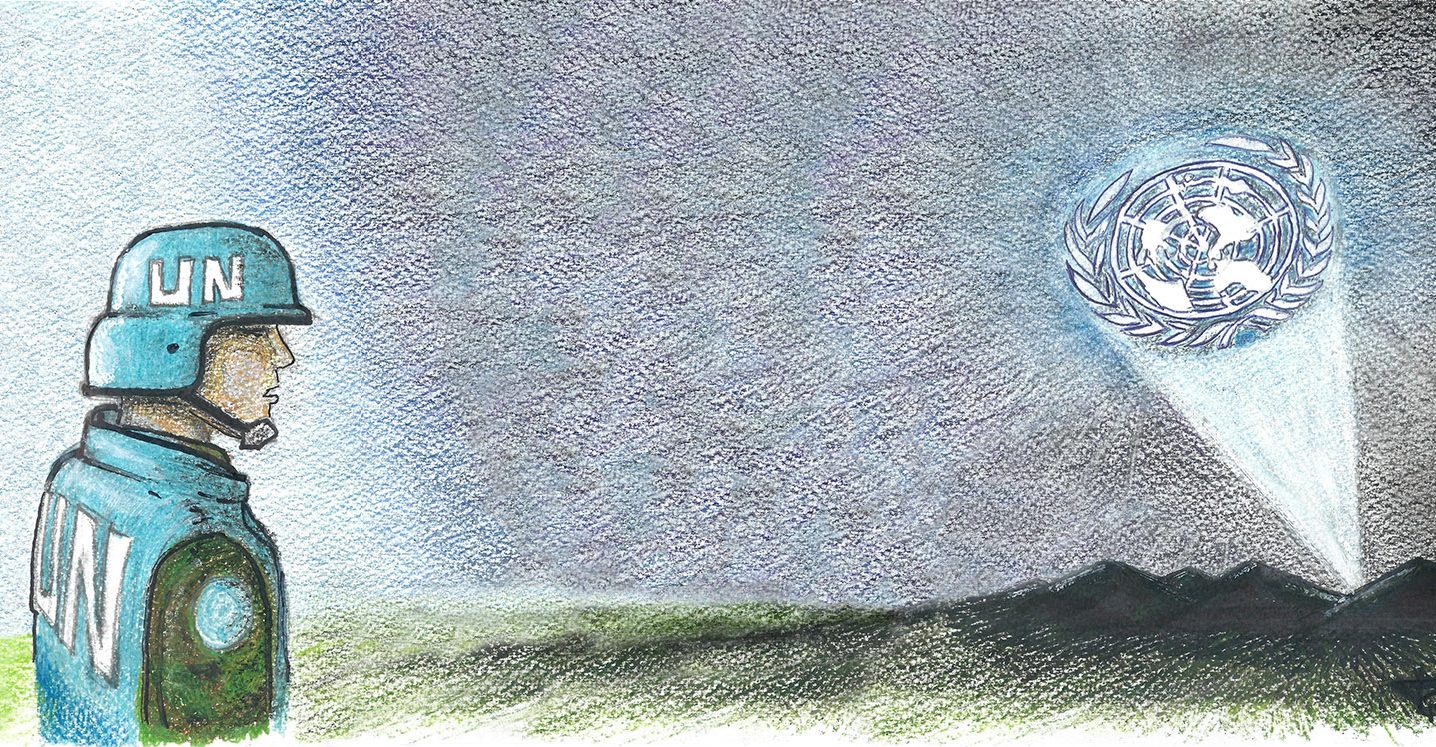
According to the Bicesse Agreements, sign in May 1991, the two major opposing parts in the Angolan conflict (MPLA and UNITA) should demobilize their combatants and plan for elections on the following year.
Both political parties initiated the demobilization of their contingents but, allegedly, the modality of disarmament was somehow … tolerant … regarding the assigned side weapons. In result, everybody had a AK-47 Kalashnikov, and several magazines packed with ammunition, at home.
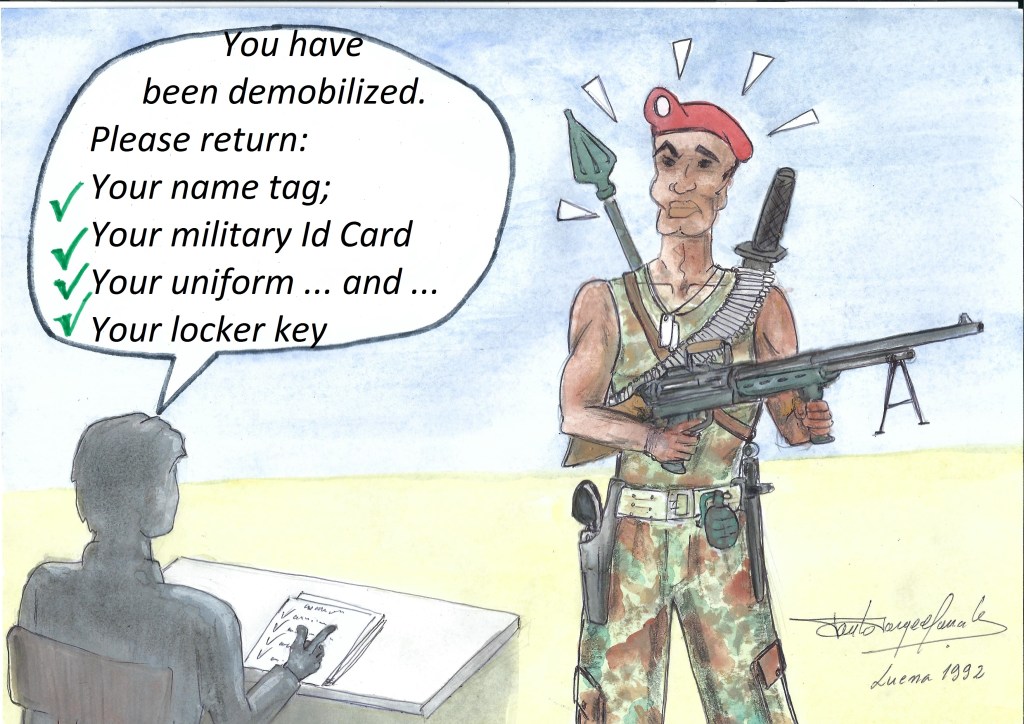
The demobilization, disarmament and reintegration (DDR) process is a matter to be dealt with by the local authorities. The International Community may help, advise, even sponsor, but they cannot interfere or substitute the governmental process.
According international sources in Luena, there was a major difference in the behavior of the UNITA and FAPLA (Governmental) demobilized people. The UNITA people gave their names, formed a column of three, and march right back to the Jamba (UNITA’s stronghold); the FAPLA people tried to sell their side weapon and moved to the local aerodrome trying to cash a ride to the Capital – Luanda.
A military pistol was being sold by 8000 Kwanzas and a Kalashnikov 12 000 Kwanzas. It was a modest price, equivalent to a volume of 10 cigarette packages. If the rifle’s butt had an artistic craved scene, the price would go up.
In Luena, the visible part of the (poor) DDR process was at the aerodrome. In October 92 there was about 400 demobilized FAPLA soldiers wandering in the facilities, which included the aircraft ramp and access taxiways. Some even had their family with them. They all waited the change to board an aircraft to fly out, preferably to Luanda. However, the UN aircraft could not take these people without a specific prior request from the Angolan Government to UNAVEM; only them we could help the demobilized on their quest.
One day, the Portuguese Air Force C-130 that had been tasked to support the United Nations regarding the electoral process of Angola, received an official request to bring 90 demobilized people from Luena to Luanda. There was no list and no criteria … just 90 people out of Luena … into Luanda. After they’ve landed, I went to the cockpit to great my comrades. I was noticed that he navigator, a friend of mine, was looking out of the window trying to see something on the wing. Something had hit the aircraft on the approach path.
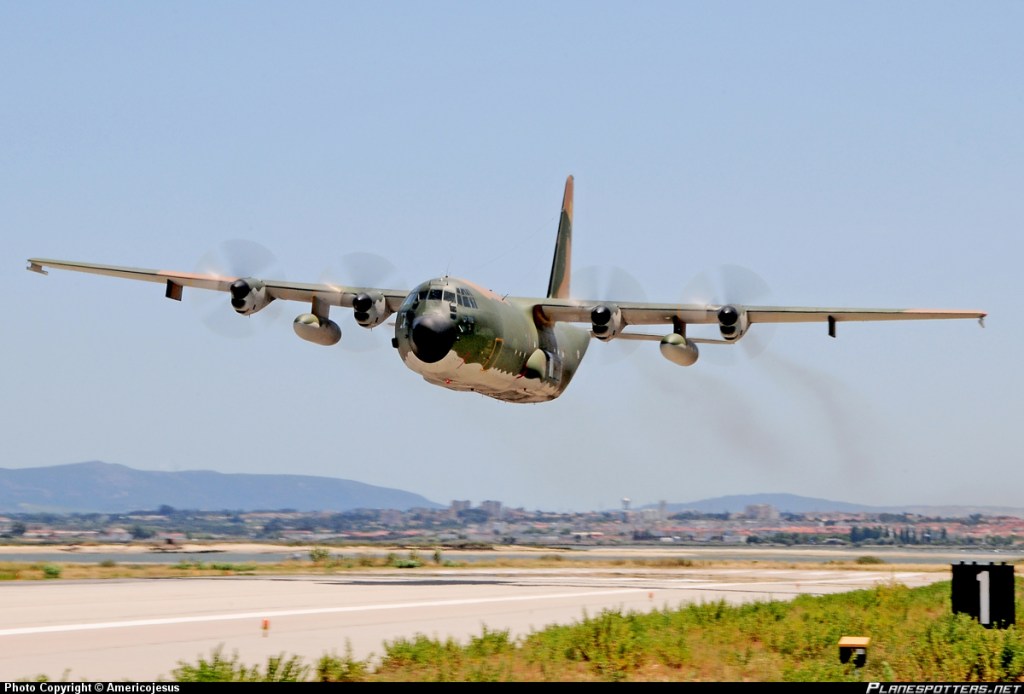
– “It must have been a bird-strike.” – Said the navigator. – “When the birds are very small you can see it from here.”
Due to the boarding confusion outside the aircraft, I went out to help organizing the crowd. When we finally managed to put 90 bodies inside the Hercules, the doors closed and it went away; leaving several dozens of other demobilized, complaining violently for not having been selected.
Latter I’ve learned that the aircraft was not been hit by a small bird; it was hit by two bullets of Kalashnikov; one of them missed by centimeters an important mechanic component that, if it had been hit, the return flight to Luanda would have been seriously compromised.
 OPen samento