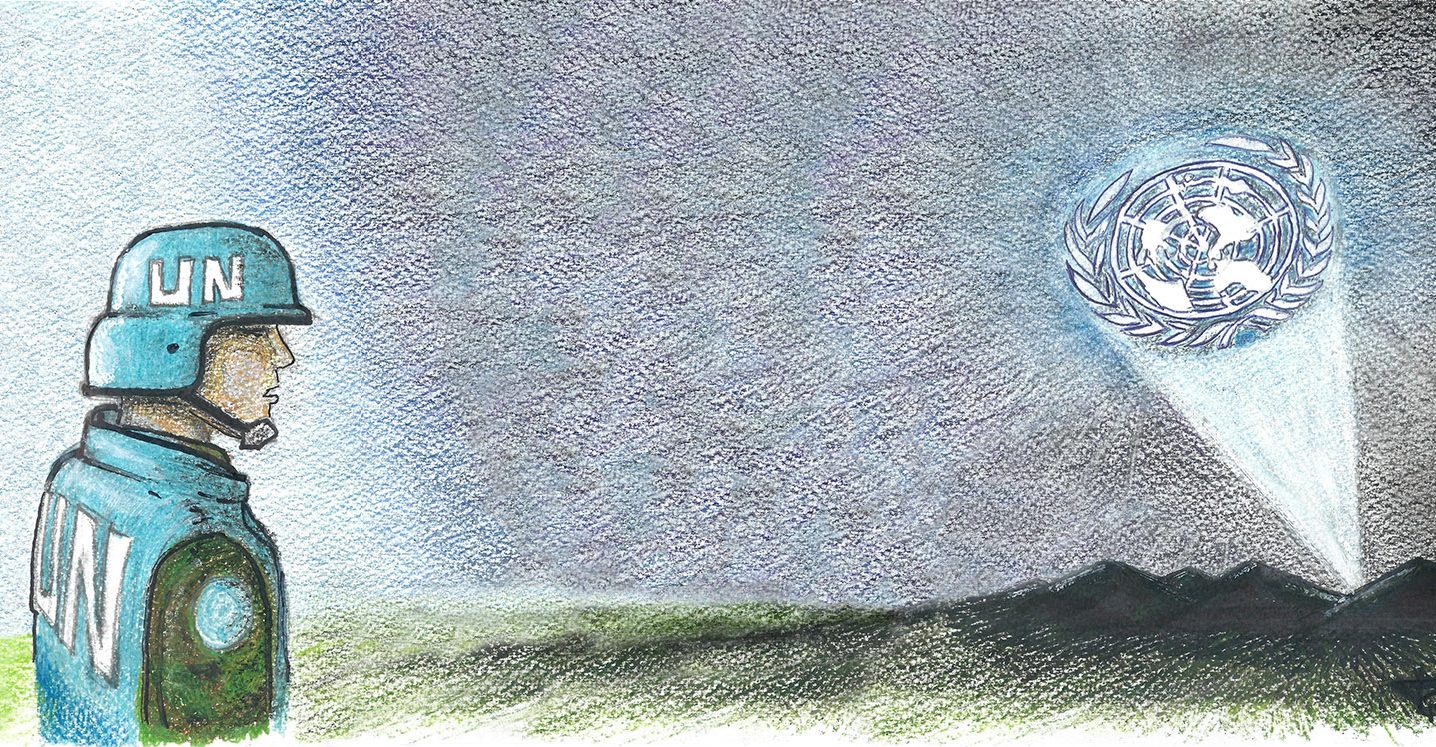
António Guterres tentou; muitos acharam impossível mas a coisa pegou. Gradualmente, 16 zonas de conflito estavam a alinhar no projecto e vários Países do Security Council da ONU elaboraram projectos de uma Resolução nesse sentido. De repente, no dia em que se comemorava o fim da II WW, os Russos disseram que necessitavam de maisContinuar lendo “Cessar-Fogo Mundial por causa do COVID.”
Arquivos da tag:UN
Ilidza’s Chetnik Car (Bosnia 1995)
In October 1995, during the days when the Dayton Agreements were being discussed, I was driving through Sarajevo’s Serb neighborhood of Ilidza, providing situation awareness to a recently arrived UN Military Observer (UNMO), when we saw something simultaneously danger and unique – “The Chetnik Car”. That was something not all UNPROFOR staff had the chanceContinuar lendo “Ilidza’s Chetnik Car (Bosnia 1995)”
Field mission Lessons Learned: – Group Work versus Team Work
Military personnel deployed in the Theater of Operations should take into account the differences between Group Work and Team Work. Both cases of cooperative work are necessary but they are different and should be applied in different contexts. The differentiating factor is the TASK. In the first case (Group Work) everybody has approximately the sameContinuar lendo “Field mission Lessons Learned: – Group Work versus Team Work”
Field mission Lessons Learned – “Runaway Bags”
In a UN mission, when one person less expects, he/she will/may have to stay away from the main Unit, sometimes for several days. In a conflict zone, the peacekeeper should not only plan to have his/her gear prepared for an unexpected stay, but also for an unexpected evacuation of the UN compound. That brings aboutContinuar lendo “Field mission Lessons Learned – “Runaway Bags””
Scenes from a past war – Sarajevo 1995
Back in 1995, Sarajevo had no electricity, no gas and no water distribution system operational. Living among the population, the UN Military Observers (UNMO) had to suffer the same restrictions and solve the same problems of the locals. Going out for water replenishment was particularly interesting. The water collection point was located inside of aContinuar lendo “Scenes from a past war – Sarajevo 1995”
Blue Helmets’ Core Values and Core Competencies
When discussing the matter of Core Values and Competencies with other former UN staff, I have been noticing that there some confusion between Values and Competencies. A Value is something everybody in the same organization shares, a common belief that guides de different actions and attitudes of all its members, regardless their individual technical skills,Continuar lendo “Blue Helmets’ Core Values and Core Competencies”
Not even COVID-19 has been able to stop the fighting in Afghanistan
Late last winter, the Taliban have made an agreement with the USA to halt the violence in Afghanistan and start exchanging prisoners of war with the Afghan Government. Allegedly, the Taliban got from the US delegation the promise that the Afghan Government would release about 5.000 Taliban prisoners, but apparently that did not happened …Continuar lendo “Not even COVID-19 has been able to stop the fighting in Afghanistan”
Looking for the missing journalist (Bosnia 1995)
One of my last patrols in UNPROFOR – Bosnia – 1995, while the belligerent factions were negotiating an enduring Peace Agreement in Dayton, was to go look for a U.S. journalist, which was allegedly missing behind the Serb’s lines. That news reporter wanted to write the Bosnia war story in a different angle – theContinuar lendo “Looking for the missing journalist (Bosnia 1995)”
CODE OF CONDUCT FOR BLUE HELMETS
1 – Dress, think, talk, act and behave in a manner befitting the dignity of a disciplined, caring, considerate, mature, respected and trusted soldier, displaying the highest integrity and impartiality. Have pride in your position as a peace-keeper and do not abuse or misuse your authority. 2 – Respect the law of the land ofContinuar lendo “CODE OF CONDUCT FOR BLUE HELMETS”
Lavoisier Law for UN Military Observers – Lei de Lavoisier para Observadores Militares da ONU
The UNMO interpretation of Lavoisier’s Law, in a conflict area, is as follows: “Nothing can be created or destroyed, it can only be NEGOTIATED”. Para os Observadores Militares das Nações Unidas, numa zona de Conflito, a Lei de Lavoisier deve ler-se: “Nada ganha, nada se perde, tudo se negoceia”.
 OPen samento