Opportunity for Veterans! Any service — any nation!
New Musicals Inc (NMI) in the United States is adapting veteran’s stories into ten-minute musicals to be filmed as part of a web-series to honor military veterans of all and any nation.
Veterans whose stories are selected for development will receive a $1000 (USD) honorarium and hold on to the rights of their stories.
Don’t let the “musical” aspect dissuade you. In fact, you don’t have to be musical at all. NMI just needs a compelling story from your military background – just one story – not a compilation — and they will bring a composer, lyricist, and professional actor together to turn it into song. They will also welcome you into the collaboration process if you want to be included on the creative side.
See the link for info and a very short video that explains the project.
On October 24, 1945, 51 countries came together and created the United Nations Organization (U.N.). The Second World War had just finished, and these countries pledge the promote peace and cooperation around the world.
Today, we have 193 sovereign member states in the United Nations, and all have equal representation in the UN General Assembly.
We are living very difficult times, with an invisible enemy that threatens our lives regardless who we are, where we are or what we do. An enemy that cannot be fought unilaterally, it has to be dealt with in all dimensions, by all nations, involving every human being in the Planet.
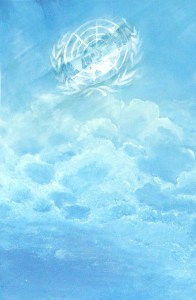
However, as turbulent as the high dark cloths can be, we know the sky above is peacefully blue, and we have a place where we can present our differences, discuss our needs and coordinate our actions; World Wide. That place is call The United Nations.
Oil painting “Blue Skies above” – by Paulo Gonçalves
The main function of the United Nations is to preserve international peace and security. Therefore, regardless the virus, the opposing faction, the scarcity of essential resources, we should all embrace this “blue wave” and start helping each other.
The abstract entity we call – International Community – shelters its values at the United Nations (UN) headquarters, in New York. A forum of 193 sovereign countries, with equal rights and representation in its General Assembly. The UN General Assembly embraces a large variety of cultures, wills and political systems. However, as different as they may be, they are all committed to maintaining international peace and security, developing friendly relations among nations and promoting social progress, better living standards and human rights.
Another thing the International community (at large) militates for is the observance for free and fair elections; a sacrosanct matter for social stability and the desired Global Democracy. “Free and fair elections” became a sound bite, but not many people actually realize what it means. What are the conditions for an electoral process to be considered “free and fair”?
The electoral observer’s checklist is quite extensive, but, to summarize, one can say that the electoral process should be transparent, inclusive, accountable, and there must be equitable opportunities for different people to compete in the election.
These conditions are not easy to achieve in stable and democratic countries; let alone countries and territories that had just emerged from a long dictatorial period, or from internal conflict, where the democratic concepts that are loudly broadcast, but little practiced. The rule is that the desire of the majority of the voters will prevail; but the exceptions confirm that rule. An electoral process carried out in a post-war environment, with leaders little motivated for democratic compromises, does not usually foster national unity, quite the opposite. Unfortunately, this is exactly what happened in Angola in 1992.
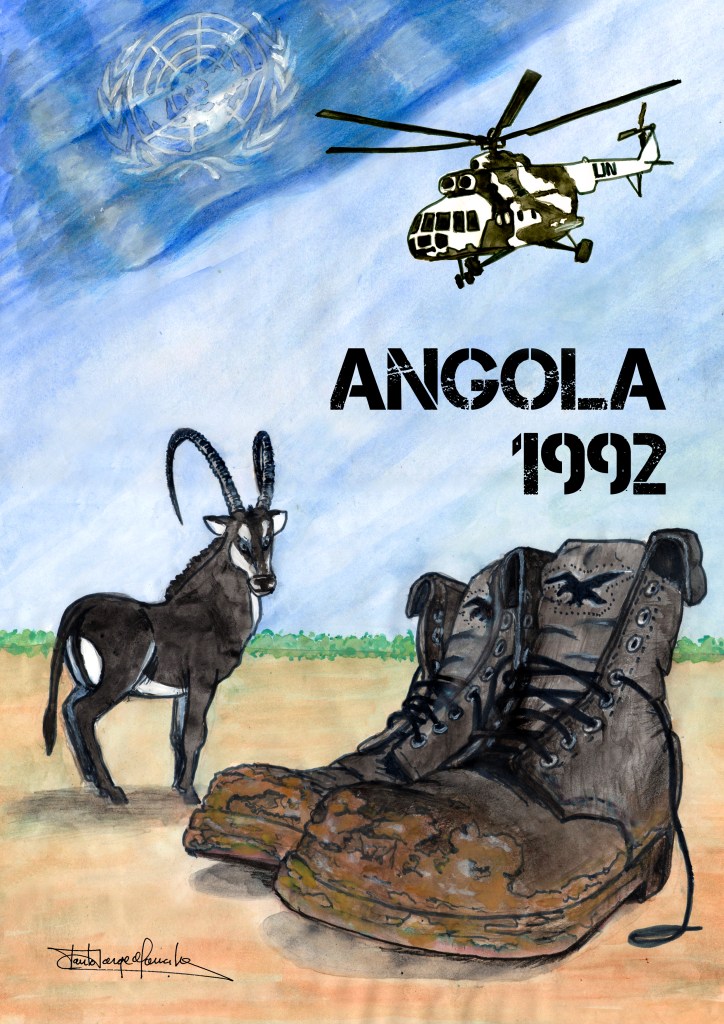
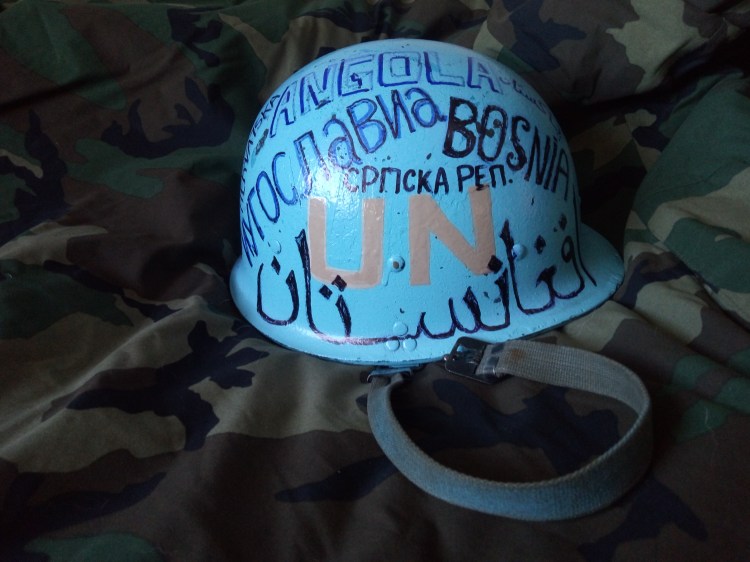
My next book unveils the content of a Peace Support Operation’s Mission Diary, written during the conduction of Angola’s “First Free Elections” (1992). An enterprise conducted by the UN in one of the most land-mined territories of the World, which became the largest UN air operation by that time.
Air Force boots on the ground
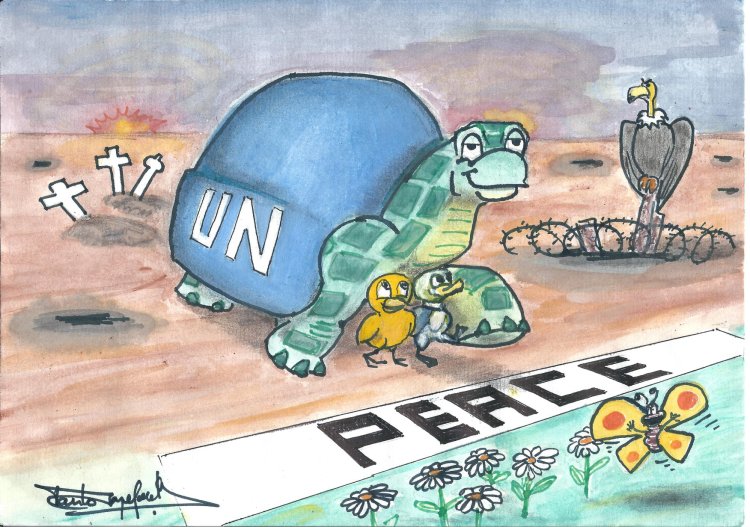
Upon arriving in Luanda, the sighting of snow-cleaning vehicles, in an African airport, presented itself as a surrealist picture , awakening a critical look at the reality that surrounded me. From that moment on, I started to observe everything in “another way”, trying to see beyond my stereotyped concepts, through a critical-constructive prism, with a touch of humor; but always respecting the values of the United Nations. Gradually, I felt the need to record all those experiences that escape the banality of everyday life. This was achieved both in the version of the word writing, and drawing cartoons, which was all registered in a Mission Diary.
On the year that the United Nations celebrates its 75th Anniversary, the Angolan Mission Diary was revisited and gave rise to this book. All situations are real, but the names of the characters are fictitious in order to protect their identity.
I’ve just started it and I hope you’ll like it as much as you did the Bosnia 95 book.
On the 21st September 2020, the Portuguese PM – António Costa – left a message to the UN community, addressing the future concerns, where he spoke about illegal migration, racism, global warming, corruption, cyber regulation, peace and stability and he called for a special attention regarding our oceans …” Which are the new frontier in our development and are under a unprecedented pressure from raising temperatures, to the oxygenation of acidification…”
Unfortunately, not all World leaders joined this ceremony and shared their thoughts with the rest of the World. President Trump did not share a message with the World. According to the news channel PASSBLUE:
President Trump failed to deliver an expected video speech for the United Nations’ 75th anniversary commemoration. Instead, the acting deputy United States ambassador addressed the ceremony live from UN headquarters. From Washington, Secretary of State Michael Pompeo announced new sanctions against Iran during the UN anniversary remembrance, flanked by the US ambassador to the UN, Kelly Craft, as well as some Cabinet members.
The Trump administration attempted to roll back all elements of the 2015 Iran nuclear deal that the Obama administration spent two years negotiating. But most members of the Security Council have ignored Pompeo’s move to “snap back” all sanctions relief agreed at the conclusion of the deal in 2015. Iran’s foreign minister, Javad Zarif, called it “chutzpah” at a Council on Foreign Relations virtual meeting.
Pompeo, at the interagency press conference in Washington, announced sanctions against Iran’s defense and armed forces and its director. Iran, he said, must stop any proliferation of weapons of mass destruction and come to a table to accept a “real deal.” The world, Pompeo added, must not lift an October arms embargo against Iran as contained in the Obama nuclear deal. In addition to the Defense Ministry, the Trump administration has sanctioned several Iranian military organizations and individuals, as well as three entities and five people associated with the Atomic Energy Association of Iran.
Peace and Security are two things we don’t pay too much attention in our daily routines; until we lose them.
The simple act of going out into the street carelessly to go buy bread, is something that deserves our reflection. We are not going to be hit by a sniper, we have the money to buy the bread, we have a place to go to buy bread, and there is bread to be bought.
None of this is guaranteed in many places in the world, where people like us suffer just because they were unlucky to be born there.
A paz e a segurança são coisas a que não ligamos muito no nosso dia-a-dia; até as perdermos.
O simples ato de sair à rua despreocupadamente para ir comprar o pão é algo que merece a nossa reflexão. Não vamos ser atingidos por um sniper, temos uns trocados para comprar o pão, temos um local onde ir comprar o pão e temos pão.
Nada disto é garantido em muitos locais do Mundo, onde pessoas como nós sofrem somente porque nasceram ali.
On September 21, 2020, the UN will celebrate its 75th anniversary. A very special date celebrated in a very tragic year. A year in which the world suffered a crisis at the planetary scale, caused by the pandemic known as COVID 19. However, within the United Nations there is a genuine hope that we will emerge from this crisis stronger and more united than ever. The world had to come together to fight the virus; the great powers had to listen to the small countries.
Multilateralism has become increasingly important, and countries must now think about the new “World” model in which we intend to live in the future. To this end, on 21 September 2020, the United Nations International Day should be celebrated. An event that will bring online a large number of world leaders, under the theme “What is the future we want?”.
COVID 19 tried to help us in this regard, with people understanding that we are “gregarious animals” for not being able to accept the confinement; Faith leaping from religious leaders to doctors and nurses; and politicians having to correct their strategies to accommodate the new priorities of the “International Family”. For a few months, Multilateralism prevailed, because what happened in the country next door became of tremendous importance in the way of conducting National policy.
During these 75 years, Portugal actively participated in 34 UN missions to help resolve humanitarian crises, fratricidal conflicts and natural disasters. Namely – 1958/58 – UNOGIL – Lebanon; 1988/89 – UNAVEM I – Angola; 1989/89 – UNTAG – Namibia; 1991/92 – UNAVEM II – Angola; 1991/2001 – UNPROFOR / UNPF – ex-Yugoslavia; 1993/94 – ONUMOZ – Mozambique; 1995/96 – UNCRO – Croatia; 1995/99 – UNAVEM III – Angola; 1995/2001 – MINURSO – Western Sahara; 1995/99 – UNPREDEP – FYROM (North Macedonia); 1995/2002 – UNMBH – Bosnia and Herzegovina; 1996/2004 – UNMOP – Croatia; 1997/2002 – MONUA – Angola, 1998/2000 – MINURCA – Central African Republic; 1999/2000 – INTERFET – East Timor; 2000/02 – UNTAET – East Timor; 2001/05 – UNIMSET – East Timor; 2003/03 – UNMIL – Liberia; 2004/04 – UNOCI – Ivory Coast; 2004/05 – MINUSTAH – Haiti; 2004/06 – ONUB – Burundi; 2005/2013 – UNMIK – Kosovo; 2005/06 – UNOTIL – East Timor; 2006/09 – UNMIT – East Timor; 2006/2012 – UNIFIL – Lebanon; 2006/06 – WFP –Lebanon; 2006/06 – MONUC – DR Congo; 2006/06 – UNHCR – Algeria; 2006/08 – UNIOSIL – Sierra Leone; 2008/09 – MINUCART – Chad and Central African Republic; 2008/2018 – UNAMA – Afghanistan, 2016 / ongoing – ONMC-MVM – Colombia, 2014/14 – UNIOGBIS – Guinea Bissau, 2014 / ongoing – MINUSMA – Mali, 2014 / ongoing – MINUSCA – Central African Republic.
On September 21, 2020, during the celebrations of the 75th Anniversary of the United Nations, World leaders will sign a joint declaration. We will wait to see how the beautiful words that are written there will pass from the paper to the ground. The UN emerged from the ashes of World War II … we are waiting to see what will emerge from the ashes of the War against COVID.
No dia 21 de setembro de 2020 a ONU irá celebrar o seu 75º Aniversário. Uma data muito especial celebrada num ano trágico. Um ano em que o Mundo sofreu uma crise ao nível planetário provocada pela pandemia conhecida por COVID 19.Porém, no seio das Nações Unidas existe a genuína esperança que iremos sair desta crise mais fortes e unidos do que sempre. O Mundo teve de se unir no combate ao vírus; as grandes potências tiveram de auscultar os pequenos países.
O multilateralismo passou a ter uma importância acrescida, e os países deverão agora pensar no novo modelo de “Mundo” em que pretendemos viver no futuro. Para o efeito, no dia 21 de Setembro de 2020, deverá ser celebrado o Dia Internacional das Nações Unidas. Um evento que irá reunir “online” uma grande quantidade de líderes mundiais, sob o tema “Qual é o futuro que queremos?”.
O COVID 19 tentou dar-nos uma ajuda nesse sentido, com as pessoas entenderam de vez que somos “animais gregários” por não conseguirmos aceitar o confinamento; a Fé a saltar dos líderes religiosos para os médicos/as e enfermeiros/as; e os políticos a terem de corrigir as suas estratégias para acomodar as novas prioridades da “Família Internacional”. Por alguns meses, o Multilateralismo prevaleceu, porque aquilo que acontecia no país do lado passou a ter uma tremenda importância na forma de conduzir a política Nacional.
Durante estes 75 anos, Portugal participou ativamente em 34 missões da ONU para ajudar a resolver crises humanitárias, conflitos fratricidas e catástrofes naturais. A saber – 1958/58 – UNOGIL – Líbano; 1988/89 – UNAVEM I – Angola; 1989/89 – UNTAG – Namíbia; 1991/92 – UNAVEM II – Angola; 1991/2001 – UNPROFOR/UNPF – ex-Jugoslávia; 1993/94 – ONUMOZ – Moçambique; 1995/96 – UNCRO – Croácia; 1995/99 – UNAVEM III – Angola; 1995/2001 – MINURSO – Sarara Ocidental; 1995/99 – UNPREDEP – FYROM (Macedónia do Norte); 1995/2002 – UNMBH – Bósnia Herzegovina; 1996/2004 – UNMOP – Croácia; 1997/2002 – MONUA – Angola, 1998/2000 – MINURCA – República Centro Africana; 1999/2000 – INTERFET – Timor Lorosae; 2000/02 – UNTAET – Timor Lorosae; 2001/05 – UNIMSET – Timor Lorosae; 2003/03 – UNMIL – Libéria; 2004/04 – UNOCI – Costa do Marfim; 2004/05 – MINUSTAH – Haiti; 2004/06 – ONUB – Burundi; 2005/2013 – UNMIK – Kosovo; 2005/06 – UNOTIL – Timor Lorosae; 2006/09 – UNMIT – Timor Lorosae; 2006/2012 – UNIFIL – Líbano; 2006/06 – WFP –Líbano; 2006/06 – MONUC – RD Congo; 2006/06 – UNHCR – Argélia; 2006/08 – UNIOSIL – Serra Leoa; 2008/09 – MINUCART – Chade e República Centro Africana; 2008/2018 – UNAMA – Afeganistão, 2016/a decorrer – ONMC-MVM – Colombia, 2014/14 – UNIOGBIS – Guiné Bissau, 2014/ a decorrer – MINUSMA – Mali, 2014/a decorrer – MINUSCA – República Centro Africana.
No dia 21 de Setembro de 2020, durante as celebrações do 75º Aniversário das Nações Unidas, os lideres Mundiais vão assinar uma declaração conjunta. Nós vamos esperar para ver como as palavras bonitas que lá estão redigidas irão passar do papel para o terreno. A ONU surgiu das cinzas da Segunda Guerra Mundial … estamos expectantes para ver oque vai surgir das cinzas da Guerra contra o COVID.
On Thursday 17 September, NATO’s newest command, Joint Force Command Norfolk (JFCNF) will hold a ceremony to mark reaching Initial Operational Capability (IOC). This Command reflects the Alliance’s concern in having no military Command and Control structure based in the United States, capable to conduct a major Transatlantic military campaign, raising from a Crisis to a full conflict scenario, in an area that covers about 20% of the planet.
The new JFCNF will be commanded by Vice Adm. Andrew Lewis, which is also the Commander of the newly reestablished US Second Fleet. Bringing the capabilities of the US Navy 2nd Fleet into the NATO Command and Control assets will naturally raise the Alliance to a new level of performances.
JFCNF will fall under the command of NATO’s Allied Command Operations (in Mons, Belgium), just like its NATO sister joint force commands of Brunssum and Naples.
Quase duas dezenas de anos após ter extinguido o Comando Supremo Aliado para o Atlântico (SACLANT) a NATO vem agora reconhecer que necessita de um Comando Aliado para gerir a transição de Crise para Conflito, naquela vasta área oceânica e respectivas linhas de costa.
Desta forma, no dia 17 de Setembro de 2020, será feita em Norfolk – Virgina – USA – uma cerimónia onde se marcará a fase de Início de Capacidades Operacionais (IOC) do novo Joint Force Command Norfolk (JFCNF).
Com a constituição do JFCNL a NATO passará a ter uma capacidade acrescida, uma vez que o Comandante dessa estrutura Aliada também é (acumulativamente) o Comandante da 2ª Esquadra Norte Americana, o que muda completamente a actual capacidade de conduzir uma forte campanha militar, com características Transatlânticas, numa área que cobre cerca de 20% do planeta.
Na mesma localização de Norfolk, onde está instalada uma das maiores bases aeronavais do mundo, já existe o Comando Aliado para a Transformação da Aliança Atlântica – o Supreme Comand Transformation (ACT). Contudo, o ACT está focado em processos de aprendizagem, inovação, investigação e adaptação da Aliança aos novos desafios, não tendo as capacidades de comando e controlo necessárias para desenvolver uma campanha militar de larga escala.
De acordo com a nova estrutura de Comandos da NATO, o JFCNF irá ficar sob as ordens do Comando Aliado para as Operações (ACO) baseado na Bélgica (Mons).


 OPen samento