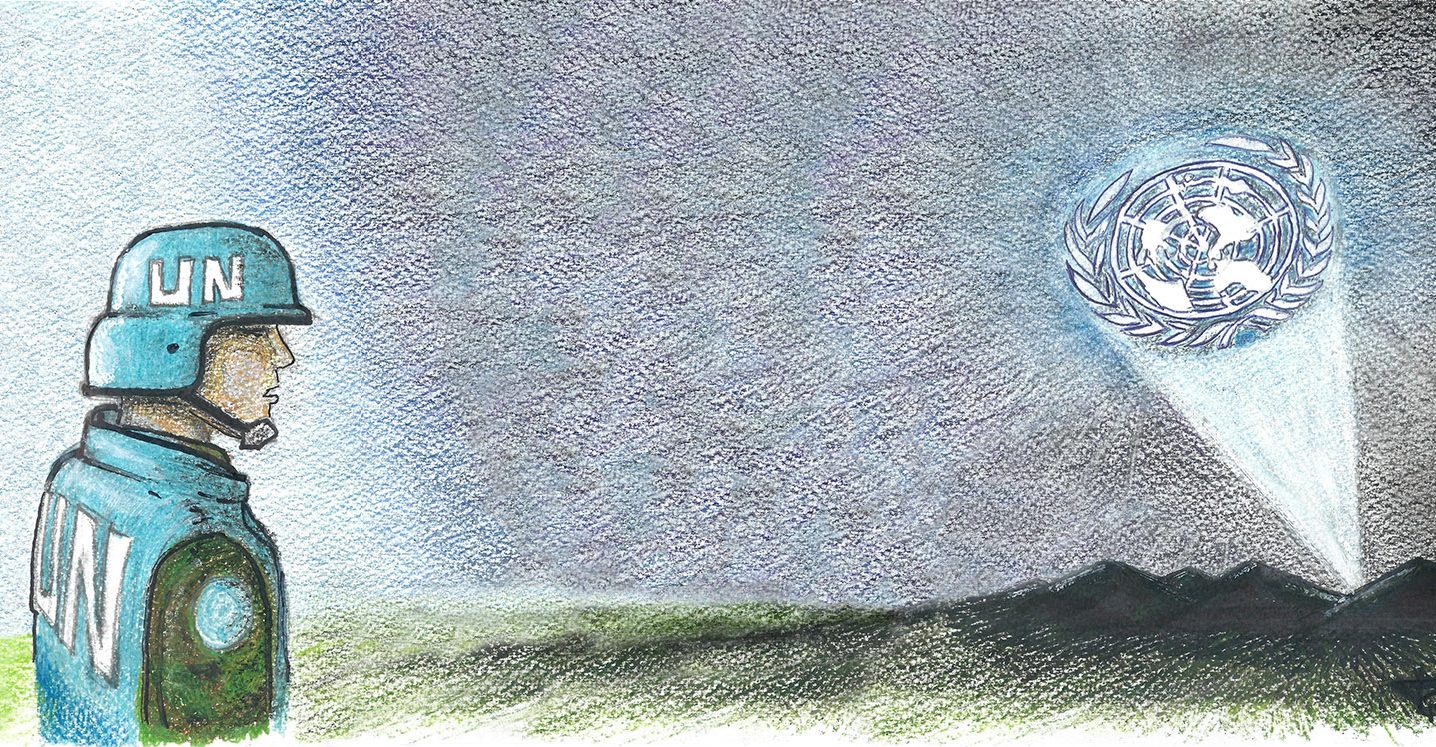
For several years we´ve been listening people claiming that the UN needs a serious restructuring. Many say that its peacekeeping missions are not actually solving the problems in the intervened territories, and the entire concept is in crisis. But, is it?
Peacekeeping is not only about military operations. It also deals with Human Rights; demining; electoral assistance; civilian protection, community welfare, and Rule of Law. All extremely relevant matters; and yet, considerable uncertainty surrounds the future of UN peacekeeping.
Peacekeeping missions are, by definition, temporary operations. The UN establishes an “End State” (the final goal, or objective, of the mission) and, upon arriving it, the mission should close. Having said that, some mission seems to be there forever, without a feasible sign of possible closing time. That´s due to the extremely difficult situations those host nations are suffering in the path from conflict to peace. Therefore, it must be seen as an investment and not an expenditure, because the peacekeepers operate in territories where other people cannot.
Presently, the UN has approximately 90,000 military and police blue helmets from 122 different countries, integrated with civilian staff, in 12 missions around the World. The UN peacekeeping yearly budget is 7,3 billion US Dollars. Although that sum seems to be a huge amount of money, it is only 0,5% of the 1.5 trillion US Dollars the World spends each year in warfare. Each year, the United States of America deploys more military personnel abroad than the United Nations.
It is consensual that the UN structure and modus operandi needs reviewing, because it was set for the post Second World War environment, but “the times, they are a-changin’ ”. It needs a metamorphosis.

Many say that the number of seats in the permanent board of the United Nations’ Security Council should be enlarged from the current five (China, France, Russia, United Kingdom and United States) to 12 and above. Others say that the real problem resides on the “veto” prerogative that the five permanent nations have, and that it should be deleted from the UN Charter. The “veto” tool is (too) regularly used which blocks all major decisions and prevents conflict resolution where their interests are at stake. France and the UK have proposed that the “veto” prerogative should only be used scarcely, under specific conditions that might affect directly and profoundly that nation security. This is an interesting proposal, because it does not require any changes in the UN Charter, or other legislation, been exclusively a political agreement among the five permanent nations. The proposal is under study and appreciation and its approval or refusal could make a considerable difference in the way peacekeeping operations will be done in the future.
The UN Secretary-General – Antonio Guterres – has a project called: the “Future of Peacekeeping”, aiming to anticipate how peace operations might look like. In the last few years, there’s been a 24% reduction in peacekeeping personnel and a 23% reduction in spending. From 2017 further reduction in peacekeeping missions has occurred, and several peacekeeping missions have been closed. Secretary-General Guterres prefers focusing on preventive initiatives and special political and peacebuilding missions with “light footprints.”
A major reason for this new posture is the financial pressure that the major contributors have put over the UN. The United States under former president Trump and some European countries have sought drastic cost reductions, which the impact of the COVID-19 pandemic is likely to intensify. However, one should look to the overall landscape of the peacekeeping operations because, despite a range of current constraints, challenges, and crises, UN peace operations are unlikely to finish, but rather to evolve, because:
1 – The World we live in is becoming an evermore a common space, both in all its successes and (mostly) in all its crisis. Stock markets, organized crime, desperate migrants, radical ideologists and pandemics do not stop at our country’s physical borders; therefore, isolationism is not the way to go.
2 – The problems that the UN is trying to solve do not seem to diminish in the future and, sooner than latter those problems will spill over into the rich countries, jeopardizing their social structure and economy. It is much safer, and cheaper, to solve those problems at the origin, with a UN mandate, than it is to suffer the consequences of a “homeland solution”.
3 – UN peacekeeping missions work! Some may work faster than others, but they do work. Its absence would imply a significantly higher death rate and problem solving, among the supported populations, than it is with UN “boots on the ground”.
4 – UN peace operations are highly cost-effective both as investments for conflict management and in terms of deployment costs. UN member states are unlikely to reject them indefinitely, though peace operations might become less frequent and more constrained in the absence of great power cooperation;
5 – Peace operations remain a potentially useful tool for great powers to manage a wide range of conflicts with international political coverage and public opinion acceptance.
In conclusion, it is true that the UN needs, and will have to, restructure itself in order to adjust to the new World challenges. It must be lighter in its structure, faster in its action and wider in its intervention space. But there is no reason for great powers to abolish peace operations, quite the opposite, they need it to prevail in order to legitimize their problems’ solutions. Hence, there’s no evidence that the United Nations, or its peacekeeping missions, are crisis.
 OPen samento