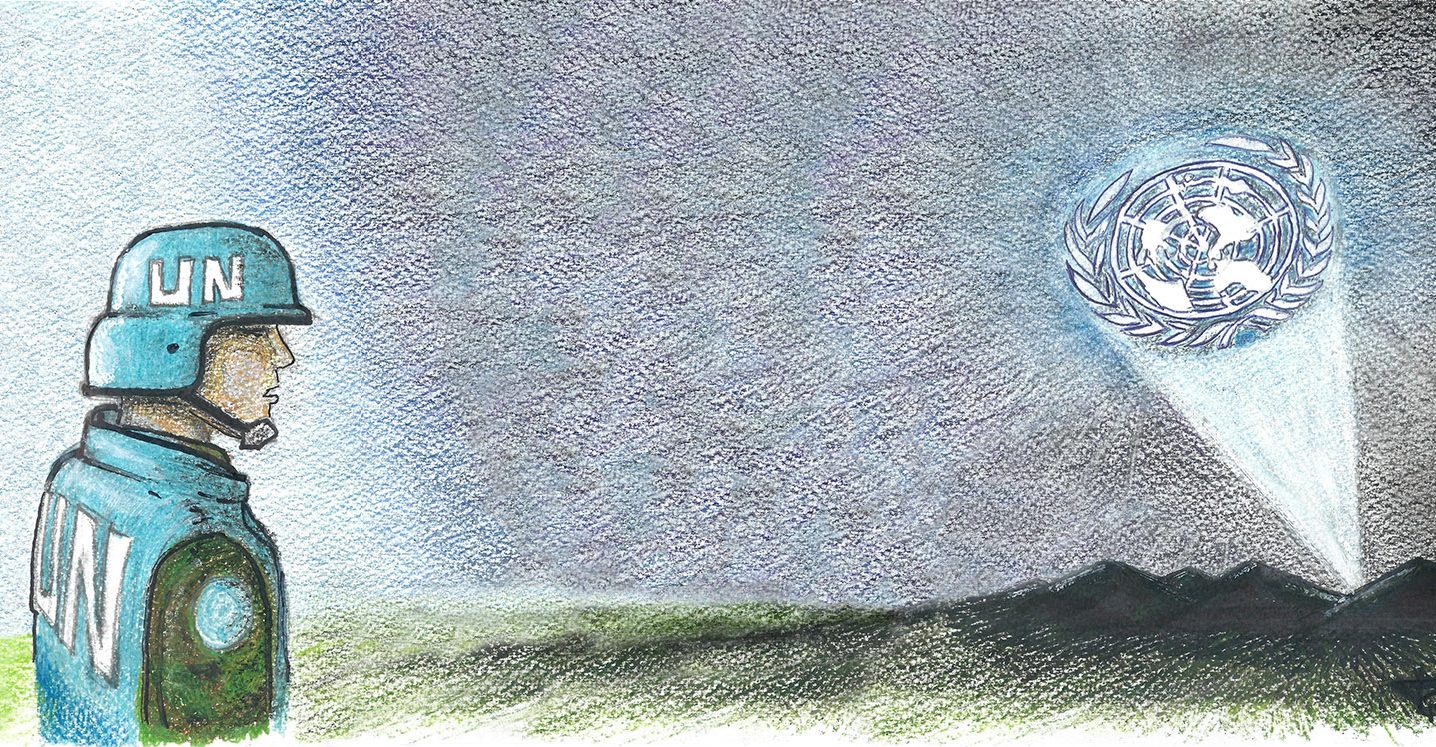
Interpreters always have a funny nick name or callsign. In Bosnia they were “Yellow Cards” because of the distinctive color of their UN id. cards. In Afghanistan some called them “Fnoos”. However, regardless the nickname we attribute them, they are absolutely indispensable in any crisis response deployment, peace/development negotiation and in all major achievements.
In fact, every problematic country/territory requiring International presence has the same situation. Either in Asia, Africa, Europe or South America, every crisis resolution deployment of an International (Civilian/Police/Military/Diplomatic/Non-Governmental) organization has got to have them.
Afghanistan is not a small country. In fact, its territory ranks in number 41 of the largest countries in the World, occupying 0,44% of earth’s land mass. It has 653 000 square kilometers, with extremely different geography landscapes, ranging from deserts to forests, mountains of Hindukush (beginning of Himalaya system) and flat plains, dry areas and wild rivers; hence the distribution of the international community was wide spread, pending on their interest. But they all needed to speak with the local population; and that was always a problem, because Afghanistan is a very heterogenic country. It has tribes from different ethnic groups, such as Pashtuns, Hazaras, Almaks, Balutchis, Turkmen, Uzbeks, Tadzhiks, and some others less representative. All of them had a different version of the same Dari or Pashtun languages. An Afghan from the north could hardly understand someone from the south, let alone a foreigner.
The need for local interpreters was very high, but the problem was: – Where to find them?

The Afghani population had a very low level of scholarship; only 19% of the people could read and write – in a country that had a past with Soviet influence – let alone speaking English;
The average salary of a (male) urban Afghani was less than 150 USD per month. An Air Traffic Controller (which had to have domain of the English language) had a salary of 300 USD per month.
These international missions had two things in common:
- The vast majority of the international staff did not have previous education on the local languages (which are not easy to learn);
- The staff rotated in and out of the mission area quite fast (no time to learn the local language);
- They all had US Dollars and no problems in spending it.
Therefore, following the market demand/offer system, the salaries of the Afghani that could speak English started to rise considerably. One driver could made about 1 000 USD per month working for an International organization. A proper linguistic expert made more than 2 000 USD. There were cases of Air Traffic Controllers quitting their job to become local employees of International Organizations. The problem started to be so big that the Afghani institutions were struggling to retain their educated staff, and they were (also) loosing that battle. In many cases, the way to maintain the Governmental jobs was through corrupted solutions, having “other sources” of payment that could compensate (if possible – supplant) what the foreigners were offering.
This introduced a new type of constrain – resentment toward the ones that had foreigner salaries. Not only were they subject of envy, they were “targets” of extortion. Many times were heard stories of interpreters that had members of their family kidnaped for a ransom, live threatening, illegal taxation, etc.
The other issue was Security related. Being easy targets of the Taliban (and organized crime) the interpreters were constantly approached by the insurgency tin order to operate as spies. They attended meetings with important people, therefore they knew stuff nobody else knew among the Afghani population, and that privileged information was crucial for the Taliban to plan their combat campaigns.
That was how they got their nick name – Fnoo. Some military contingents tried to protect their interpreters, and their family name was never mentioned. They were addressed by their birth name and registered as Family Name Unknown (FNU), which sounded like “Fnoo”.
Regarding the quality of the translations, there was something to take into consideration: the best interpreters were the ones hired in the same region of operation. Bringing someone from another region of Afghanistan could jeopardize the quality of the translation. Afghanistan is a patchwork of different ethnicities, and the way each ethnic group and local community looked at foreigners was not always the most favorable way, hence they would not open entirely to outsiders.
Yet another issue related to Afghan interpreters was the women, and all maters related with gender. Women were the ones that possessed most of the (non-combat) information, but the access to them was quite “obscure”. It required not only female international interlocutors but, above all, female interpreters. In this case, the interpretation went well beyond the pronounced words, because a simple gesture or even the silence had to be “interpreted” into a meaning.
The Afghan Government tried to look very Westernized – incorporating women in their ranks – but it was an absolute artificiality. The women wanted to go into that direction but the society is still divided between urban areas and rural areas. The urbans accept it with a smile in the face and cautiousness in the heart, but the rest of the country was not ready for it.
The demobilization of interpreters was heart breaking. Sometimes the Intel services revealed that the person we started to be attached to was in fact someone with close contacts with the insurgency, and we had to cease abruptly our relation with those “friends”. Other times, we had to close our compounds and living facilities in certain regions (reduction of international presence) and the interpreters were not needed anymore. That was the most difficult part of it. The result of closing compounds depended a lot on the organization and the nation in question. If it was a civilian international organization the interpreters were simply dispensed. Eventually they could be transferred to other areas with fewer personnel, but it did not always work. Most of the times the contracts simples ceased, and that was it. Normally that was the “Pay Back Time” and everybody jumped on them for having had a good salary while working for “infidels”. In case of International military compounds (pending on the nation) sometimes the interpreters were lucky to be working for a National contingent that would take care of them (bringing them with their family to the windrowing country), but that was not always possible, and they were simply left behind.
As a last note, allow me to say that a Taliban combated made 10 USD per day and, should he be able to assassinate an Interpreter, he would receive and extra payment of about 500 USD.
 OPen samento