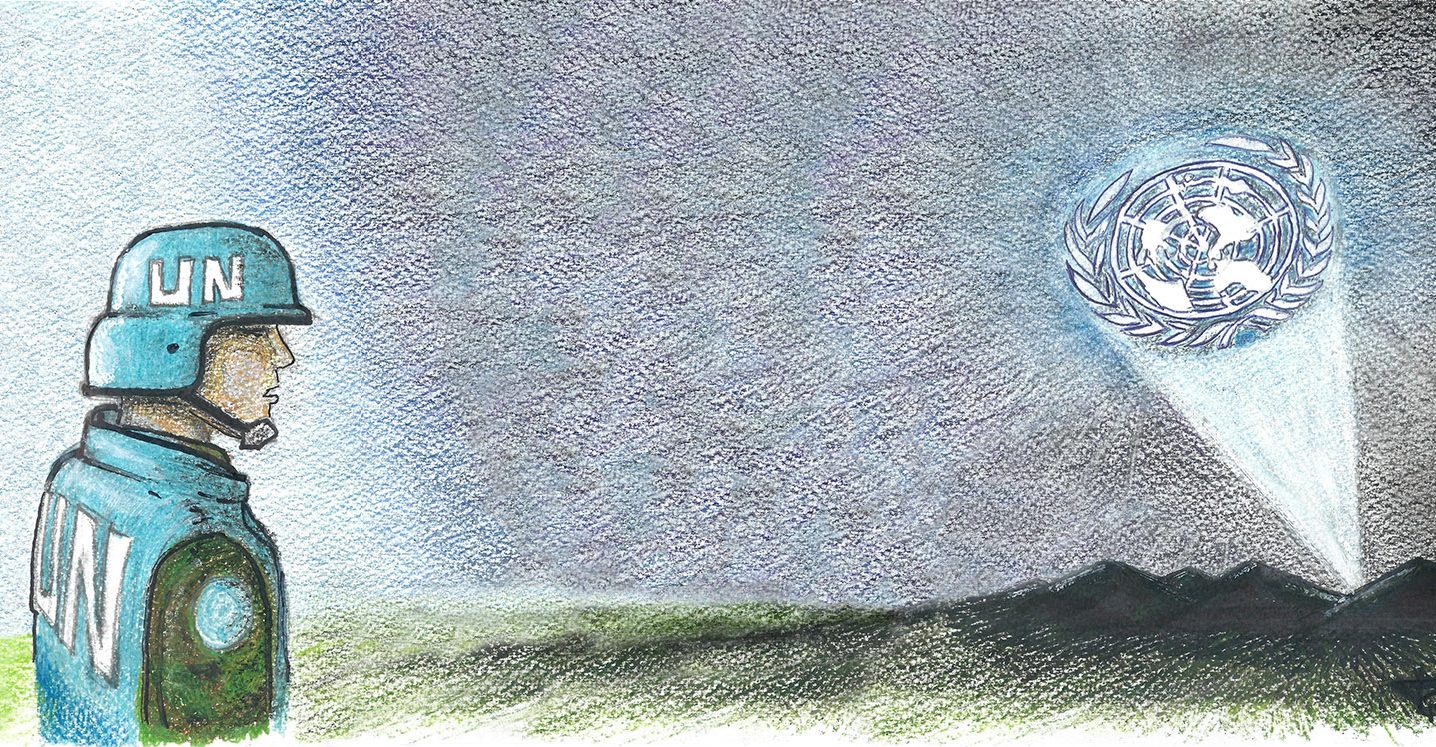
The abstract entity we call – International Community – shelters its values at the United Nations (UN) headquarters, in New York. A forum of 193 sovereign countries, with equal rights and representation in its General Assembly. The UN General Assembly embraces a large variety of cultures, wills and political systems. However, as different as they may be, they are all committed to maintaining international peace and security, developing friendly relations among nations and promoting social progress, better living standards and human rights.
Another thing the International community (at large) militates for is the observance for free and fair elections; a sacrosanct matter for social stability and the desired Global Democracy. “Free and fair elections” became a sound bite, but not many people actually realize what it means. What are the conditions for an electoral process to be considered “free and fair”?
The electoral observer’s checklist is quite extensive, but, to summarize, one can say that the electoral process should be transparent, inclusive, accountable, and there must be equitable opportunities for different people to compete in the election.
These conditions are not easy to achieve in stable and democratic countries; let alone countries and territories that had just emerged from a long dictatorial period, or from internal conflict, where the democratic concepts that are loudly broadcast, but little practiced. The rule is that the desire of the majority of the voters will prevail; but the exceptions confirm that rule. An electoral process carried out in a post-war environment, with leaders little motivated for democratic compromises, does not usually foster national unity, quite the opposite. Unfortunately, this is exactly what happened in Angola in 1992.
My next book unveils the content of a Peace Support Operation’s Mission Diary, written during the conduction of Angola’s “First Free Elections” (1992). An enterprise conducted by the UN in one of the most land-mined territories of the World, which became the largest UN air operation by that time.
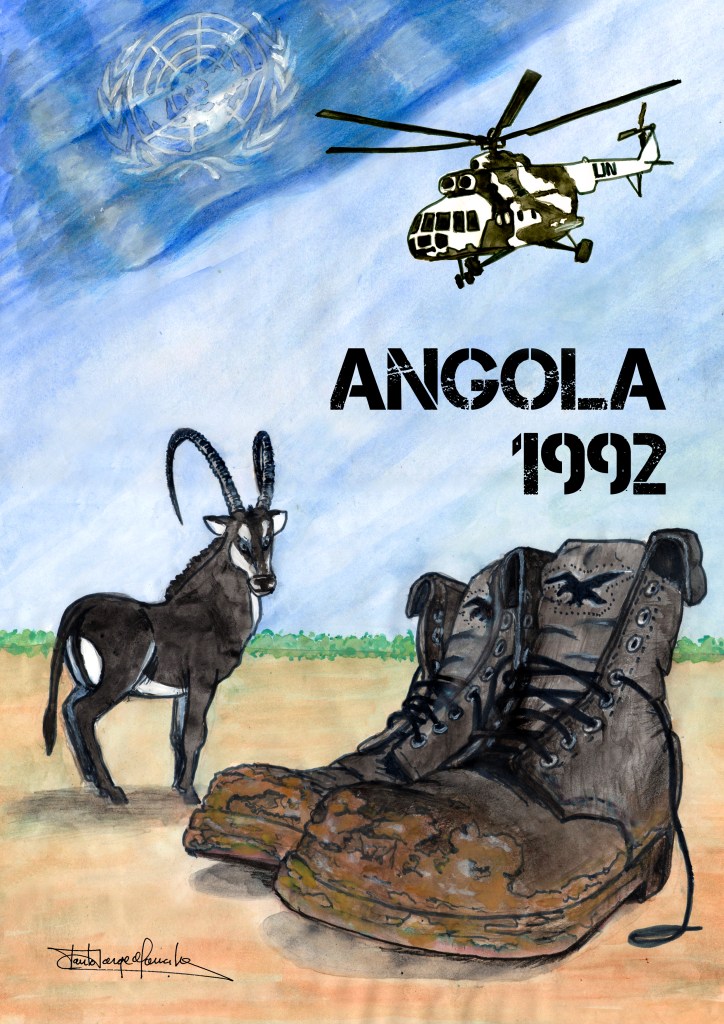
Upon arriving in Luanda, the sighting of snow-cleaning vehicles, in an African airport, presented itself as a surrealist picture , awakening a critical look at the reality that surrounded me. From that moment on, I started to observe everything in “another way”, trying to see beyond my stereotyped concepts, through a critical-constructive prism, with a touch of humor; but always respecting the values of the United Nations. Gradually, I felt the need to record all those experiences that escape the banality of everyday life. This was achieved both in the version of the word writing, and drawing cartoons, which was all registered in a Mission Diary.
On the year that the United Nations celebrates its 75th Anniversary, the Angolan Mission Diary was revisited and gave rise to this book. All situations are real, but the names of the characters are fictitious in order to protect their identity.
I’ve just started it and I hope you’ll like it as much as you did the Bosnia 95 book.
 OPen samento