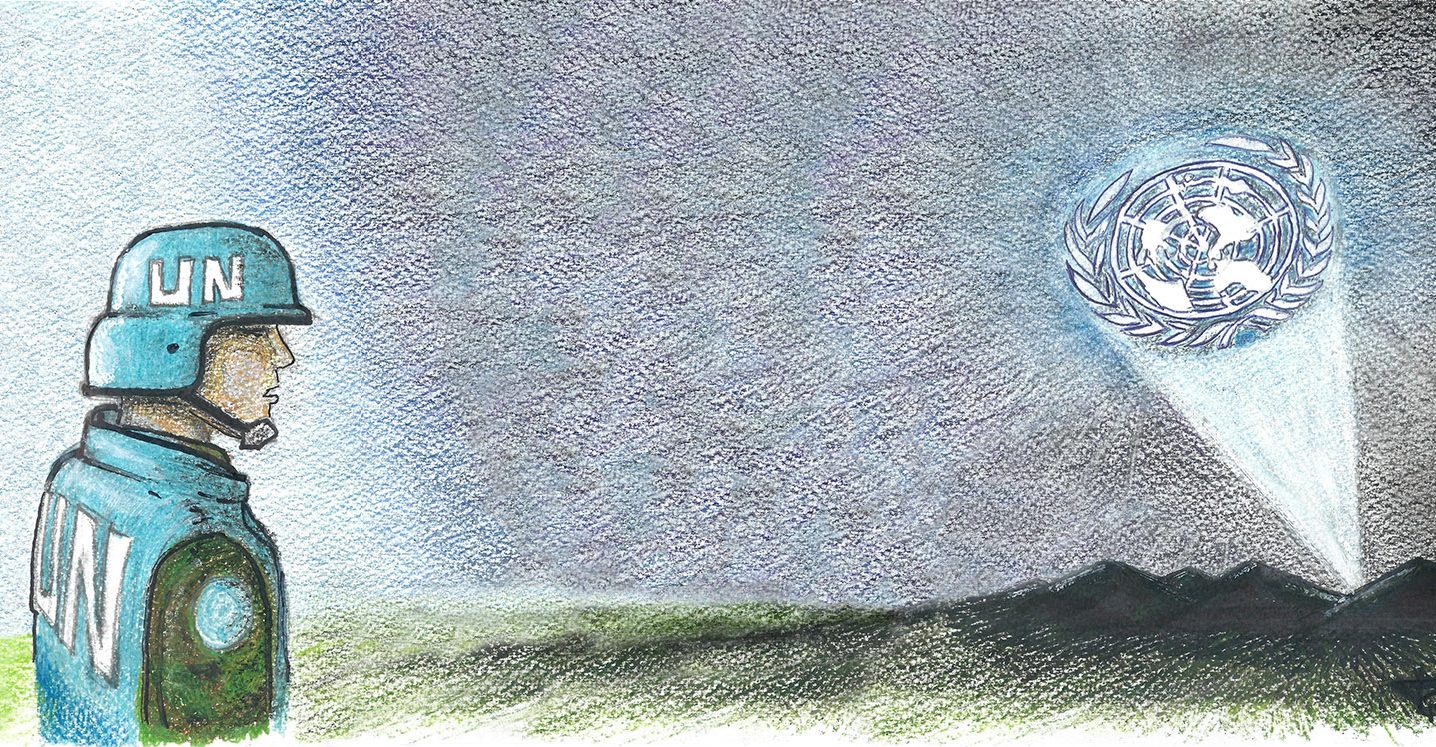
When discussing the matter of Core Values and Competencies with other former UN staff, I have been noticing that there some confusion between Values and Competencies.

A Value is something everybody in the same organization shares, a common belief that guides de different actions and attitudes of all its members, regardless their individual technical skills, in consonance with the United Nations Charter. It is something abstracted and not a product that be measured; but the Peacekeeper can be accountable for.
The UN Core Values are: – “integrity”, “respect for diversity/gender” and “professionalism”. The question is: – What does that mean? How do you define it?
In acting with Integrity, the Peacekeeper: – upholds the principles of the United Nations Charter; demonstrates the managerial principles of the United Nations, including impartiality, fairness, honesty and truthfulness, in daily activities and behavior; acts without consideration of personal gain; resists undue political pressure in decision-making; does not abuse power or authority; stands by decisions that are in the Organization’s interest even if they are unpopular; and takes prompt action in cases of unprofessional or unethical behavior.
Behaving with Professionalism, the Peacekeeper will: Show pride in work and in achievements; demonstrate skillful competence and mastery of subject matter; have a conscientious and efficient attitude in meeting commitments, observing deadlines and achieving results; be motivated by professional rather than personal concerns; show persistency when faced with difficult problems or challenges; and will remain calm in stressful situations.
Respect for Diversity and Gender is reflected in: – Working effectively with people from all backgrounds; treating all people with dignity and respect; treating men and women equally; showing respect for, and understanding of, diverse points of view and demonstrating this understanding in daily work and decision-making; examining own biases and behaviors to avoid stereotypical responses; not discriminating against any individual or group.
What are UN Competencies?
The term “Competency” refers to a combination of skills, attributes and behaviors that are directly related to successful accomplishments of each and every UN staff member´s Job Description.
There two major types of Competencies: Core Competencies and Managerial Competencies.
The Core competencies (applicable to everybody) are: Communication; Teamwork; Planning & Organizing; Accountability; Client Orientation; Creativity; Technological Awareness; and Commitment to Continuous Learning.
The Managerial Competencies (for leaders) are: Vision; Leadership; Empowering Others; Managing Performance; Building Trust; and Judgement / Decision Making.
Let’s focus on the Core Competencies – applicable to all peacekeepers – and the way they should and shouldn’t behave, in order to assure a good image for themselves, their own countries and the United Nations Organization.
Core Competencies are not specific to any occupation, but rather to the overall staff. Specific technical or functional Skills are not included, because this Communication Plan concerns to the image of the Centre and not the individual Peacekeeper.
The matrix bellow portrays what is normally evaluated when accessing the Peacekeeper’s Competencies. Basically, it’s the DO(s) and DON´T(s) each blue helmet should consider.
Communication
| Positive indicators | Negative indicators |
| Speak and write clear and effectively | Lack of confidence when talking |
| Listen to others, interpret messages from others and respond appropriately | Produce writing that is vague or wordy |
| Ask questions to clarify, show interest in having two-way communication | Use of inappropriate language |
| Tailor language, tone, style and format to match the audience | Lack of expression during an interview |
| Openness in sharing information (within OPSEC) and keeping the audience informed | Lost the attention of the audience at times |
| Drift from one subject to another | |
| Limited positive feedback from others on communication effectiveness | |
| Withholds information without justification |
Teamwork
| Positive indicators | Negative indicators |
| Work collaboratively with colleagues to achieve the goal | Rarely offers support to colleagues |
| Request inputs and genuinely value others´ ideas and expertise, willing to learn from others | Prefers to work and act alone |
| Place the Team agenda before personal agenda | Emphasizes achieving personal goals |
| Build consensus within the Team | Is prepared to ignore/disrupt majority decisions |
| Support and act in accordance with Team decisions, even when such decisions may not reflect own position | Shows limited consideration of the ideas and inputs from others |
| Share credit for Team accomplishments and accepts joint responsibility for team shortcomings | Takes the credit for Team accomplishments; passes on responsibility for Team limitations |
Planning and Organizing
| Positive indicators | Negative indicators |
| Develop clear goals consistent with agreed strategies | No clear system of priorities |
| Identify priority activities and assign/adjust priorities as required | Disorganized and unsystematic (impractical work schedules) |
| Allocate appropriate amount of time and resources for completing work | Unrealistic about timelines, deadlines not met, tasks not complete |
| Foresee risks and allow for contingencies when planning | Efforts get sidetracked |
| Monitor and adjust plans and actions as necessary | No checks on activities |
| Use time efficiently | Unwilling to change plans to meet new demands |
Accountability
| Positive indicators | Negative indicators |
| Takes ownership for all responsibilities and honors commitments | Defers responsibility |
| Delivers outputs for which one has responsibility within prescribed time, cost and quality standards | Does not deliver on commitments, compromises standards easily, cuts corners |
| Operates in compliance with organizational regulations and rules | Produces poor quality work and/or takes longer than is efficient to achieve quality |
| Supports subordinates, provides oversight and takes responsibility for delegated assignments | Unaware of standards that need to be achieved |
| Takes personal responsibility for his/her own shortcomings and those of the work unit, where applicable | Unconcerned with the standards of other people’s work once it has been delegated |
“Client” Orientation
| Positive indicators | Negative indicators |
| Consider all those to whom services are provided to be “clients” and, although maintaining and independent and impartial posture, seek to see things from the clients´ point of view | Limited awareness of clients´ point of view |
| Establish and maintain productive partnerships with clients by gaining their trust and respect | Only moderately concerned about helping others |
| Keep the clients informed of progress or setbacks in projects | Takes time to warm to people and establish relationships |
| Meet time for delivery of the projects to the clients | Does not work as hard as colleagues to meet client needs |
| ——————————- | Little evidence of receiving client feedback |
| —————————— | Laz in keeping clients informed |
Creativity
| Positive indicators | Negative indicators |
| Actively seek to improve programs or services | Slow to produce new ideas |
| Offer new and different options to solve problems or meet client needs | View problems in a conventional manner and thinks in a traditional way |
| Promote and persuade others to consider new ideas | Accepts the status quo |
| Take calculate risks on new and unusual ideas; think “outside the box” | Problem-solving lacks creativity |
| Take interest in new ideas and new ways of doing things | Produces few alternatives |
| Not bound by current thinking or traditional approaches | Little experience of creativity at work |
Technological Awareness
| Positive indicators | Negative indicators |
| Keep abreast of available technology | Limited knowledge about technologies |
| Understand applicability and limitations of technology to the work | Little interest in finding out about technologies |
| Actively seek to apply technology to appropriate tasks | Lack of proactivity in applying technology to work |
| Show willingness to learn new technologies | Limited understanding of the applicability of technology to work |
Commitment to Continuous Learning
| Positive indicators | Negative indicators |
| Keep abreast of new developments in NATO operations, exercises and experiments | Limited knowledge about NATO matters beyond the assigned projects |
| Actively seek to develop oneself professionally and personally | Struggle to keep up to date |
| Contribute to the learning of colleagues | Not proactive in undertaking development tasks |
| Show willingness to learn from others | Reluctant to help others to learn |
| Seek feedback to learn and improve | Defensive with feedback from others |
 OPen samento