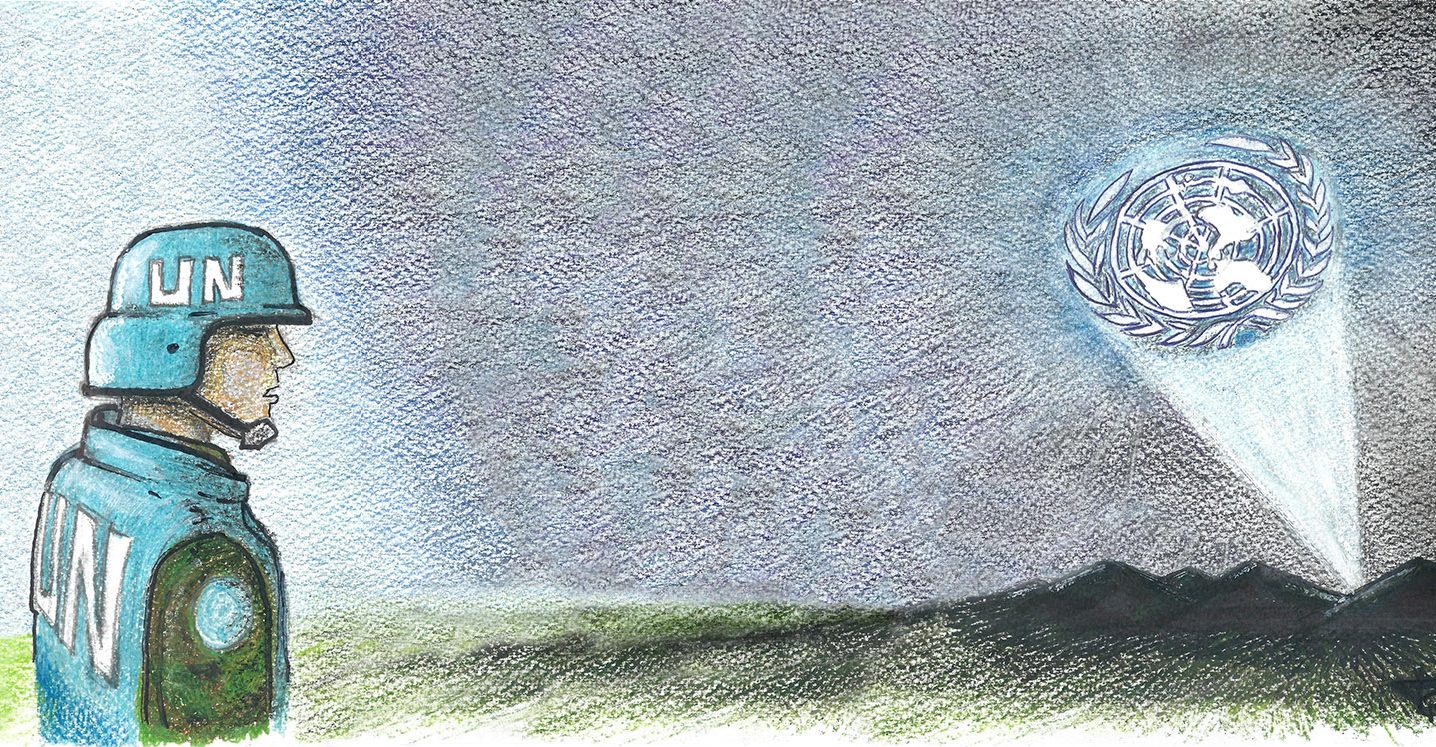
In July 1995, the most discussed issue in UNPROFOR’s corridors was Srebrenica.
After the fall of Krajina’s Sector West, in May 1995, the entire situation in Bosnia reached a tipping pint; for the worst! The Serbian residents of the other sectors of the Krajina started to abandon their lands, fearing the same destiny as Sector West. The rate of Serbian refugees entering Bosnia aggravated the work of the UN humanitarian agencies, which claimed they didn’t have capacity to accomplish their mission anymore. Simultaneously, the increased numbers of Serbian men able to fire a gun was an excellent recruitment opportunity for Republika Srpska. The Serbs had all the military gear they needed, but were short on manpower. The income of Krajina male refugees was solving the Serbian Army (VRS) manpower, and their forces were biffing-up.
In the other hand, encouraged with the falloff the Serbian stronghold in Croatia (Sector West) Bosnian Muslin (ABiH) residing is Srebrenica – the enclave protect by the UN – started regular incursions outside the Muslim pocket, attacking Serbian outposts and villages. The Serbs complained to UNPROFOR that there should be no weapons inside the enclave, because it has been declared a “UN Save Area”. According to the Serbs, not only there were weapons inside Srebrenica, the ABiH was using the “UN Save Area” as a jumping point to perpetrate their attacks to Serbian villages. In response, the Serbs surrounded the enclave with tanks, and everybody feared the worse.

The Serbs kept claiming that the ABiH had crossed the “red line”, and, since UNPROFOR was not doing anything about it, they were going to put a stop to it. By the end of May 1995 the VRS initiated military manoeuvres in Srebrenica and in Zepa, threatening the status of those two UN Safe Areas. Leaded by the (in)famous General Ratko Mladic, the VRS moved in and, although in a restrained manner, it did not spare the UNPROFOR units located in those enclaves. The blue helmets were threatened and even submitted to direct attacks. Those initial restricted actions against the UN were merely to test the capacity of the UNPROFOR forces to protect the enclaves.
The Serbian forces had notorious superiority over the ABiH and the Dutch Contingent protecting Srebrenica. The VRS engaged in an aggressive posture towards all personnel of international organizations. The Serbs were not provoking anymore; they were deliberately launching military actions against UNPROFOR.
On the 1st of July a Dutch Observation Post (OP) in Srebrenica, known as “OP E (Echo)” was overrun by the VRS. That OP had a privileged view over the accesses to the enclave. There were no casualties to report among the Dutch, but the Serbs humiliated the blue helmets, and expelled them out of that OP. For everybody’s surprise, the UN decided neither to retaliate nor to retake that OP. The Dutch contingent was reminded that Self-defence opportunity had ended when they were overrun by Serbs; retaliation or a counter attack didn’t qualified as self defence, therefore it could not be done. That lack of attitude passed a message of impunity to the Serbian soldiers, and the situation entered a negative spiral cycle.

On 8th of July the VRS attacked another Dutch OP – “OP U (Uniform)”, and kept several blue helmets imprisoned. General Mladic wanted to use as human shields should NATO decide to do airstrikes.
The Serbs had eliminated the two OPs that could have warned the Town of Srebrenica about the advance of Serbian tanks and infantry.
On the 9th of July the VRS entered the Safe Area with all its fire power, stopping only at Srebrenica’s Town gates. They waited to see the reaction; but there was no reaction.
On the 10th of July General Ratko Mladic himself ordered the VRS to bombard the Town of Srebrenica, including the Dutch Battalion.
During all those days, the Dutch Contingent requested Close Air Support to protect them and the civilian population. The Dutch didn’t have heavy weapons to respond to the VRS indirect fires. However, the NATO fighters never showed up.
Why? – was everybody’s question. Was it because the Serbs still had UN hostages in their power? Was it because the Serb Units were too close to the civilian population and NATO feared collateral damages? Was it because of the weather conditions? The answer was never provided to the soldiers on the ground, but they all felt that the Mission’s leadership in Zagreb had put the political details ahead of the safety of UN personnel and the live of Srebrenica’s civilian population.
On the 11th of July the VRS occupied the Town provoking an exodus of 25.000 people. General Mladic brought along with him a paramilitary group called “The Scorpions” to “solve unconventional situations”. This was a group of unscrupulous men claiming to be volunteer combatants for the “Greater Serbia”. They would do the dirty jobs forbidden by the international conventions, whenever, wherever it was necessary.
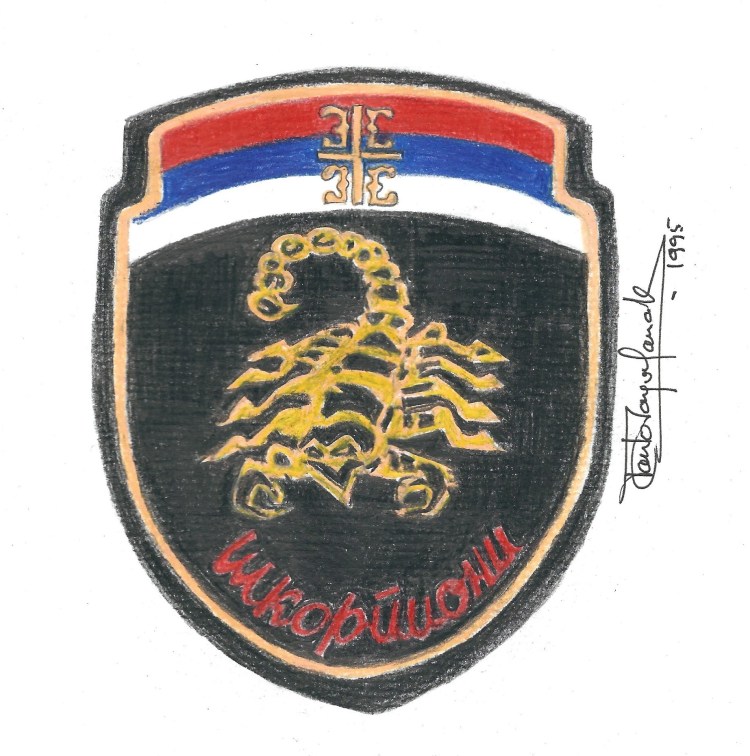
Many muslin families sought refuge inside and around the Dutch Contingent’s compound. They were hooping the Serbs would respect the UN flag and no harm would come to them; but they were wrong. In order to kept General Mladic, and the VRS, clear of blame, the “Scorpions” embraced the task to “deal with that situation”. The men were separated from their families; some were executed at the site and others were taken away, never to be seen again.
On that day’s afternoon the NATO jets finally appeared; but it was too late, attacking the VRS inside the town meant killing blue helmets and civilians. Mladic had the entire Dutch Battalion in his hands and threatened to kill them if NATO would strike.
After having the situation under his control, General Mladic authorized the opening of a corridor connecting Srebrenica to Tuzla – a large muslin city in the Bosniak territory – allowing the muslin families to exit Srebrenica using their own means. As a result, a long column of people walked for five days, through mountain roads, in the direction of Tuzla. During that forced march they were attacked several times each day.
On 16th July at 17H00, the column reached Tuzla, and reported that between 5.000 to 8.000 Military Age Men had been shot dead and thrown into mass graves.
On 25th of July, the VRS did exactly the same thing in yet another Safe Area – Zepa – Serbian impunity was the master word. .
The massacre of the Muslim population running from the VRS was considered the worst mass murder since the World War Two. Even if the Dutch would have made a “creative interpretation” of their Rules of Engagement, their pistols and rifles could not have stopped the Serb tanks. Srebrenica defenders were not equipped to do the job, and the essential Close Air Support never arrived.
The Dutch contingent was not to be blamed for the fall of Srebrenica – it was the fault of the International Community, which did not take the necessary decisions to avoid it.
 OPen samento