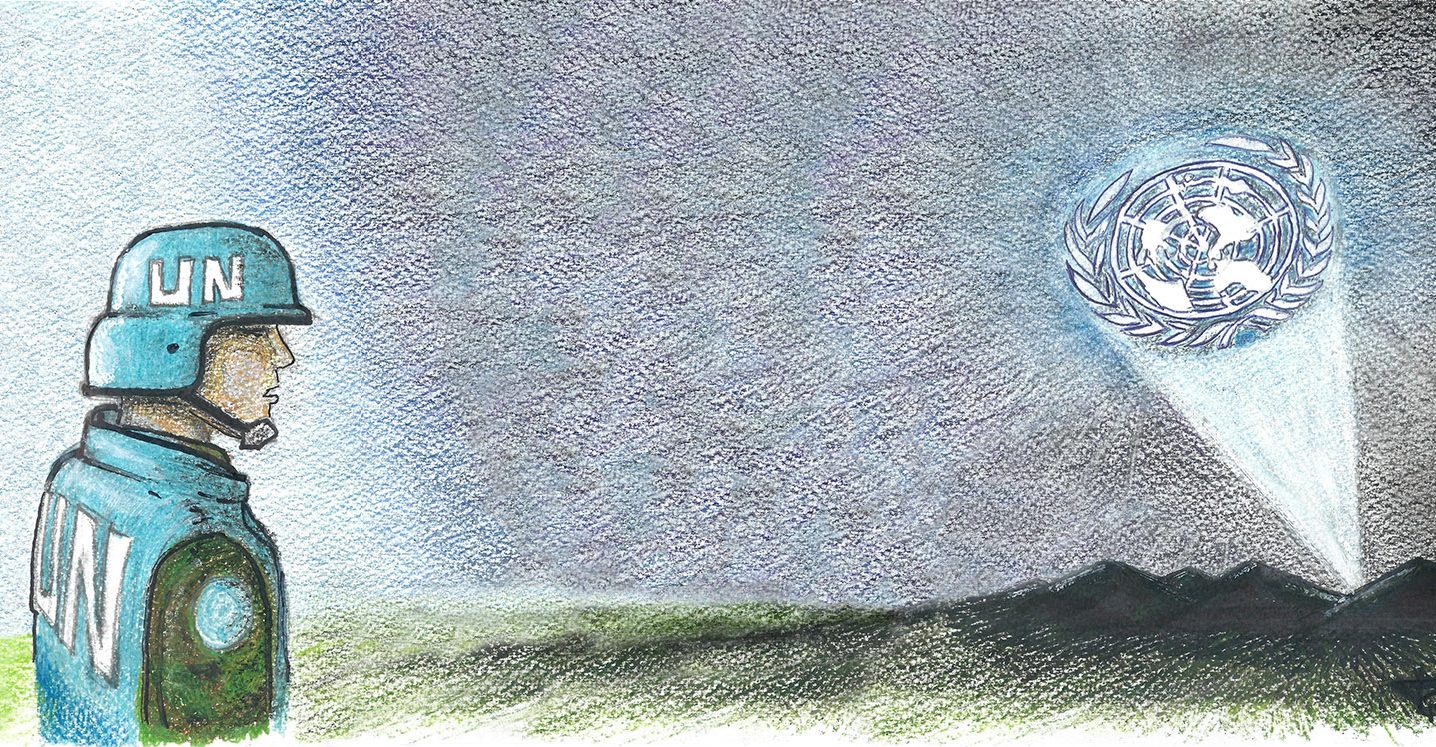
In January 1995, the UN mission for the Yugoslav conflict(s) – UNPROFOR – had 38.599 military personnel from 37 Troop Contributing Nations(TCN): Argentina, Bangladesh, Belgium, Brazil, Canada, Colombia, Czech Republic, Denmark, Egypt, Finland, France, Ghana, Indonesia, Ireland, Jordan, Kenya, Lithuania, Malaysia, Nepal, The Netherlands, New Zealand, Nigeria, Norway, Pakistan, Poland, Portugal, the Russian Federation, Slovak Republic, Spain, Sweden, Switzerland, Tunisia, Turkey, Ukraine, the United Kingdom, the United States and Venezuela.
Out of those 38.599 military, the UN picked 684 officers (normally captains OF2) to construct teams of Military Observers (UNMO). Those teams’ constitution was supposed to look impartial to the local belligerent factions, hence the UNPROFOR HQ used a method known as “National Balance”, to make sure there were no foreigner hidden agendas in the UNMO team’s performance. That meant that each team should have a mixed “flavor” of European, Asian and African officers; it should have a mix of different cultural and religious varieties and there should not be repetition of the same country in the same team.
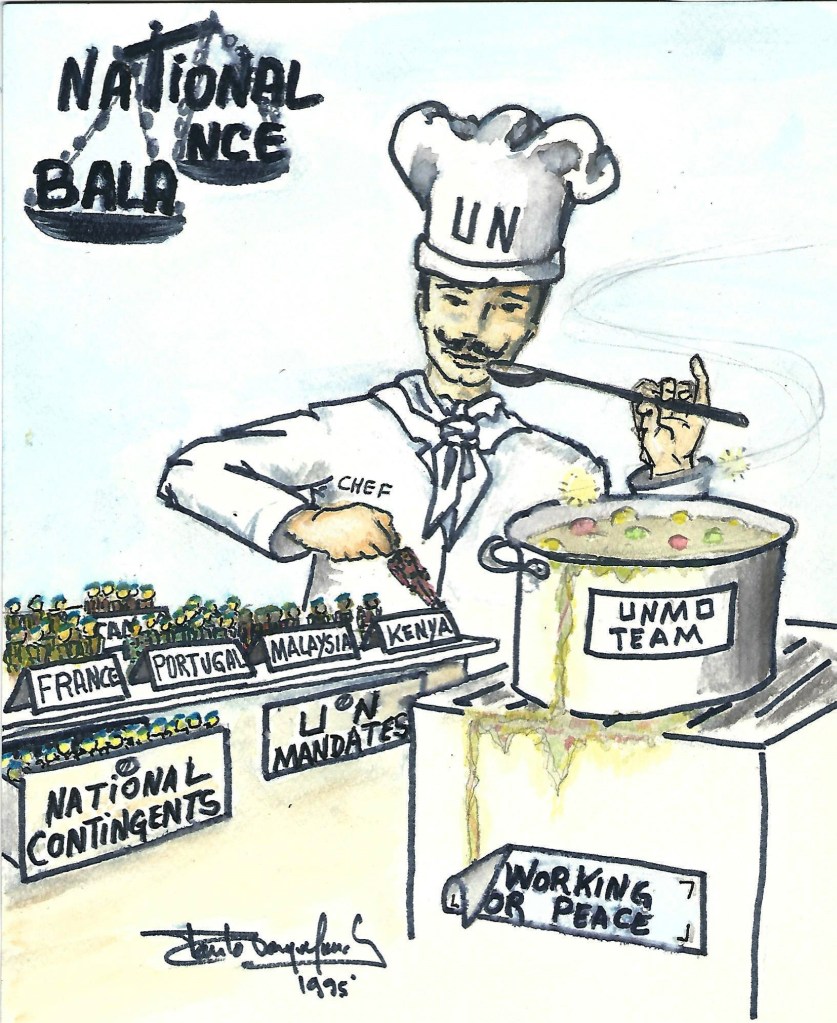
This was a big congregation of different cultures, military capabilities and distinct languages. Unlike NATO, the UN TCN did not have common procedures, standardized equipment, or the same phraseology. That said, the first difficulty everybody had during the indoctrination, was the UN Lexicon.
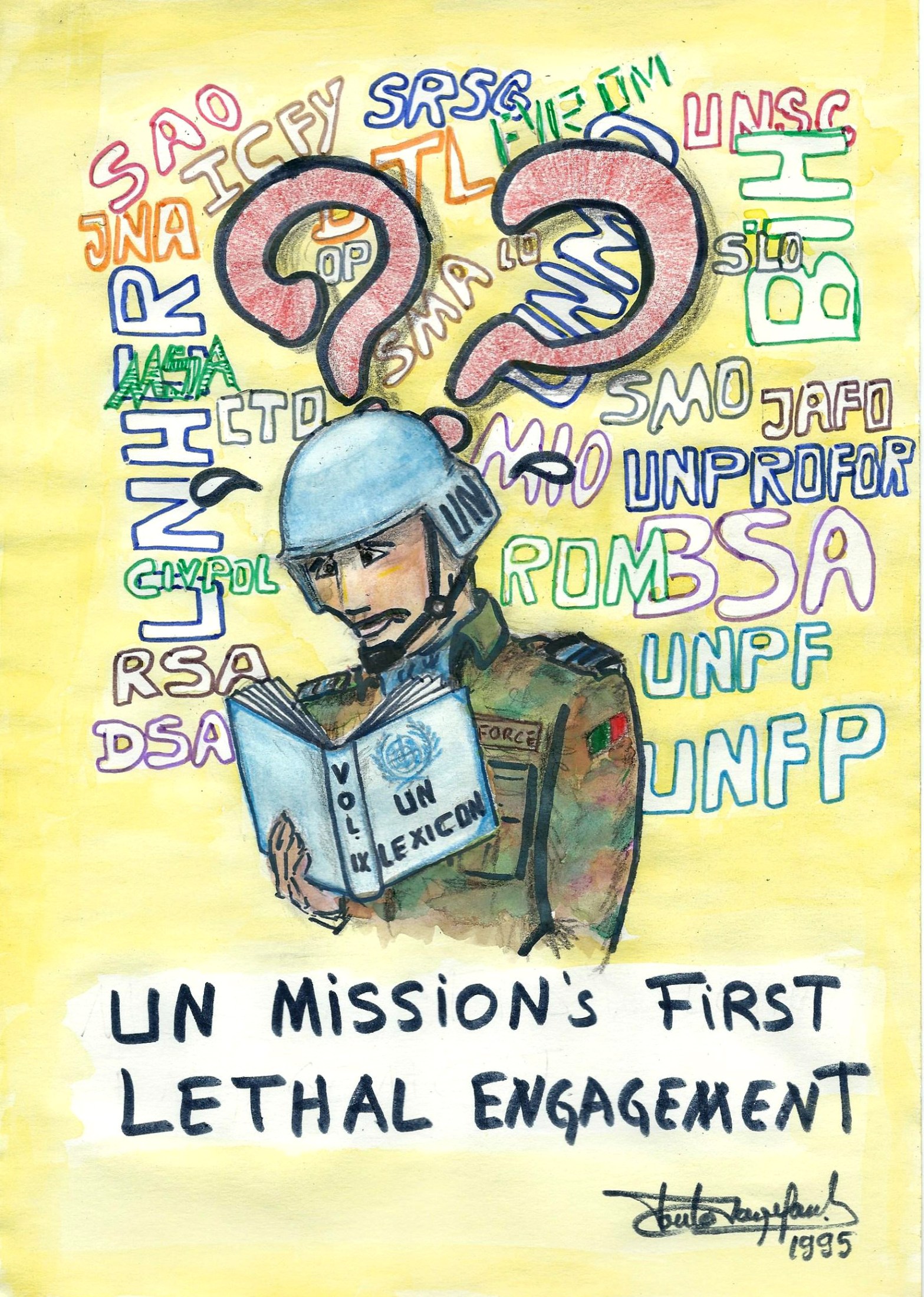
If someone mentioned something more than three times; it deserved an acronym. There were verbs, and adjectives, made out of acronyms.
 OPen samento