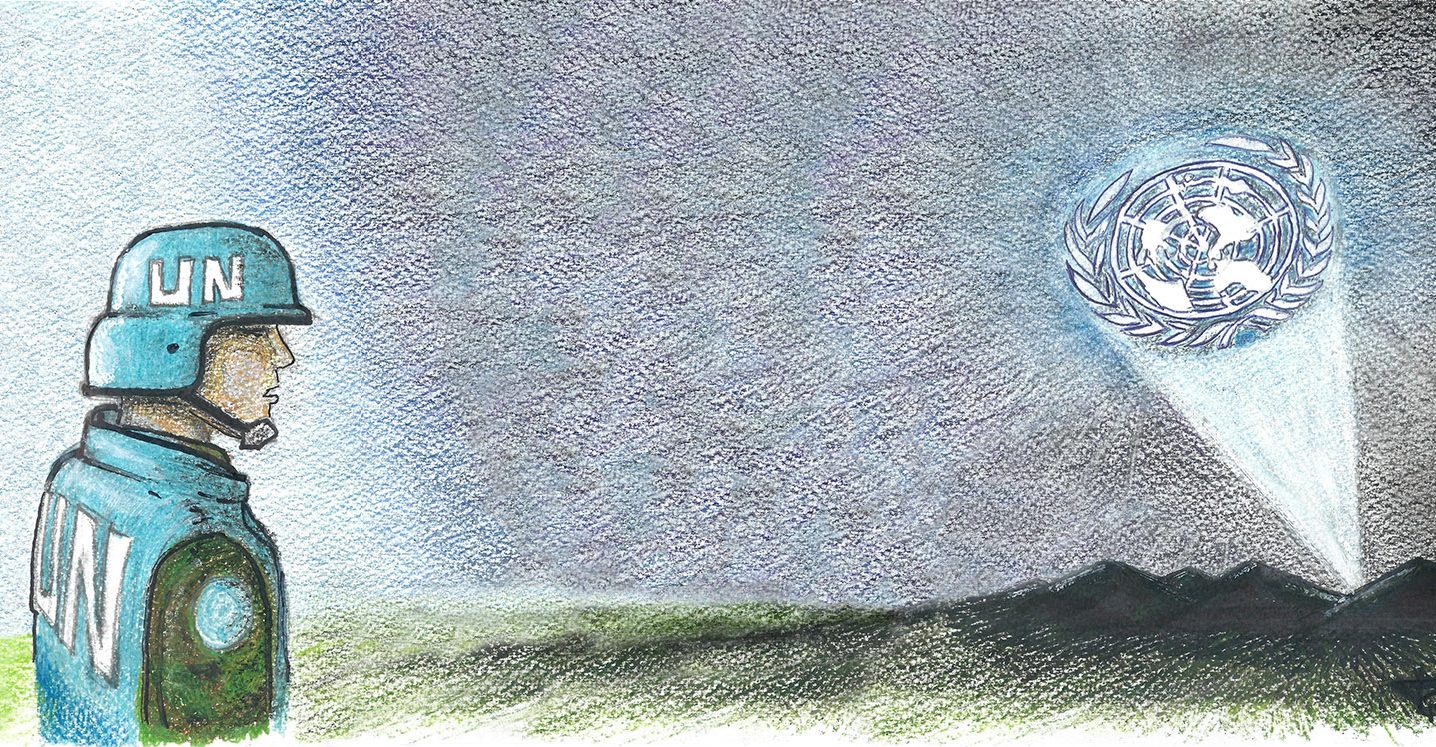
My first impression of UNPROFOR was not exactly the most valuing one.
To start with, the local population had set up a “Wall of Shame” surrounding the UN Headquarters perimeter, in Zagreb. Their message was “We’re not happy with your performance”. Each brick of that wall had a name of a deceased Croatian soldier, and their mothers blamed the UN for not having avoid it. That wasn’t very encoring regarding the locals’ appreciation of my future work.
I met my national sponsor at the gate, and we went straight to the administrative building to start my in-processing. At the check-in desk, I presented my nicest smile and addressed the silhouette across the booth’s stemmed glass.
– “Hello, good morning, I am Captain Paulo Gonçalves, from the Portuguese Air Force, and I have just arrived. Here’s my travel orders … it says that I will be joining the UNPROFOR Military Observer Unit.”
– “Let’s see…UNMO?! …Portuguese, coming for a full year?! … Paulo Gonçalves?! … Ok, we have you. Welcome to UNPROFOR. Please read this paper carefully; it’s the testament of your life insurance. Identify the beneficiary of the insurance in case you get killed, and sign it … in triplicate. We will discuss further details latter!”

– “What the hell?! – I exclaimed turning to Captain Duque, my sponsor – “The very first procedure is to sign my testament? They want to know upfront who’s going to receive the UN “blood compensation” payment if I am Killed In Action (KIA) or Wounded In Action (WIA)? This doesn’t seem to be a very bright start! Does it? How many of you have died recently?”
– “Not that many.” – Said Captain Duque – “Just sign and get over with it! It’s a pragmatic formality, made in New York.”
UNPROFOR was a Peacekeeping mission, but unfortunately that UN “blood compensation” payment was done several hundreds of times during those four years.
 OPen samento