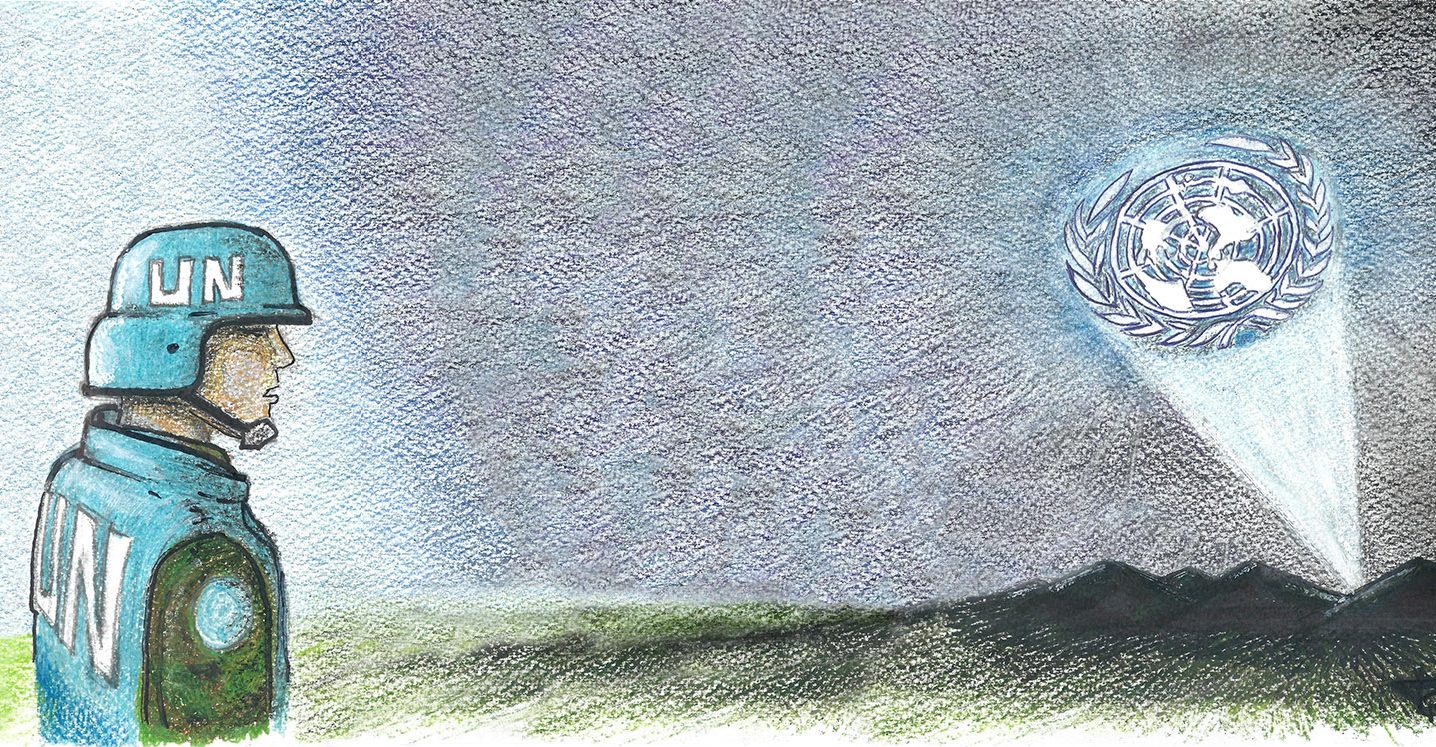

Nowadays, in any military operation, exercise or HQ ceremony, one has to consider the news media coverage. In most cases, it is not an option; it is a battlefield characteristic.
The military tend not to appreciate the presence of journalists during their activities, not only for reasons of Operational Security, but also because of the criticism media reports tend to convey about military activities. Military planners are very much aware that one should not fight the scenario. We must adjust and overtake. Therefore the new mantra is: “We’ve got to have Strategic Communications.”
Some people may think that Strategic Communications (StratCom) is a new thing in the Public Relations environment. They see it as a new discipline that introduces a different (more active) posture, with modernized products—something like Public Affairs on steroids. That’s not the case! StratCom is the natural evolution of the communication orchestra, which has become too big and it requires a maestro.
Humans are a social species. We need to communicate in order to survive. One cannot live in a society without having some sort of communication with the surrounding people. In today’s world we are so inter-dependable that, if you don’t communicate, you die! Our institutions have exactly the same constraints. An organization without flexible communications will not evolve and, like the dinosaurs, it will become extinct sooner rather than later.
However, in StratCom, the term Communications should be understood in its broadest sense. Actions (or the lack of them) are also forms of communication. In the StratCom business, one must not only “talk the talk”, one must also “walk the walk”; better yet, one must Walk the Talk!
An American philosopher – Ralph Waldo Emerson – once said “What you do speaks so loudly, that I can’t hear a word you’re saying”.
Each operational capability will have its own formatted messaging, with diverse messages tailored for different target audiences. As in an orchestra, what the violin plays in isolation is very different from what the trumpet plays. What StratCom does is to make sure that they all play their different pieces of the music, in tune, so that the melody is harmonious.
Military planners must identify the proper communication tools for each different audience, and master their use. Failure to do so may result in a negative public perception of the operation. Therefore, planning is the first step towards the answer; but it is not the whole solution, because, as Mike Tyson (the famous boxer) said: “– Everybody has a plan … until he is punched in the face!”
It’s adaptability that bridges the route to success. StratCom is based on a dialogue (not a monologue), both internally and externally. Feedback on our communication activities is paramount. StratCom is the empowered maestro who can stop the music, review it with the author, and come back to the orchestra to produce an excellent symphony.
If you don’t do it right … you’ll be under heavy fire of the news media criticism!
Lessons Learned from UN/NATO/EU field missions. The warring faction that doesn’t know how to operate along side with the news media … losses the war.
 OPen samento